
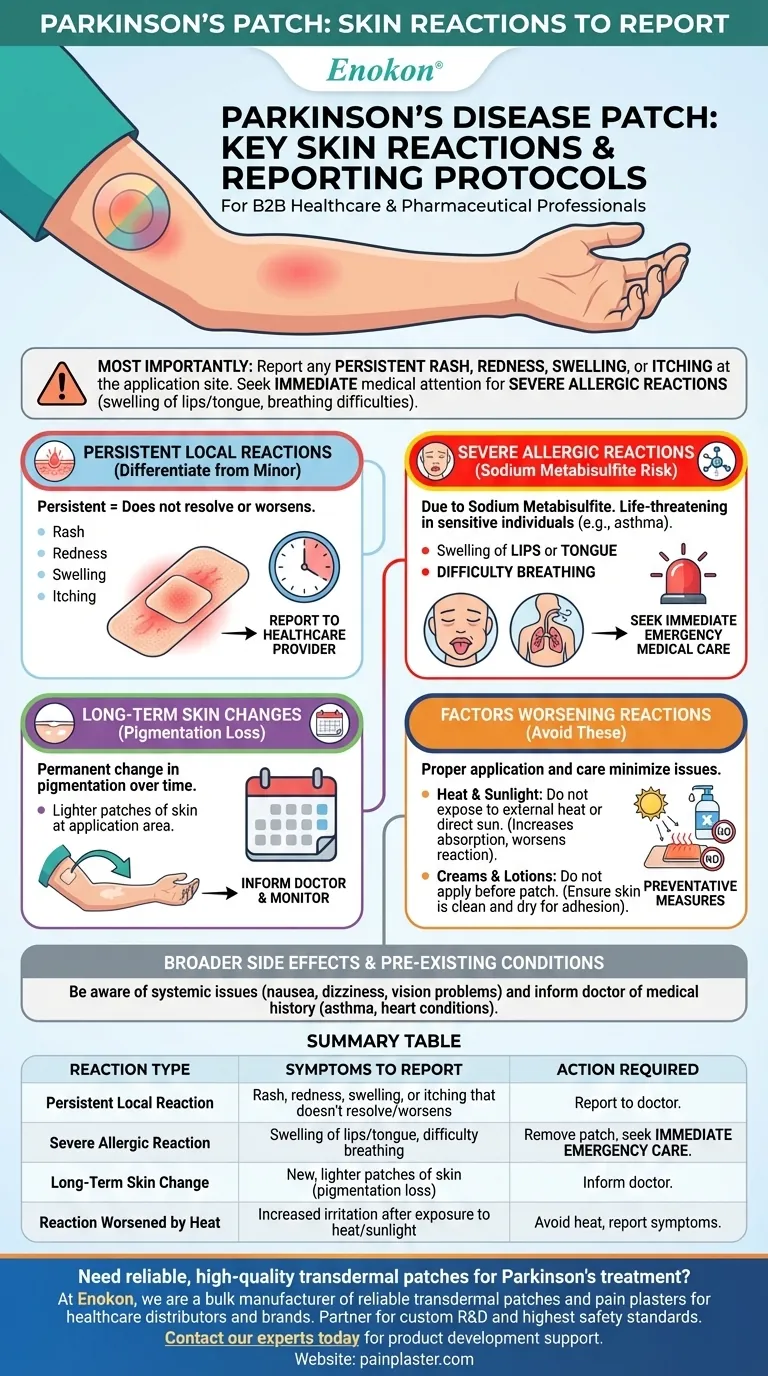
Most importantly, you should report any persistent rash, redness, swelling, or itching that occurs where the Parkinson's disease patch was applied. You must also seek immediate medical attention for any signs of a severe allergic reaction, such as swelling of the lips and tongue or difficulty breathing.
While some minor irritation can be expected with a transdermal patch, the key is to distinguish between temporary discomfort and persistent or severe reactions. Any skin reaction that doesn't resolve, worsens, or is accompanied by systemic symptoms requires a conversation with your doctor.

Differentiating Minor Irritation from Reportable Reactions
Understanding what to look for is the first step in using a medication patch safely. Your skin's reaction is a key indicator of how your body is handling the treatment locally.
Standard Application Site Reactions
Many people experience mild, temporary redness or itching when they first start using a patch. This often resolves on its own as your skin adjusts.
Persistent Symptoms to Report
The critical word is persistent. If redness, swelling, a rash, or itching at the application site does not go away after a short time or gets worse, it must be reported to your healthcare provider.
Understanding Serious and Long-Term Skin Changes
Beyond immediate irritation, there are two other categories of skin reactions that warrant specific attention due to their potential severity or long-term impact.
Signs of a Severe Allergic Reaction
The patch contains sodium metabisulfite, an ingredient that can cause severe, sometimes life-threatening, allergic reactions in sensitive individuals, especially those with asthma.
Symptoms like swelling of the lips or tongue or difficulty breathing are signs of a serious allergic event. If these occur, remove the patch and seek immediate emergency medical care.
Potential for Skin Lightening
Over time, the patch may cause permanent changes in skin pigmentation, resulting in lighter patches of skin in the application area.
You should monitor your skin and report any new areas of lightening to your doctor. This is a potential long-term cosmetic effect of the medication.
Factors That Can Worsen Skin Reactions
Proper application and care are crucial for minimizing skin issues. Certain external factors can increase the likelihood or severity of a reaction.
The Role of Heat and Sunlight
Do not expose the application site to external heat sources like heating pads or direct sunlight. Heat can increase the absorption of the medication and may worsen local skin reactions.
Avoiding Creams and Lotions
Lotions, creams, or ointments should not be applied to the skin area where you are about to place the patch. Ensure the skin is clean and dry to promote proper adhesion and prevent interference.
Beyond the Skin: A Broader View of Side Effects
Skin reactions are just one aspect of the medication's safety profile. It's important to be aware of other potential side effects to have a complete picture.
Common Systemic Side Effects
Besides skin issues, the medication can cause other side effects. These may include nausea, sleepiness, dizziness, insomnia, vision problems, leg swelling, or uncontrolled limb movements.
Pre-existing Conditions Matter
Always inform your doctor of your complete medical history before starting treatment. Conditions like asthma, heart problems, blood pressure abnormalities, or mental health issues can influence how the medication affects you.
How to Respond to a Skin Reaction
Your response should be guided by the type and severity of the symptoms you observe.
- If you experience persistent irritation: Report any rash, redness, swelling, or itching at the patch site that does not resolve on its own to your doctor.
- If you notice signs of a severe allergy: Seek immediate medical attention for symptoms like swelling of the lips or tongue or difficulty breathing.
- If you observe long-term skin changes: Inform your doctor about any new areas of skin lightening that develop over time.
Proactive monitoring and open communication with your healthcare team are essential for managing your treatment safely and effectively.
Summary Table:
| Reaction Type | Symptoms to Report | Action Required |
|---|---|---|
| Persistent Local Reaction | Rash, redness, swelling, or itching that doesn't resolve or worsens. | Report to your doctor. |
| Severe Allergic Reaction | Swelling of lips/tongue, difficulty breathing (patch contains sodium metabisulfite). | Remove patch, seek immediate emergency care. |
| Long-Term Skin Change | New, lighter patches of skin (pigmentation loss) at the application site. | Inform your doctor. |
| Reaction Worsened by Heat | Increased irritation after exposure to heating pads or direct sunlight. | Avoid heat on application site; report symptoms. |
Need a reliable, high-quality transdermal patch for your Parkinson's disease treatment?
At Enokon, we are a bulk manufacturer of reliable transdermal patches and pain plasters for healthcare and pharmaceutical distributors and brands. We understand the critical importance of safety and consistent drug delivery in Parkinson's therapy.
Partner with us to benefit from our technical expertise for custom R&D and development, ensuring your patches meet the highest standards of quality and patient safety.
Contact our experts today to discuss your specific requirements and how we can support your product development.
Visual Guide
Related Products
- Natural Herbal Patch for Motion Sickness and Car Sickness Relief
- Far Infrared Deep Heat Relief Patches Medicated Pain Relief Patches
- Lidocaine Hydrogel Pain Relief Patch for Pain Relief
- Far Infrared Pain Patch Relief Pain Reliever for Back
- Icy Hot Menthol Medicine Pain Relief Patch
People Also Ask
- How should the patch be stored? Essential Tips for Preserving Herbal Patch Efficacy
- What activities should be avoided while using this patch? Key Precautions for Safe & Effective Use
- What should be avoided when using the patch? Key Safety Tips for Herbal Patch Users
- What should be done if a patch falls off or a dose is missed? Quick Fixes & Safety Tips
- What are the pharmacological effects of multi-target herbal patches in relieving joint inflammation? Science-Backed OEM



















