
The scopolamine patch is a transdermal medication primarily used to prevent nausea and vomiting, but it is not suitable for everyone. Certain individuals should avoid or use it with extreme caution due to potential health risks. Key groups include those with glaucoma, enlarged prostate, urinary retention, or severe kidney/liver disease, as the patch can exacerbate these conditions. Children under 12, pregnant or breastfeeding women, and individuals sensitive to its components should consult a doctor before use. Additionally, activities like alcohol consumption, driving, or prolonged water exposure should be avoided to prevent adverse effects or patch failure.
Key Points Explained:
-
Pre-existing Medical Conditions
- Glaucoma: Scopolamine can increase intraocular pressure, worsening symptoms.
- Enlarged Prostate/Urinary Retention: Anticholinergic effects may cause difficulty urinating.
- Severe Kidney/Liver Disease: Impaired metabolism/excretion increases overdose risk.
-
Age Restrictions
- Children Under 12: Safety and efficacy are unverified for this age group.
-
Pregnancy and Breastfeeding
- Potential fetal/neonatal risks (e.g., drowsiness, breathing issues) warrant medical supervision.
-
Activity Limitations
- Alcohol: Heightens drowsiness/dizziness.
- Driving/Operating Machinery: Delayed reaction times due to sedation.
- Water Exposure: Prolonged swimming/bathing may loosen the anti inflammatory patch.
-
Contraindications from Analogous Patches
- While not directly related to scopolamine, insights from hormonal patches (e.g., birth control) highlight the importance of avoiding use with certain medications or conditions like uncontrolled diabetes or migraines with aura.
-
General Precautions
- Avoid touching eyes/mouth after handling to prevent accidental ingestion or eye irritation.
Always consult a healthcare provider to assess individual suitability, especially if multiple risk factors are present. The patch’s convenience must be balanced against its systemic effects and potential interactions.
Summary Table:
| Group | Reason to Avoid |
|---|---|
| Glaucoma patients | Increases intraocular pressure, worsening symptoms. |
| Enlarged prostate/urinary retention | Anticholinergic effects may cause difficulty urinating. |
| Severe kidney/liver disease | Impaired metabolism/excretion raises overdose risk. |
| Children under 12 | Safety and efficacy unverified. |
| Pregnant/breastfeeding | Potential fetal/neonatal risks (drowsiness, breathing issues). |
| Alcohol users | Heightens drowsiness/dizziness. |
| Drivers/machine operators | Delayed reaction times due to sedation. |
Need reliable transdermal solutions tailored to your needs?
At Enokon, we specialize in bulk manufacturing of high-quality transdermal patches and pain plasters for healthcare distributors and brands. Our expertise in custom R&D ensures safe, effective formulations for diverse medical requirements.
Contact us today to discuss your project or explore our product range!
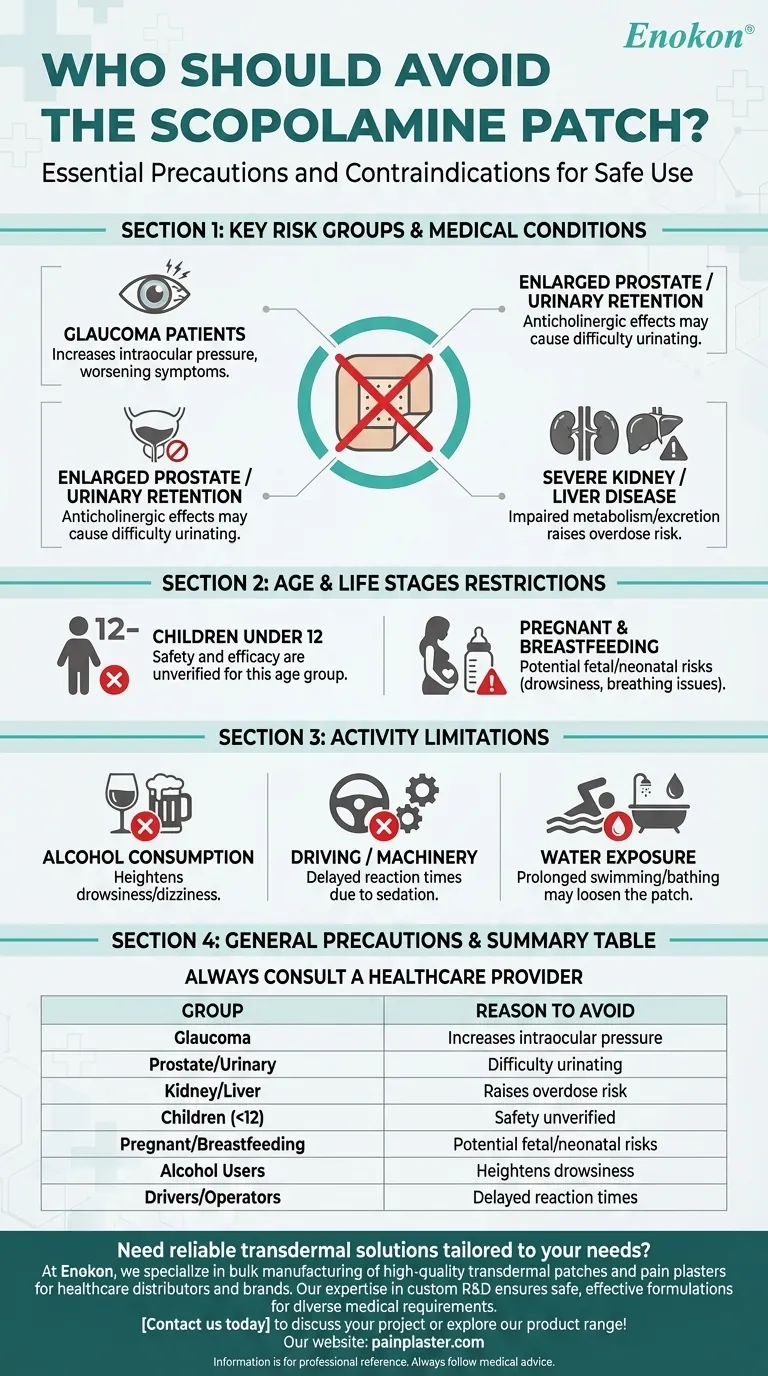
Visual Guide
Related Products
- Asthma Cough and Pain Relief Patch for Adults and Kids
- Lidocaine Hydrogel Pain Relief Patch for Pain Relief
- Menthol Gel Pain Relief Patch
- Herbal Medicated Anti Diarrhea Patch for Digestive Relief
- Icy Hot Menthol Medicine Pain Relief Patch
People Also Ask
- What role do natural ingredients and acupoint stimulation play in a cough relief patch? Synergistic Relief Explained
- What are the key benefits of using the cough relief patch? Soothe Your Cough with Targeted, Non-Oral Relief
- How does the cough relief patch provide targeted relief? Direct, Soothing Comfort for Coughs & Chest Congestion
- What makes the cough relief patch a convenient option for managing coughs? A Mess-Free, On-the-Go Solution
- What are the potential side effects of pain relief patches? A Guide to Safe Use & Key Risks


















