The Silent Panic of a Broken Routine
It’s a quiet, sinking feeling. The glance in the mirror, the touch of a shoulder, and the sudden realization: the patch isn't there. Or perhaps it was never applied. For a patient relying on transdermal hormone therapy, like a testosterone patch, this moment is more than an inconvenience. It’s a disruption to a carefully balanced biological system.
This isn't just about medicine. It's about the intricate system built between a human and a technology. A missed dose introduces chaos and uncertainty. The immediate questions are psychological as much as they are medical: Have I undone my progress? What happens now? How do I fix this?
The Physics of Forgiveness: Why Timing is a Critical Variable
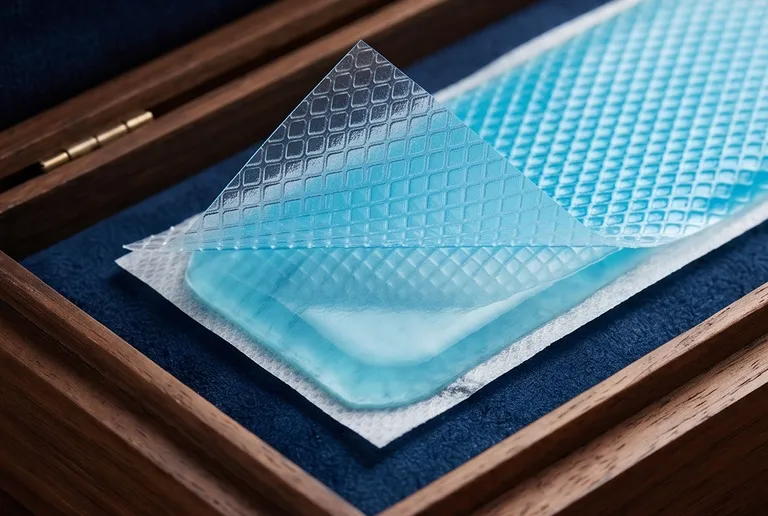
A transdermal patch is an engineering marvel—a tiny, self-contained system designed for steady, continuous drug delivery. Its goal is to maintain a therapeutic equilibrium in the bloodstream, avoiding the peaks and valleys associated with other delivery methods.
When a dose is missed, that equilibrium is threatened. The protocol for recovery is governed by a simple principle: restoring consistency without creating a dangerous overcorrection.
The Rule of Proximity: To Apply or to Skip?
The decision hinges on where you are in the 24-hour cycle. The logic is designed to prevent both prolonged troughs and sudden spikes in hormone levels.
- If you remember early: Apply the patch as soon as you realize the mistake. The brief gap is manageable, and the system can return to its intended rhythm. You'll still remove it at the originally scheduled time to stay on track.
- If it's almost time for the next dose: Skip the missed one entirely. Applying a new patch now would be like adding a second train to a track just as the next one is due to arrive. The risk of collision—or in this case, an excessive hormone spike—is too high.
The Human Instinct to Compensate
The most dangerous impulse after a mistake is the desire to overcompensate. Our psychology tells us to "make up for" the lost time by applying two patches.
This is a fallacy. Hormone therapy is not about quantity; it's about stability. Doubling the dose doesn't just deliver twice the medication—it overwhelms the body's receptors, risking side effects ranging from mood instability to cardiovascular strain. The system is designed for a steady drip, not a flood.
| Scenario | Recommended Action | The Rationale |
|---|---|---|
| Missed dose, remembered within hours | Apply patch immediately. | Minimizes the gap in therapy. |
| Missed dose, close to next scheduled application | Skip the missed dose entirely. | Avoids toxic overdose and side effects. |
| Never | Apply extra patches to "catch up." | Prevents dangerous hormonal spikes. |
When the Technology Fails: The Engineering of Trust

Sometimes, the error isn't human. A patch can detach prematurely due to sweat, friction, or poor adhesion. This is a failure of the hardware, not the user.
It's also a breach of trust. The user must be able to rely on the patch to perform its function silently and effectively. If it can't even stay on, how can they trust the complex drug delivery matrix within it?
The protocol here is again time-based:
- Fell off after <12 hours: It likely didn't deliver a sufficient dose. Replace it immediately.
- Fell off after >12 hours: A significant portion of the medication has probably been absorbed. Wait for the next scheduled application time.
This highlights a critical, often-overlooked aspect of transdermal therapy: the physical engineering of the patch itself. Adhesion science, flexible materials that move with the skin, and a stable drug matrix are not minor details. They are the foundation of patient adherence and therapeutic success.
A patch that stays put reduces the user's cognitive load. It removes a variable of uncertainty, allowing them to focus on their routine, not on whether the technology is failing them. This is where the expertise of a specialized manufacturer becomes paramount. Companies like Enokon focus obsessively on these engineering challenges—perfecting the adhesion, ensuring consistent drug release, and manufacturing a product that integrates seamlessly into a person's life. They build the reliability that allows the user-technology system to function without anxiety.
Creating a Resilient System
Managing hormone therapy is a partnership between the patient's discipline and the product's reliability. The rules for a missed dose are a safety net, but the goal is to never need it.
That resilience is built on two pillars: a clear, simple protocol for human error and a robust, well-engineered product that minimizes technical failure. By understanding the psychology behind adherence and appreciating the engineering that enables it, we can create a more forgiving and effective therapeutic experience.
Building that trust starts with superior design and manufacturing. To create a transdermal solution that accounts for the human element, Contact Our Experts.
Related Products
- Far Infrared Heat Pain Relief Patches Transdermal Patches
- Silicone Scar Sheets Patch Transdermal Drug Patch
- Icy Hot Menthol Medicine Pain Relief Patch
- Menthol Gel Pain Relief Patch
- Mugwort Wormwood Pain Relief Patch for Neck Pain
Related Articles
- Engineering Certainty: The Invisible Architecture of a Gold-Standard Clinical Trial
- The Silent Workhorse: How Transdermal Patches Rewrote the Rules of Pain Management
- Beyond the Pill: The Silent Engineering of Safer Pain Relief
- Beyond Efficacy: The Psychology of Adherence in Topical Pain Relief
- Beyond the Molecule: The Behavioral Science of the Simple Pain Patch



















