
The Invisible Risk in a Simple Gesture
Imagine a grandfather, recently prescribed a testosterone patch, giving his pregnant granddaughter a warm hug. It’s a moment of simple affection. Yet, within this simple act lies a complex and often invisible risk.
The transdermal patch is a marvel of medical engineering—a self-contained system delivering a precise, continuous dose through the skin. Its convenience is its power. But this convenience can mask the potency of the hormone it contains. The safety of this therapy doesn't just reside in the pharmacology of the molecule; it lives in the silent, disciplined protocol that must surround its use.
The greatest challenge in any therapeutic system is not the technology itself, but the human behavior that interacts with it. We are wired to respond to immediate, visible threats, not the abstract, probabilistic risks of accidental hormone exposure or a long-term side effect. This is where the architecture of safety becomes paramount.
Deconstructing the Protocol: A System of Safeguards
The list of precautions for a testosterone patch isn't just a set of rules; it's a series of safeguards designed to manage specific failure points where technology meets the complexities of human life.
The Proximity Problem: Managing Environmental Risk
The most critical protocol is arguably the one that protects others.
- Rule: Pregnant women should never touch the patch.
- The Human Factor: We underestimate risks we cannot see. A simple touch feels harmless. The protocol forces us to treat the patch not as a simple sticker, but as the sophisticated delivery mechanism it is. Accidental contact requires immediate, deliberate action—washing with soap and water—to break the chain of exposure.
The System Blindspot: When Medical Worlds Collide
A patient is not a closed system. They move through different medical environments, each with its own powerful technologies.
- Rule: Remove the patch before an MRI.
- The Human Factor: It's easy to forget to mention a patch to a radiologist. The metallic components in some patches can heat up in a powerful magnetic field, causing skin burns. This isn't a flaw in the patch or the MRI; it's an interaction failure between two independent systems. The safety protocol depends entirely on complete information disclosure from the patient.
The Internal Environment: Full Disclosure as a System Input
The therapy's success depends on knowing the patient's unique biological landscape.
- Rule: Disclose your full medical history (cancers, heart conditions, allergies).
- The Human Factor: We often compartmentalize our health issues. But testosterone therapy interacts with the entire body. Pre-existing conditions related to the prostate, heart, or liver are critical initial inputs. Without them, the therapeutic system is operating blind, potentially amplifying risks instead of delivering benefits.
The table below summarizes these critical intersections of technology and behavior:
| Precaution Category | Technical Consideration | The Human-Centered Safeguard |
|---|---|---|
| Environmental Safety | Active hormone on patch surface | Strict handling protocols; immediate washing upon contact. |
| System Interaction | Metallic components and magnetic fields | Mandatory removal before MRI/surgery. |
| Patient Biology | Pre-existing cardiovascular or prostate risks | Full medical history disclosure before starting therapy. |
| Drug Interactions | Compounding effects of other medications | Comprehensive medication review with a physician. |
The Manufacturer's Role: Engineering the First Line of Defense

Even the most diligent patient can be let down by an unreliable product. A patch that leaks, delivers an inconsistent dose, or has poor adhesion undermines the entire safety protocol. User error increases when the tool itself is flawed.
This is the engineer's romance: creating an object so reliable that it simplifies compliance. The physical integrity of the patch is the foundation upon which all behavioral protocols are built.
For healthcare distributors and pharmaceutical brands, sourcing a patch from a manufacturer that prioritizes this reliability is non-negotiable. At Enokon, we operate as a bulk manufacturer of transdermal patches where precision isn't just a feature—it's the core design principle. Our expertise in materials science, adhesive technology, and dose consistency ensures that each patch performs predictably. We build the stable foundation that allows patient safety protocols to succeed.
The Harmony of Technology and Behavior
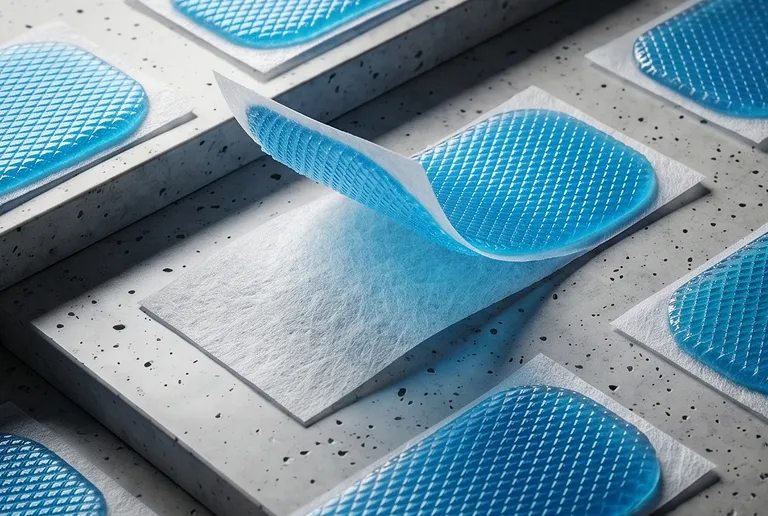
Effective testosterone therapy is a quiet partnership between a precisely engineered product and an informed, disciplined user. The goal is to make safety feel less like a checklist and more like a seamless, intuitive part of a daily routine. This harmony is achieved when the technology is so reliable you can trust it, and the protocols are so clear you can follow them effortlessly.
To build a therapeutic system grounded in reliability, the quality of the delivery mechanism is paramount. If you are developing or distributing transdermal solutions, ensuring that foundation is solid is the first and most important step. Contact Our Experts
Related Products
- Prostate Pain Kidney Health Care Patch for Men
- Cooling Fever Patches Color Change Cold Fever Patch
- Lidocaine Hydrogel Pain Relief Patch for Pain Relief
- Menthol Gel Pain Relief Patch
- Heating Pain Relief Patches for Menstrual Cramps
Related Articles
- More Than a Sticker: The Hidden Engineering of a Safe Pain Patch
- The Architecture of Relief: Deconstructing the Modern Pain Patch
- The Unseen Calculus of a Simple Pain Patch
- The Silent Geography of Healing: Decoding the Global Demand for Transdermal Herbal Patches
- The Unseen Engineering Behind a Simple Medicated Patch














