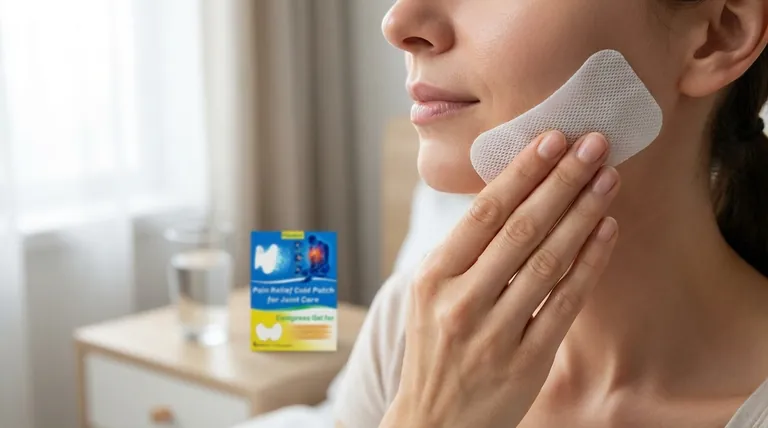
The Old Dilemma of Dental Pain
The ritual is familiar. After a dental procedure like a tooth extraction, the patient leaves with a prescription for oral painkillers. The next few days become a cycle of clock-watching: a throbbing pain returns, a pill is swallowed, and then comes the anxious wait for relief.
This isn't just a pharmacological process; it's a psychological one. The patient is burdened with managing peaks of pain and troughs of relief, often coupled with the gastrointestinal discomfort that oral NSAIDs can cause. The focus shifts from healing to simply enduring the side effects of the treatment.
This old model of pain management is effective, but it's a blunt instrument. It floods the entire system to treat a localized problem.
A More Elegant Solution: The Transdermal Approach
Enter the transdermal diclofenac patch. It represents a paradigm shift—a solution of engineered elegance. Instead of an oral pill taking a long, disruptive journey through the digestive system, the patch delivers medication directly and steadily through the skin.
It’s a deceptively simple concept that solves a complex problem. By creating a direct route to the bloodstream near the site of pain, it rewrites the rules of post-operative recovery.
The Systemic Advantage: Why Bypassing the Gut Matters
The true genius of the transdermal patch lies in what it avoids.
Minimizing Collateral Damage
Oral NSAIDs are notorious for causing gastric irritation, nausea, or even ulcers. This is the "collateral damage" of systemic delivery. The drug circulates everywhere, affecting tissues it was never intended for.
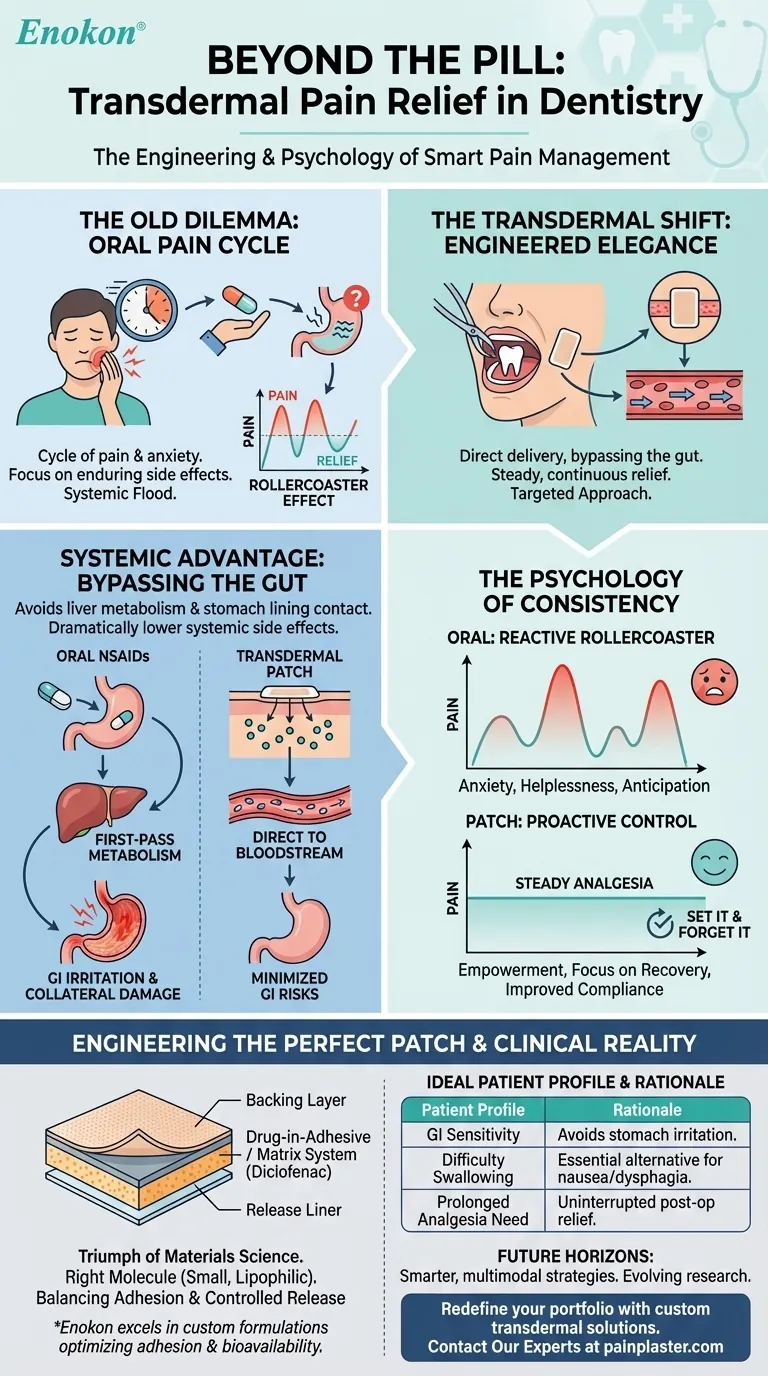
A transdermal patch bypasses this battlefield entirely. By avoiding the first-pass metabolism in the liver and keeping the drug away from the stomach lining, it delivers relief with a dramatically lower risk of systemic side effects.
The Psychology of Consistency
Oral medication creates a rollercoaster. The patient feels the pain return, reinforcing anxiety and a sense of helplessness. They are constantly reacting.
A patch offers steady, continuous analgesia. This consistency is psychologically powerful. The patient can "set it and forget it," allowing their mental energy to be focused on recovery, not on anticipating the next wave of pain. This improves compliance, especially for those who have difficulty swallowing pills or are experiencing nausea. It hands control back to the patient.
The Science of Adhesion and Release: Engineering the Perfect Patch
The effectiveness of a transdermal patch is not an accident. It is a triumph of materials science and pharmaceutical engineering, balancing two critical functions.
The Right Molecule for the Job
Diclofenac is an ideal candidate for transdermal delivery due to its molecular properties—it is small and lipophilic (fat-soluble), allowing it to effectively penetrate the skin's outer layer.
A Balancing Act: Adhesion vs. Delivery
The core engineering challenge is designing a patch that adheres securely and comfortably to the skin for 12 or 24 hours while releasing its active ingredient at a precise, controlled rate.
- Drug-in-Adhesive Systems: The drug is mixed directly into the adhesive layer.
- Matrix Systems: The drug is held in a semi-solid matrix, with a separate adhesive layer.
Achieving this balance requires deep expertise in polymer chemistry, adhesive technology, and drug formulation. This is where the partnership between a pharmaceutical brand and a specialized manufacturer becomes crucial. Enokon excels at this, leveraging its R&D capabilities to develop custom patch formulations that optimize both adhesion and bioavailability, ensuring consistent and reliable therapeutic outcomes.
Clinical Reality and Future Horizons
Transdermal diclofenac patches are already a viable and potent tool, especially for specific patient groups.
| Ideal Patient Profile | Rationale |
|---|---|
| GI Sensitivity | Avoids stomach irritation common with oral NSAIDs. |
| Difficulty Swallowing | An essential alternative for nauseous or dysphagic patients. |
| Need for Prolonged Analgesia | Provides uninterrupted relief after surgery. |
While current studies confirm their efficacy for mild-to-moderate pain, the frontier for research is expanding. Larger trials are exploring optimal dosing for severe pain, long-term safety profiles, and synergistic effects when used with other therapies. The patch is not just a product; it’s a platform for building smarter, multimodal pain management strategies.
For healthcare distributors and pharmaceutical brands looking to lead this shift toward more intelligent, patient-friendly pain relief, the expertise in formulation and manufacturing is paramount. Contact Our Experts to explore how custom transdermal solutions can redefine your portfolio.
Visual Guide
Related Products
- Far Infrared Heat Pain Relief Patches Transdermal Patches
- Menthol Gel Pain Relief Patch
- Icy Hot Menthol Medicine Pain Relief Patch
- Silicone Scar Sheets Patch Transdermal Drug Patch
- Mugwort Wormwood Pain Relief Patch for Neck Pain
Related Articles
- Engineering Certainty: The Invisible Architecture of a Gold-Standard Clinical Trial
- The Silent Workhorse: How Transdermal Patches Rewrote the Rules of Pain Management
- Beyond the Pill: The Silent Engineering of Safer Pain Relief
- Beyond Efficacy: The Psychology of Adherence in Topical Pain Relief
- Beyond the Molecule: The Behavioral Science of the Simple Pain Patch

















