
The Parent's Dilemma
Picture this: it's 2 AM, and you're comforting a child with a fever. You’ve applied a cooling patch to their forehead, and it seems to be providing some relief. An hour later, as the patch starts to feel less cool, a thought crosses your mind: "Can I just put this in the fridge and use it again?"
This impulse comes from a place of resourcefulness. In our daily lives, we are taught to reuse, recycle, and make things last. But when we apply this common-sense logic to a medical device, we unknowingly bypass the fundamental principles of its design—principles rooted in physics, microbiology, and patient safety.
The cooling patch isn't just a cold compress; it's a single-mission delivery system.
The Hydrogel's Finite Mission
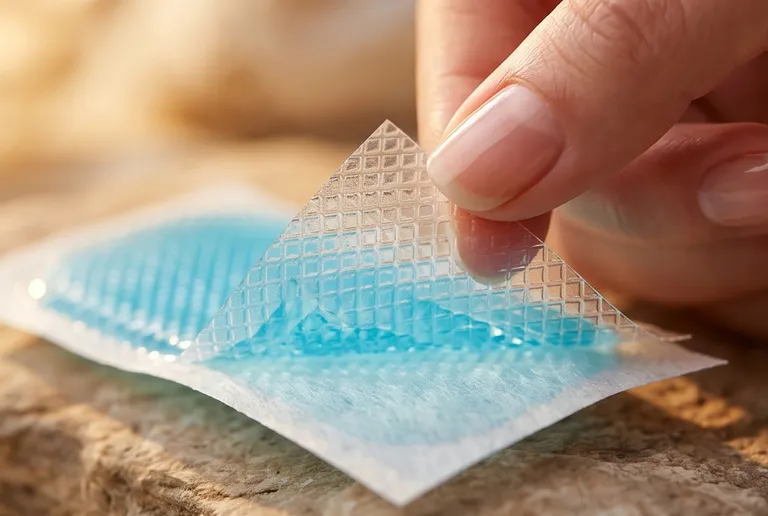
The magic of a cooling patch lies in its hydrogel layer. This isn't just a wet sponge; it's a complex polymer matrix engineered to hold a significant amount of water and release it through slow, controlled evaporation.
The Physics of Cooling
The cooling sensation is a result of evaporative heat transfer. As the water molecules in the gel turn to vapor, they draw thermal energy away from the skin. This process is passive, continuous, and designed to last for a specific duration.
Once the majority of its water content has evaporated, the mission is complete. The gel's structure is designed for a one-way journey of moisture release. Attempting to "recharge" it by soaking it in water is ineffective; the polymer matrix cannot reabsorb moisture in the same uniform way, rendering it useless for sustained cooling.
The Unseen Risk: A Microbiological Perspective
Even if a patch could be effectively rehydrated, a far more critical issue remains: hygiene.
Our skin is a thriving ecosystem of bacteria. When you apply a patch, you create a warm, moist, and enclosed environment—a perfect incubator. After just one use, the patch surface is colonized by microorganisms from the skin.
The psychological trap is that the patch still looks clean. We are biased toward what we can see. But re-applying it introduces a concentrated bacterial load back onto the skin, which can be particularly risky for someone who is already ill or has sensitive skin. This can lead to irritation, rashes, or infection.
The single-use design is a deliberate safeguard against this invisible threat.
Optimizing Performance, Not Lifespan
A common tip is to refrigerate cooling patches before use. This is a sound practice, but it's often misunderstood.
- A Pre-Cooling Boost: Chilling an unused patch lowers its starting temperature. This provides a more intense initial cooling sensation and can slightly prolong the overall effect. It's an optimization, not a revival.
- The Dangers of Freezing: Freezing a patch should be avoided. Ice crystals can form within the hydrogel, physically damaging the delicate polymer structure and leading to an inconsistent, unreliable performance upon thawing.
The goal of refrigeration is to enhance the performance of a fresh, sterile product, not to extend the life of a used one.
The Principle of Predictability in Medical Design
In medical and therapeutic applications, consistency is non-negotiable. A patient or caregiver must be certain that the product will perform exactly as intended, every single time.
This is why single-use design is a cornerstone of modern medical product engineering.
| Key Aspect | Engineering Rationale |
|---|---|
| Single-Use Design | Guarantees full hydrogel efficacy and sterility for each application. Eliminates variables and user error. |
| No Reuse | The hydrogel's evaporative mission is finite. Reuse introduces significant microbiological risks. |
| Refrigeration | Enhances the initial cooling effect of an unused patch. It does not enable reuse. |
| Safety First | Discarding after use prevents skin irritation and bacterial contamination, ensuring patient safety. |
For manufacturers, the responsibility is to engineer risk out of the equation. Creating a disposable product isn't a compromise; it's a commitment to delivering a predictable, safe, and effective therapeutic experience. At Enokon, we build our transdermal patches and pain plasters on this very principle, leveraging our R&D expertise to ensure that healthcare distributors and brands can offer products defined by their reliability.
When you need a solution where performance and safety are engineered from the start, a partnership built on technical excellence is key. Contact Our Experts
Related Products
- Cooling Fever Patches Color Change Cold Fever Patch
- Medical Cooling Gel Patches for Fever Cooling Patches
- Hydra Gel Health Care Eye Patch
- Herbal Eye Protection Patch Eye Patch
- Mugwort Wormwood Pain Relief Patch for Neck Pain
Related Articles
- The Quiet Engineering of Comfort: Decoding the 8-Hour Lifespan of a Cooling Patch
- The Last Centimeter: Why How You Apply a Transdermal Patch Defines Its Success
- The Physics of Comfort: Why Engineered Cooling Patches Outperform Traditional Fever Care
- Beyond the Pill: The Engineering and Psychology of Modern Fever Relief
- Beyond Size: The Hidden Physiology in Cooling Patch Design














