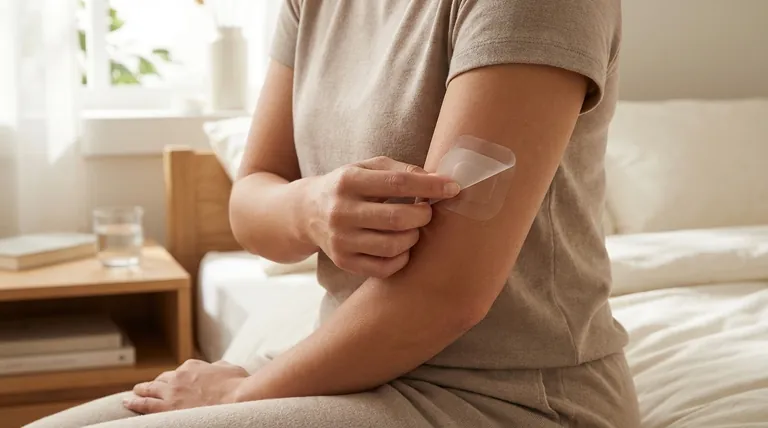
The Tyranny of the Clock in Chronic Pain
Chronic pain is more than a sensation; it's a thief. It steals focus, energy, and peace. For patients managing severe, persistent conditions like osteoarthritis or chronic low back pain, the treatment can become a burden in itself.
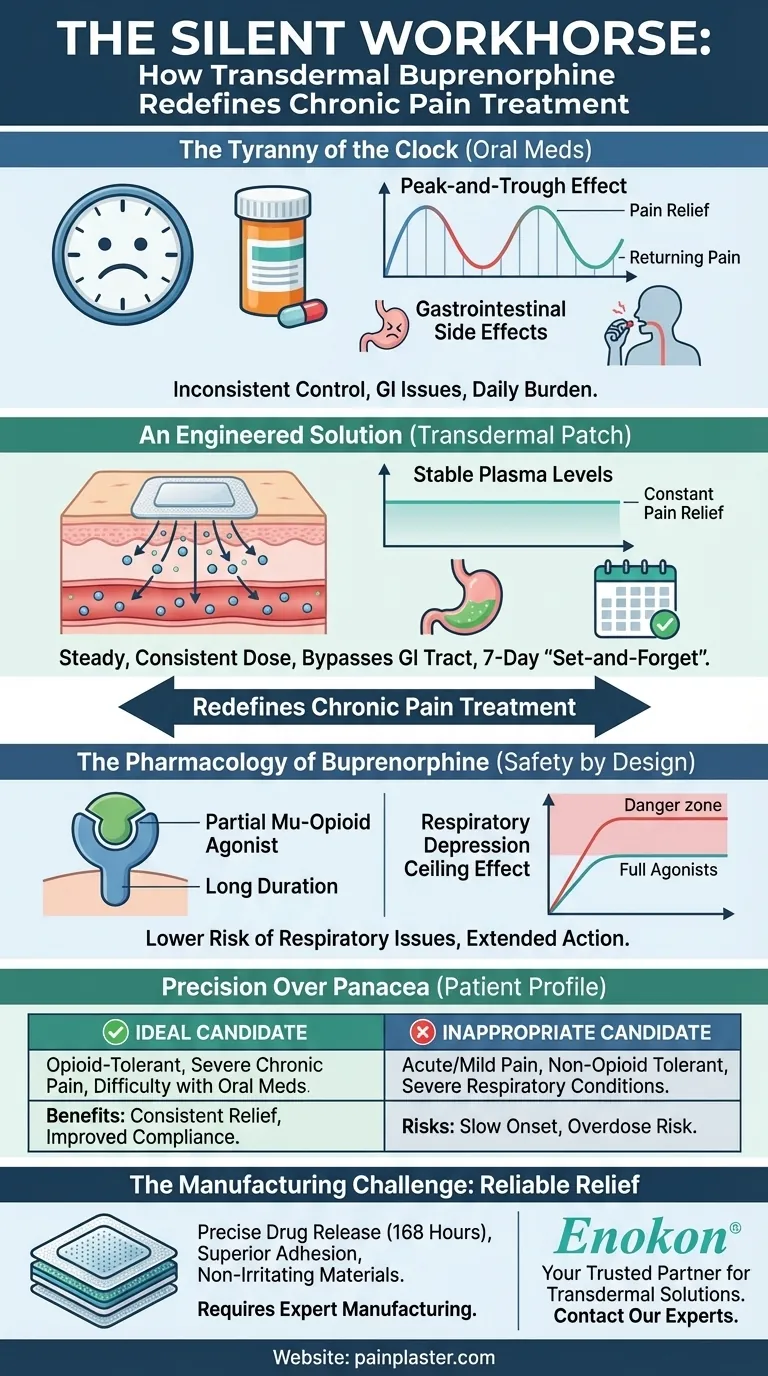
Oral medications, the traditional first line of defense, chain a person to the clock. Life becomes a cycle of watching for the next dose, enduring the rollercoaster of peak relief followed by returning pain, and managing the gastrointestinal side effects. For an elderly patient with multiple prescriptions and difficulty swallowing, this regimen isn't just inconvenient—it's a significant point of failure for consistent pain management.
The Flaw in Episodic Relief
The problem with pill-based dosing is both physiological and psychological. Physiologically, it creates a "peak-and-trough" effect. The body experiences a surge of medication, followed by a decline, leading to inconsistent pain control.
Psychologically, each pill is a reminder of the condition. It reinforces the identity of being a "patient." The fear of a missed dose or the nausea that can accompany oral opioids adds another layer of anxiety to a life already defined by discomfort. This system, while effective for acute issues, is poorly designed for the marathon of chronic pain.
An Engineered Solution: The Transdermal Delivery System
The transdermal patch is an elegant engineering solution to this systemic problem. It’s not just a sticker with medicine; it's a sophisticated, multi-layered system designed for controlled, continuous drug delivery.
A buprenorphine patch, applied just once a week, delivers a steady, consistent dose of medication directly through the skin into the bloodstream. This design achieves several critical goals:
- Stable Plasma Levels: It eliminates the peak-and-trough cycle, providing smooth, uninterrupted pain relief.
- Bypasses the GI Tract: By avoiding the digestive system, it significantly reduces side effects like nausea and vomiting.
- Improves Adherence: The "set-it-and-forget-it" nature of a weekly patch fundamentally changes the patient's relationship with their treatment. It frees them from the clock.
It's the difference between manually stoking a fire every few hours and relying on a thermostat for perfectly regulated warmth.
The Pharmacology of Buprenorphine: Safety by Design
The choice of buprenorphine for this system is deliberate. As a partial mu-opioid receptor agonist, it has unique properties that make it ideal for long-term, unsupervised use.
Unlike full agonists (like morphine), buprenorphine has a "ceiling effect" for respiratory depression. This means that beyond a certain dose, its effect on breathing doesn't increase, making it a significantly safer option for chronic pain management. Its high affinity for receptors and long duration of action mean it binds tightly and works for an extended period, perfectly complementing the slow-release mechanism of a 7-day patch.
Precision Over Panacea: Identifying the Right Candidate
This powerful tool is not a one-size-fits-all solution. Its use is reserved for specific, well-defined clinical scenarios to ensure maximum benefit and safety.
| Patient Profile | Suitability | Rationale |
|---|---|---|
| Ideal Candidate | Opioid-tolerant patients with severe, chronic pain (e.g., osteoarthritis) who have difficulty with oral meds. | Provides consistent relief, improves compliance, and reduces GI side effects. |
| Inappropriate Candidate | Patients with acute, post-operative, or mild pain. Non-opioid tolerant individuals. | The slow onset is not suitable for acute pain, and the opioid dose can be dangerous for those not accustomed to it. |
The patch is also contraindicated for patients with severe respiratory conditions like COPD or asthma. Proper patient selection is paramount.
The Manufacturing Challenge: From Blueprint to Reliable Relief
The clinical elegance of a buprenorphine patch is entirely dependent on the quality of its construction. The technical challenges are immense: ensuring precise, consistent drug release over 168 hours, maintaining skin adhesion through showering and daily activities, and using materials that are both effective and non-irritating.
This is where the deep technical expertise of a specialist manufacturer becomes indispensable. For pharmaceutical brands and healthcare distributors, the reliability of a transdermal patch is a direct reflection of their commitment to patient well-being. Partnering with a manufacturer like Enokon, which specializes in the R&D and bulk production of transdermal systems, ensures every patch performs exactly as designed. It’s the behind-the-scenes engineering that makes silent, consistent relief possible.
The buprenorphine transdermal patch represents a profound shift in how we approach chronic pain—moving from an intermittent battle to a state of sustained, quiet control. For healthcare distributors and pharmaceutical brands seeking to provide these advanced solutions, the right manufacturing partner is key to ensuring quality and efficacy. Contact Our Experts
Visual Guide
Related Products
- Far Infrared Heat Pain Relief Patches Transdermal Patches
- Silicone Scar Sheets Patch Transdermal Drug Patch
- Menthol Gel Pain Relief Patch
- Icy Hot Menthol Medicine Pain Relief Patch
- Mugwort Wormwood Pain Relief Patch for Neck Pain
Related Articles
- Engineering Certainty: The Invisible Architecture of a Gold-Standard Clinical Trial
- The Silent Workhorse: How Transdermal Patches Rewrote the Rules of Pain Management
- Beyond the Pill: The Silent Engineering of Safer Pain Relief
- Beyond Efficacy: The Psychology of Adherence in Topical Pain Relief
- Beyond the Molecule: The Behavioral Science of the Simple Pain Patch



















