
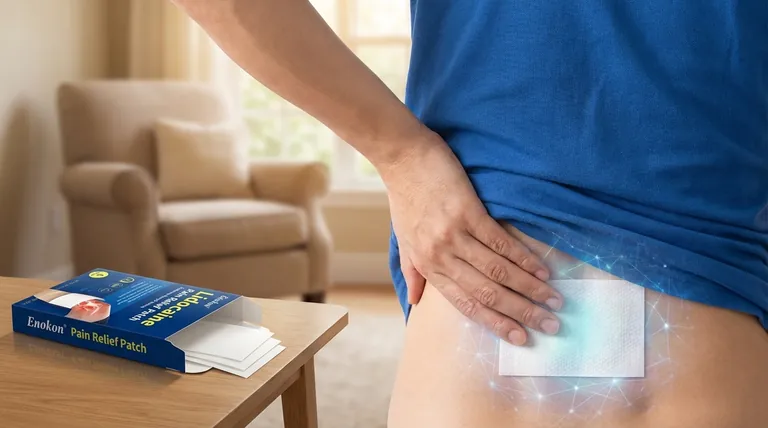
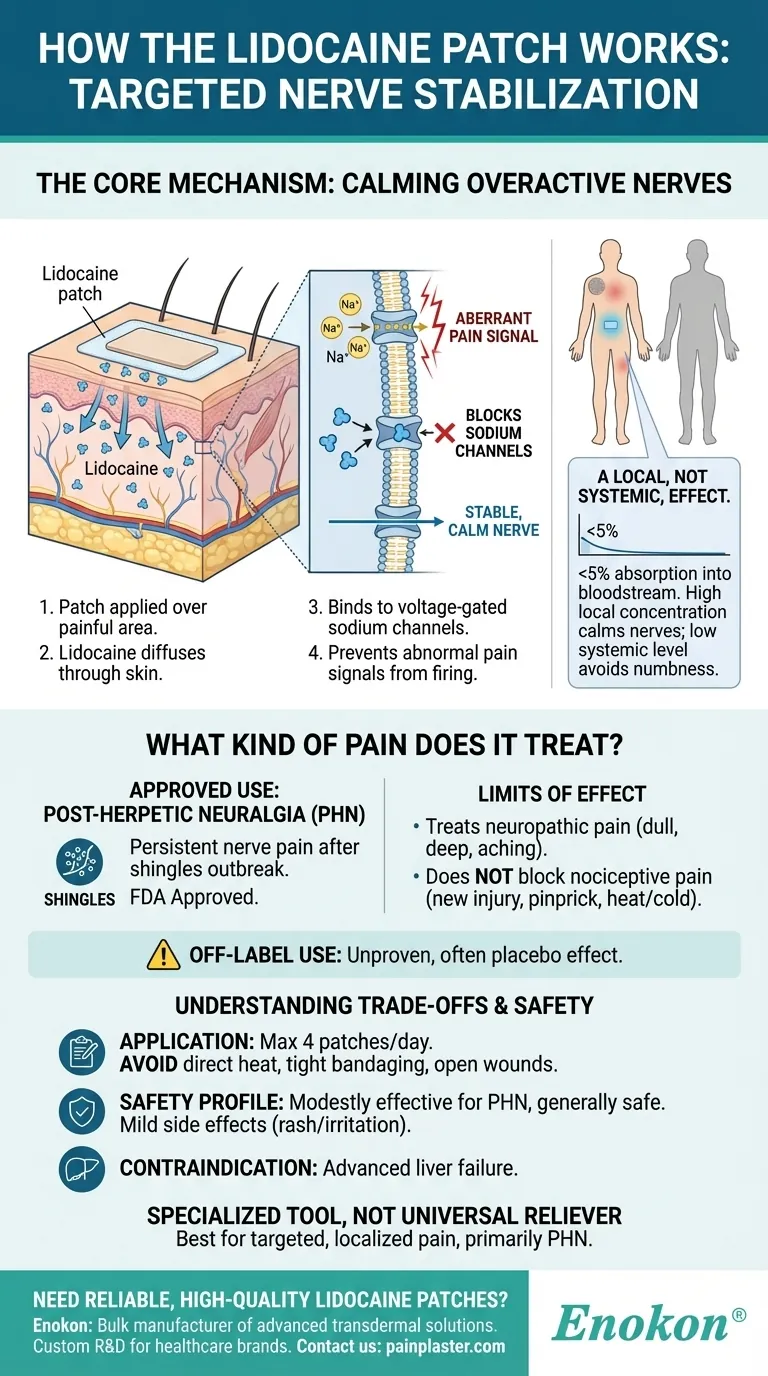
Upon application, the lidocaine patch works by delivering its active ingredient directly through the skin to calm hyper-excitable nerve fibers in a specific area. It achieves this by binding to and blocking voltage-gated sodium channels in the membranes of nerve cells, effectively preventing them from sending persistent pain signals to the brain.
The lidocaine patch is not a simple numbing agent that blocks all feeling. Instead, it acts as a targeted nerve stabilizer, reducing the aberrant, painful firing of damaged nerves directly under the patch with minimal absorption into the rest of the body.
The Core Mechanism: Calming Overactive Nerves
To understand how the patch provides relief, we must first look at how pain signals are transmitted.
Blocking the Sodium Channel Gateway
Nerve cells send signals, including pain, through a rapid electrical impulse. This impulse is generated when sodium ions rush into the nerve cell through specific openings called voltage-gated sodium channels.
Lidocaine acts as a gatekeeper. It physically blocks these channels, preventing sodium from entering the cell and stopping the electrical impulse from ever starting.
Targeting Aberrant Firing
The patch is particularly effective at quieting nerves that have been damaged, such as after a shingles infection. These damaged fibers can become overactive and fire pain signals spontaneously, a condition known as aberrant firing.
By blocking sodium channels, lidocaine specifically reduces this abnormal activity without significantly affecting the function of healthy nerves that transmit normal sensations.
A Local, Not Systemic, Effect
A critical feature of the patch is its targeted, local action. Less than 5% of the lidocaine is absorbed into the bloodstream.
This low level of systemic absorption is why patients do not feel numb under the patch. The concentration is just high enough to calm the targeted pain fibers but insufficient to cause the widespread numbness associated with local anesthetic injections.
What Kind of Pain Does It Actually Treat?
The patch is designed for a specific type of pain and has clear limitations.
The Approved Use: Post-Herpetic Neuralgia (PHN)
The U.S. FDA has approved the lidocaine patch specifically for the relief of pain associated with post-herpetic neuralgia (PHN)—the persistent nerve pain that can follow a shingles outbreak.
The Limits of Its Effect
The patch is designed to treat neuropathic (nerve-related) pain qualities like dull, deep, or aching pain.
It does not block nociceptive pain, which is the pain generated by a new injury. You will still feel a pinprick or a hot or cold stimulus in the area covered by the patch.
The Question of Off-Label Use
While the patch is widely used for other conditions like back pain, its effectiveness for these "off-label" uses remains unproven in rigorous studies.
For conditions other than PHN, reported benefits may largely reflect a placebo effect.
Understanding the Trade-offs and Safety
Before using the patch, it's essential to understand its practical limitations and safety profile.
Application and Safety Guidelines
Proper application is key to safety and effectiveness. A maximum of four patches can be applied per day to cover the painful region.
You must avoid applying direct heat sources like heating pads over the patch. Additionally, the area should not be bandaged tightly, and the patch should never be applied to open wounds or sores.
Efficacy vs. Placebo
For its approved use in PHN, the patch is considered a safe and modestly effective analgesic. For other pain syndromes, clinicians are urged to interpret reports of its effectiveness with caution due to the lack of strong supporting evidence.
Potential Side Effects
Adverse reactions are rare and typically mild, most often consisting of a topical rash or irritation at the application site.
However, the patch is contraindicated in individuals with advanced liver failure, as their body cannot effectively clear the small amount of lidocaine that is absorbed.
Making the Right Choice for Your Condition
The lidocaine patch is a specialized tool, not a universal pain reliever. Use these points to determine if it aligns with your goals.
- If you have diagnosed Post-Herpetic Neuralgia (PHN): The patch is an FDA-approved, safe, and recognized option for targeted, localized pain relief.
- If you are considering it for chronic back pain or other unapproved uses: Be aware that its effectiveness is not well-established, and any relief experienced may not be due to the drug's direct action.
- If your goal is to completely numb an area: This is the wrong tool; the patch is designed to modulate abnormal pain signals, not block all sensation.
Ultimately, the lidocaine patch provides a targeted approach to calming specific types of nerve pain directly at the source, but its true effectiveness is highly dependent on the underlying cause of your condition.
Summary Table:
| Mechanism Step | Key Action | Outcome |
|---|---|---|
| 1. Application | Patch is applied to the skin over the painful area. | Lidocaine is delivered directly to the site of nerve pain. |
| 2. Penetration | Active ingredient diffuses through the skin. | Targets hyper-excitable nerve fibers underneath the patch. |
| 3. Blocking | Binds to and blocks voltage-gated sodium channels on nerve cells. | Prevents the generation of abnormal pain signals. |
| 4. Relief | Reduces aberrant firing of damaged nerves. | Provides localized relief from neuropathic pain (e.g., PHN). |
Need a reliable, high-quality lidocaine patch for your patients or product line?
As Enokon, a bulk manufacturer of reliable transdermal patches and pain plasters, we provide healthcare and pharma distributors and brands with technically advanced solutions. Benefit from our expertise in custom R&D and development to create effective pain management products tailored to your market's needs.
Contact our experts today to discuss your requirements and how we can support your success.
Visual Guide
Related Products
- Lidocaine Hydrogel Pain Relief Patch for Pain Relief
- Menthol Gel Pain Relief Patch
- Icy Hot Menthol Medicine Pain Relief Patch
- Herbal Medicated Anti Diarrhea Patch for Digestive Relief
- Asthma Cough and Pain Relief Patch for Adults and Kids
People Also Ask
- How does the aqueous base in a lidocaine patch contribute to drug delivery? Unlocking Sustained Pain Relief Technology
- What are the advantages of topical anesthetics over invasive Lidocaine infiltration? Discover Safer, Scalable Relief
- Which pain patch is most effective for arthritis? Find the Best Relief for Your Joint Pain
- Will a GP routinely continue prescribing lidocaine patches after the initial period? Understanding Short-Term Pain Relief
- Why are lidocaine patches preferred over oral medications? Targeted Relief & Scale Your Brand with OEM R&D Solutions



















