
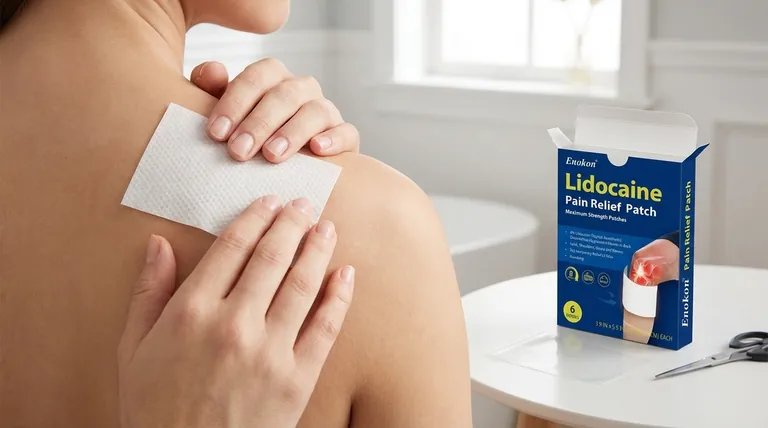
Administering a lidocaine patch is a straightforward process designed for targeted pain relief. The core procedure involves applying the patch directly over the painful area on clean, dry, and intact skin. The standard dosage is up to three patches worn simultaneously for a maximum of 12 hours within a 24-hour period, followed by a 12-hour rest period without any patches.
The key to both safety and effectiveness is proper application: the patch must be applied to healthy, unbroken skin for the prescribed duration—typically 12 hours on, 12 hours off—to deliver localized pain relief while minimizing risks.
Preparing the Application Site
Ensure Skin is Clean and Dry
Before application, the skin over the painful area must be thoroughly cleaned and dried. This ensures proper adhesion and allows the medication to be absorbed correctly.
Manage Hair Appropriately
If the area is hairy, the hair should be clipped with scissors. Do not shave the area, as shaving can cause small cuts and irritation that make the skin unsuitable for patch application.
Never Apply to Broken Skin
It is critical to apply the patch only to intact skin. Avoid areas with inflammation, infection, rashes, cuts, or open wounds like decubitus ulcers. Applying lidocaine to broken skin can lead to excessive absorption and potential side effects.
The Application Process: Step-by-Step
Cutting the Patch
The standard 10x14 cm patch can be cut to a smaller size to better fit the specific area of pain. This allows you to customize the application without wasting medication.
Applying the Adhesive
Remove the clear protective liner from the back of the patch. Apply the sticky side directly and firmly to the prepared skin, ensuring it makes full contact.
Hand Hygiene
Always wash your hands immediately after handling a lidocaine patch. This prevents you from accidentally transferring the medication to sensitive areas like your eyes, nose, or mouth.
Dosage and Duration: The Core Principles
Standard Dosing Protocol
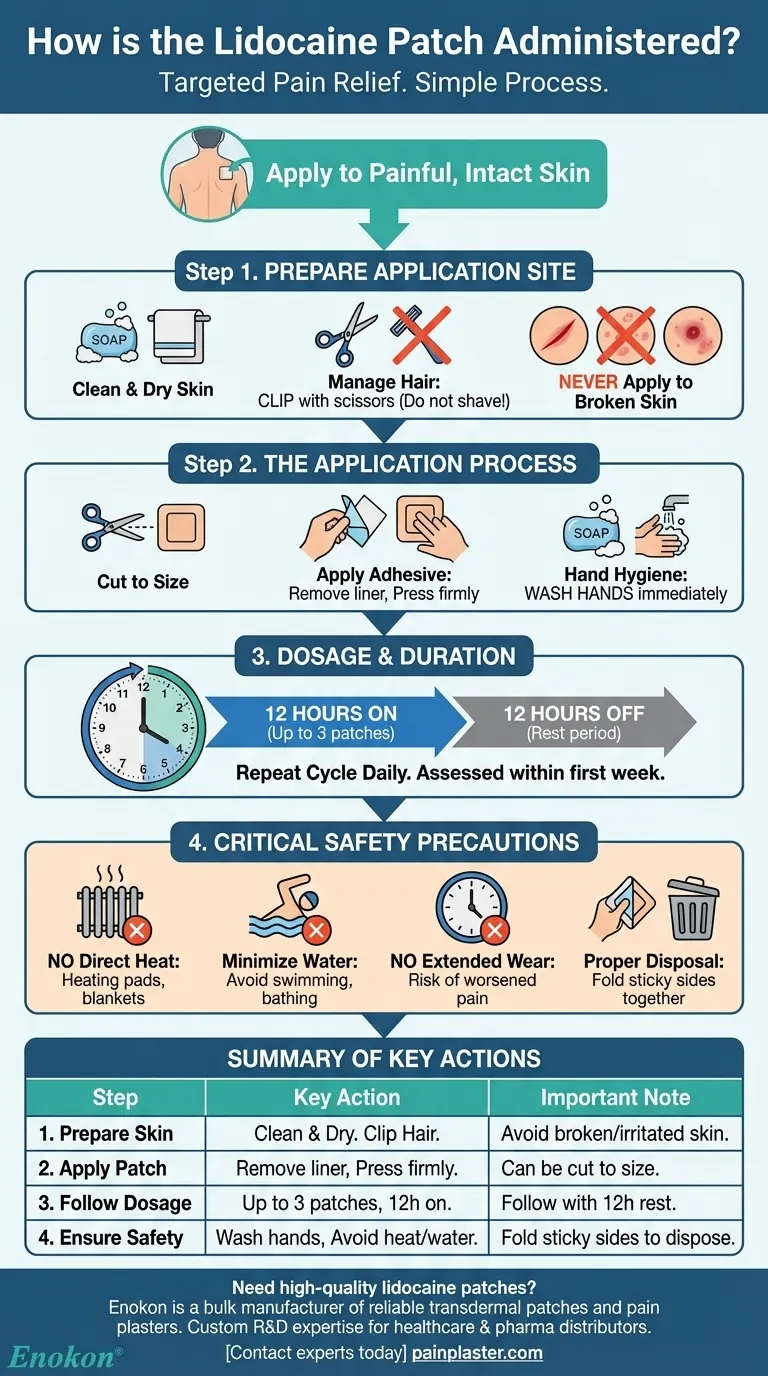
The most common regimen is applying up to three patches for 12 consecutive hours, followed by a 12-hour "off" period. This cycle is repeated every 24 hours.
Understanding Onset and Efficacy
The onset of pain relief typically occurs within a few hours of application. The overall effectiveness of the treatment can usually be assessed within the first week of use.
Extended Dosing Considerations
While some studies have shown that extended dosing (e.g., up to four patches for 24 hours) results in safe systemic lidocaine levels, this is outside of standard guidelines. Always follow the specific instructions from your healthcare provider.
Critical Safety Precautions and Trade-offs
Avoid Direct Heat Sources
Never apply direct heat, such as from a heating pad or electric blanket, over a lidocaine patch. Heat can increase the rate of lidocaine absorption, raising the risk of systemic side effects.
Minimize Water Exposure
The patch should be kept as dry as possible. Avoid activities like swimming or bathing while wearing it, as water can interfere with adhesion and medication delivery.
The Risk of Extended Wear
While tempting, wearing a patch for longer than prescribed can be counterproductive. Some patients report worsened pain during the "off" periods or after wearing a patch for more than 18 hours at a time.
Proper Disposal
After removing a patch, fold it in half with the sticky sides together. Dispose of it safely in household waste, keeping it out of reach of children and pets.
Making the Right Choice for Your Goal
- If your primary focus is maximizing pain relief: Adhere strictly to the "12 hours on, 12 hours off" schedule and apply the patch directly over the most painful area of intact skin.
- If your primary focus is ensuring safety: Never apply heat over the patch, avoid using it on broken or irritated skin, and always wash your hands thoroughly after application.
- If you are using it for off-label pain: Consult your healthcare provider and understand its efficacy is most proven for post-herpetic neuralgia, with benefits for other conditions being less certain.
Following these guidelines ensures you can use the lidocaine patch safely and effectively for localized pain management.
Summary Table:
| Step | Key Action | Important Note |
|---|---|---|
| 1. Prepare Skin | Clean and dry the painful area. | Clip hair; do not shave. Avoid broken or irritated skin. |
| 2. Apply Patch | Remove liner and press firmly onto skin. | Patch can be cut to size for a custom fit. |
| 3. Follow Dosage | Wear up to 3 patches for 12 hours. | Follow with a 12-hour rest period. Do not exceed duration. |
| 4. Ensure Safety | Wash hands after application. | Avoid heat and keep the patch dry. Fold used patch sticky-sides together for disposal. |
Need a reliable supply of high-quality lidocaine patches? As Enokon, a bulk manufacturer of reliable transdermal patches and pain plasters, we provide healthcare and pharma distributors and brands with custom R&D and development expertise. Let us help you deliver effective pain management solutions to your customers. Contact our experts today to discuss your needs.
Visual Guide
Related Products
- Lidocaine Hydrogel Pain Relief Patch for Pain Relief
- Menthol Gel Pain Relief Patch
- Herbal Medicated Anti Diarrhea Patch for Digestive Relief
- Icy Hot Menthol Medicine Pain Relief Patch
- Asthma Cough and Pain Relief Patch for Adults and Kids
People Also Ask
- How does the aqueous base in a lidocaine patch contribute to drug delivery? Unlocking Sustained Pain Relief Technology
- What are the advantages of topical anesthetics over invasive Lidocaine infiltration? Discover Safer, Scalable Relief
- Which pain patch is most effective for arthritis? Find the Best Relief for Your Joint Pain
- Will a GP routinely continue prescribing lidocaine patches after the initial period? Understanding Short-Term Pain Relief
- Why are lidocaine patches preferred over oral medications? Targeted Relief & Scale Your Brand with OEM R&D Solutions



















