
For a typical acute injury, lidocaine patches are most often prescribed for a short duration, usually up to 10 days. This timeframe is based on the expectation that pain from most minor injuries will resolve within that period.
The limited prescription length of a lidocaine patch is not arbitrary; it reflects its intended use as a tool for short-term, localized pain relief and underscores the importance of a mandatory "patch-free" interval each day for safety.
The Role of Lidocaine Patches in Pain Management
A lidocaine patch is a topical analgesic, meaning it delivers medication directly through the skin to the painful area. Understanding its specific function is key to using it correctly.
How It Works
The patch contains lidocaine, a local anesthetic. It works by blocking nerve signals in the skin, temporarily numbing the area and interrupting the pain signals being sent to your brain.
FDA-Approved vs. Off-Label Use
The FDA has officially approved the 5% lidocaine patch for treating the nerve pain that can follow a shingles infection, known as postherpetic neuralgia (PHN).
However, doctors frequently prescribe it "off-label" for other conditions like acute back pain or pain from minor injuries where localized relief is needed.
Prescription vs. Over-the-Counter (OTC)
Prescription patches typically contain 5% lidocaine, while over-the-counter versions contain a lower concentration, usually 4% lidocaine. This difference in strength affects how long you can wear them.
The Critical 24-Hour Application Cycle
The duration of a prescription is only one part of the timing. The daily application schedule is the most important factor for safe use.
The 12-Hours-On, 12-Hours-Off Rule
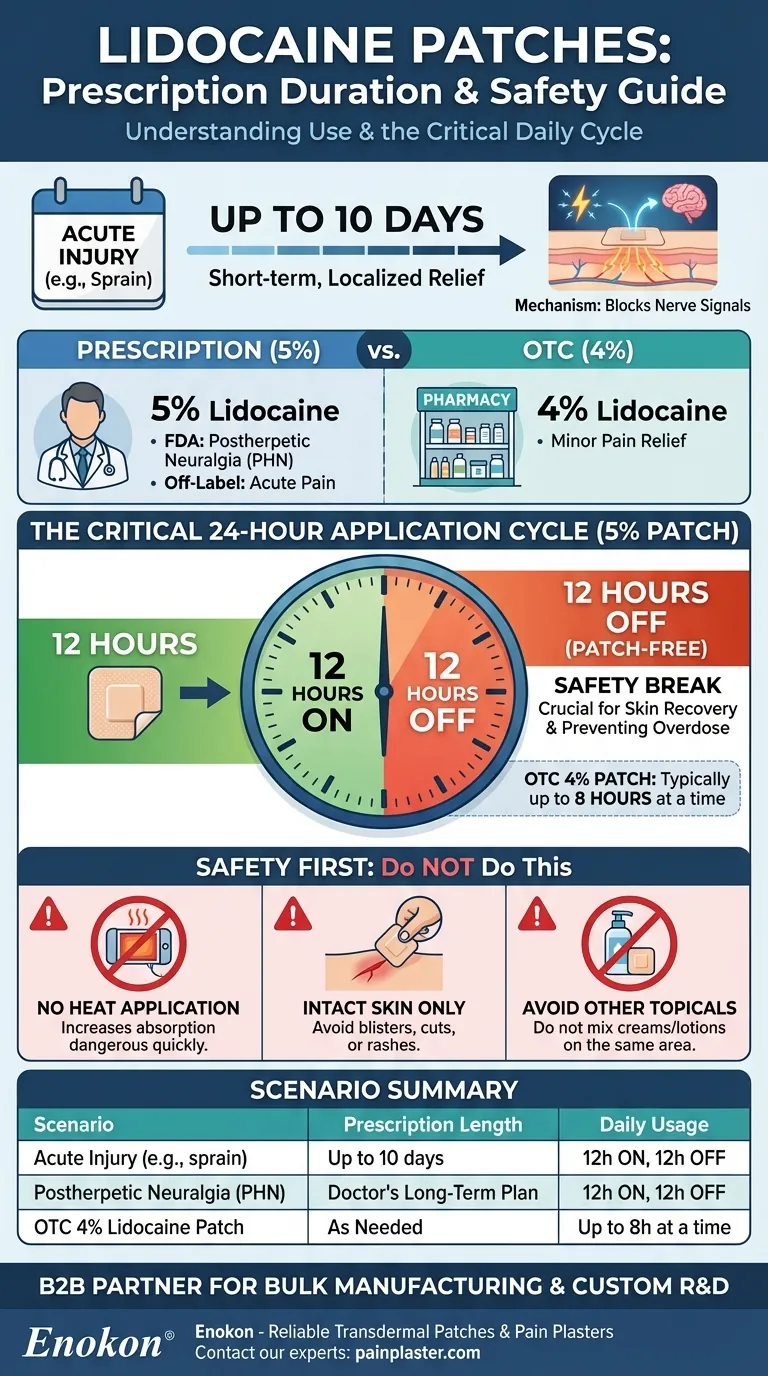
For the prescription 5% patch, the standard directive is to wear one patch for no more than 12 hours within a 24-hour period.
This must be followed by a mandatory 12-hour "patch-free" interval.
Why the "Patch-Free" Time is Non-Negotiable
This 12-hour break is a crucial safety measure. It allows your skin to recover and, more importantly, reduces the risk of too much lidocaine being absorbed into your bloodstream, which can lead to serious side effects.
OTC Patch Guidelines
The lower-strength 4% OTC patches have different rules. They can typically be worn for up to 8 hours at a time, and you may be able to apply up to three patches per day, but always follow the specific product's instructions.
Common Pitfalls and Safety Considerations
Using a lidocaine patch seems simple, but improper use can reduce its effectiveness and increase risks. Adhering to proper protocol is essential.
Do Not Apply Heat
Never use a heating pad, electric blanket, or other heat source over a lidocaine patch. Heat increases blood flow to the skin, which can cause your body to absorb a dangerous amount of the medication too quickly.
Apply Only to Intact Skin
The patch should only be applied to clean, dry, and healthy skin. Do not place it over blisters, cuts, rashes, or scratches, as this can increase systemic absorption.
Avoid Other Topical Products
Do not apply other creams, lotions, or topical pain relievers to the same area where you are wearing a patch unless explicitly told to by your doctor.
How to Apply This to Your Goal
The right way to use a lidocaine patch depends entirely on the type of pain you are treating.
- If your primary focus is managing pain from a recent, minor injury: A short course of patches, often for 10 days or less, can provide targeted relief while your body heals.
- If your primary focus is treating post-shingles nerve pain (PHN): Follow your doctor's long-term plan precisely, as this is an FDA-approved use, but be aware that other treatments like capsaicin may also be recommended.
- If your primary focus is managing chronic back pain: Use lidocaine patches only under medical guidance, as evidence for their long-term effectiveness is limited and a broader treatment plan is usually necessary.
Ultimately, using lidocaine patches safely and effectively comes down to understanding they are a temporary tool for localized pain, not a cure-all.
Summary Table:
| Application Scenario | Typical Prescription Length | Daily Usage Guideline |
|---|---|---|
| Acute Injury (e.g., sprain) | Up to 10 days | 12 hours on, 12 hours off |
| Postherpetic Neuralgia (PHN) | As per doctor's long-term plan | 12 hours on, 12 hours off |
| OTC 4% Lidocaine Patch | As needed for pain | Up to 8 hours at a time |
Need a reliable supplier for your lidocaine patch needs?
As Enokon, a bulk manufacturer of reliable transdermal patches and pain plasters, we partner with healthcare and pharmaceutical distributors and brands. Benefit from our technical expertise for custom R&D and development to create high-quality, safe, and effective topical pain relief solutions.
Contact our experts today to discuss your requirements.
Visual Guide
Related Products
- Lidocaine Hydrogel Pain Relief Patch for Pain Relief
- Capsaicin Chili Medicated Pain Relief Patches
- Menthol Gel Pain Relief Patch
- Icy Hot Menthol Medicine Pain Relief Patch
- Herbal Medicated Anti Diarrhea Patch for Digestive Relief
People Also Ask
- How does the aqueous base in a lidocaine patch contribute to drug delivery? Unlocking Sustained Pain Relief Technology
- What are the advantages of topical anesthetics over invasive Lidocaine infiltration? Discover Safer, Scalable Relief
- Which pain patch is most effective for arthritis? Find the Best Relief for Your Joint Pain
- Why are lidocaine patches preferred over oral medications? Targeted Relief & Scale Your Brand with OEM R&D Solutions
- How should lidocaine patches be applied for optimal use? Maximize Pain Relief with Proper Application



















