
Properly storing a transdermal or topical patch is critical to ensuring its safety and effectiveness. Patches must be stored at a controlled room temperature, typically between 59-86°F (15-30°C), in their original sealed container or pouch. This protects them from the damaging effects of heat, moisture, and direct light, which can degrade both the active medication and the adhesive.
Storing a patch correctly is not just about keeping it somewhere convenient; it's about maintaining the integrity of a sophisticated medical delivery system. From the moment you receive it until you safely dispose of it, your goal is to protect its chemical stability and adhesive function.
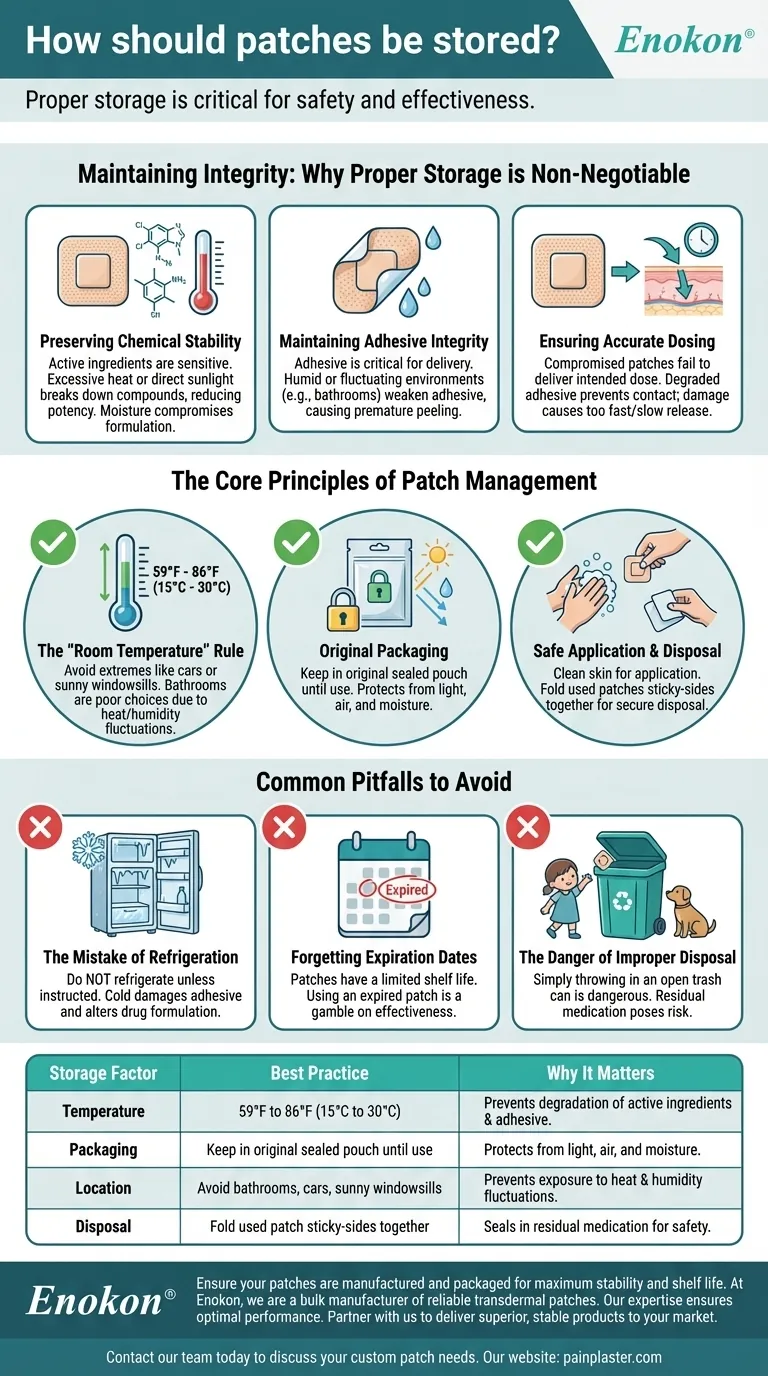
Why Proper Storage is Non-Negotiable
A patch is more than just a sticker with medicine; it's engineered to release a specific dose over a set period. Environmental factors can disrupt this design, leading to treatment failure or safety risks.
Preserving Chemical Stability
The active ingredients in a patch are sensitive. Exposure to excessive heat or direct sunlight can break down the chemical compounds, reducing the patch's potency.
Moisture is another significant threat, as it can compromise the drug formulation and the patch's protective layers.
Maintaining Adhesive Integrity
The adhesive is a critical component of the delivery system. It must keep the patch in firm contact with the skin to ensure the medication is absorbed correctly.
Storing a patch in a humid environment, like a bathroom, or a place with fluctuating temperatures can weaken the adhesive, causing the patch to peel off prematurely.
Ensuring Accurate Dosing
A compromised patch may fail to deliver its medication as intended. Degraded adhesive can prevent proper skin contact, while damage to the patch's matrix could cause it to release its contents too quickly or not at all.
The Core Principles of Patch Management
Following a few simple, consistent rules will protect the patch from the point of storage through application and disposal.
The "Room Temperature" Rule
Most patches specify a storage range of 59°F to 86°F (15°C to 30°C). Avoid storing them in places with temperature extremes, such as a car's glove compartment or on a sunny windowsill.
The bathroom medicine cabinet is also a poor choice due to constant fluctuations in heat and humidity from showers.
The Importance of Original Packaging
Always keep patches in their original sealed pouch or container until the moment you are ready to apply one. This packaging is specifically designed to protect it from light, air, and moisture.
Opening a pouch prematurely exposes the patch to environmental factors that can begin to degrade it immediately.
Safe Application and Disposal
Before application, wash your hands and ensure the skin is clean, dry, and unbroken. After the designated time, remove the used patch carefully.
Even a used patch contains a significant amount of residual medication, posing a risk to children and pets.
Common Pitfalls to Avoid
Simple mistakes in storage or disposal can undermine the patch's effectiveness and create serious safety hazards.
The Mistake of Refrigeration
Unless you are explicitly instructed to do so by a pharmacist or the manufacturer, do not refrigerate patches. Cold temperatures can damage the adhesive and alter the drug formulation, leading to improper adhesion and incorrect dosing.
Forgetting About Expiration Dates
Like all medications, patches have a limited shelf life. The expiration date is a guarantee of the product's stability and potency. Using an expired patch is a gamble on its effectiveness.
The Danger of Improper Disposal
Simply throwing a used patch in an open trash can is dangerous. The remaining active ingredient can be absorbed if touched or ingested by a child or pet.
The safest method is to fold the patch in half with the sticky sides together, which seals in most of the remaining medication. Then, dispose of it in a secure location.
Making the Right Choice for Your Goal
Adhering to best practices ensures you receive the full therapeutic benefit while keeping your household safe.
- If your primary focus is maximum effectiveness: Always store patches within the recommended temperature range and in their sealed, original packaging until the moment of use.
- If your primary focus is safety: Make secure disposal a priority by folding used patches sticky-side-in and placing them where children and pets cannot access them.
- If you are traveling: Keep patches in your carry-on luggage to protect them from the extreme temperatures common in a car's trunk or an airplane's cargo hold.
By treating a patch as the precise medical instrument it is, you ensure it can do its job safely and effectively.
Summary Table:
| Storage Factor | Best Practice | Why It Matters |
|---|---|---|
| Temperature | 59°F to 86°F (15°C to 30°C) | Prevents degradation of active ingredients and adhesive. |
| Packaging | Keep in original sealed pouch until use | Protects from light, air, and moisture. |
| Location | Avoid bathrooms, cars, and sunny windowsills | Prevents exposure to heat and humidity fluctuations. |
| Disposal | Fold used patch sticky-sides together before disposal | Seals in residual medication for safety. |
Ensure your patches are manufactured and packaged for maximum stability and shelf life.
At Enokon, we are a bulk manufacturer of reliable transdermal patches and pain plasters for healthcare and pharmaceutical distributors and brands. Our technical expertise in custom R&D and development means every patch is engineered for optimal performance from our facility to your patient.
Partner with us to deliver superior, stable products to your market. Contact our team today to discuss your custom patch needs.
Visual Guide
Related Products
- Far Infrared Heat Pain Relief Patches Transdermal Patches
- Silicone Scar Sheets Patch Transdermal Drug Patch
- Icy Hot Menthol Medicine Pain Relief Patch
- Menthol Gel Pain Relief Patch
- Mugwort Wormwood Pain Relief Patch for Neck Pain
People Also Ask
- Why is the selection of matrix materials critical when developing customized transdermal patches? Optimize Efficacy
- What role does a skin tolerance scoring system play in the safety evaluation of transdermal patches? Key Safety Metrics
- How does high-purity far-infrared ceramic powder contribute to the efficacy of far-infrared physical therapy patches?
- Why is an optical microscope used for the quality assessment of transdermal patches? Ensure Safety & Matrix Integrity
- What is the purpose of vacuum filtration for polymer solutions? Ensuring Quality in Transdermal Patch Manufacturing



















