The primary advantage of oxybutynin chloride topical gel is its significantly improved tolerability compared to the oral pill form. This is achieved by delivering the medication through the skin, which changes how the body processes it and reduces the formation of a metabolite responsible for common anticholinergic side effects like dry mouth.
The core benefit of topical oxybutynin is not about increased effectiveness, but about a smarter delivery system. By bypassing the liver's "first-pass metabolism," the gel minimizes the side effects that often cause patients to stop treatment, leading to better overall outcomes and quality of life.
How Oral vs. Topical Delivery Changes Everything
To understand the gel's advantage, you must first understand the challenge with the traditional pill form. The key difference lies in the journey the medication takes to get into your bloodstream.
The "First-Pass" Problem with Oral Pills
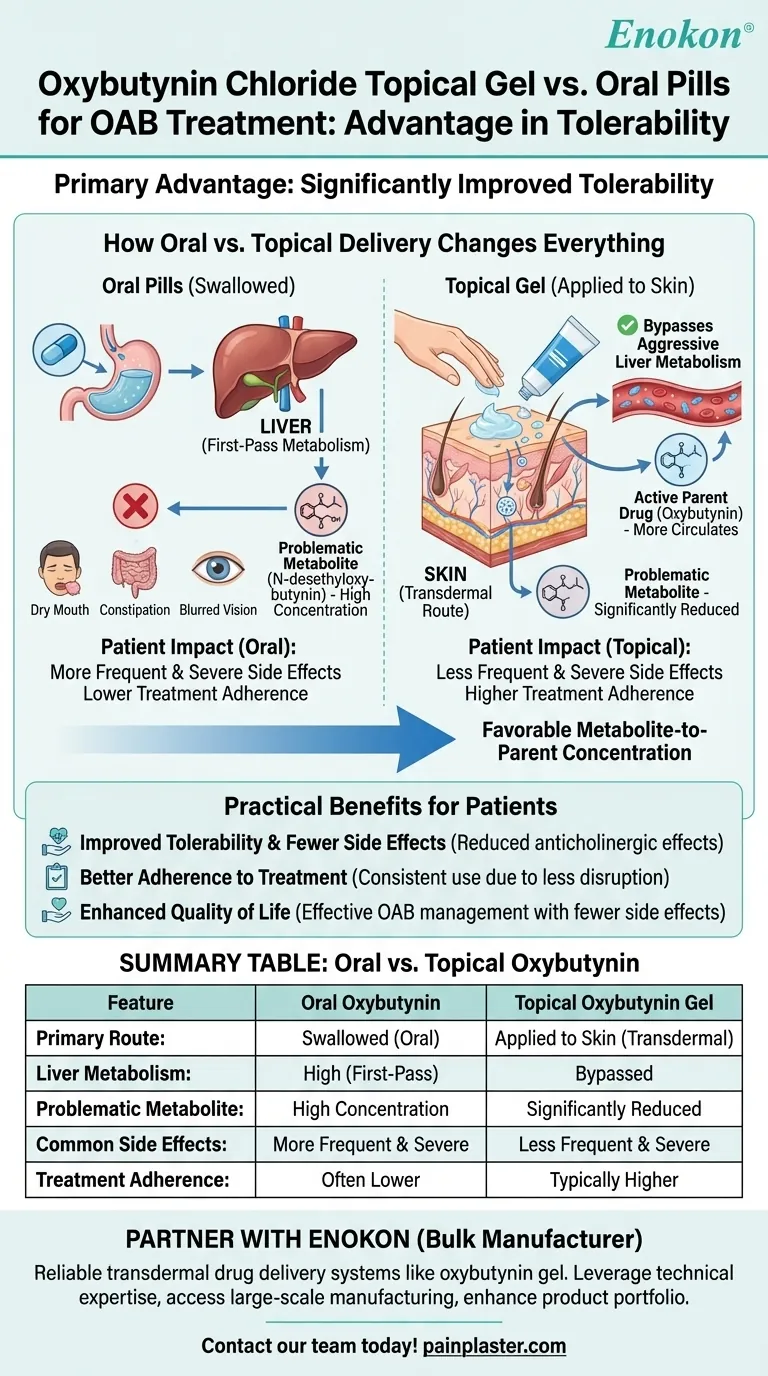
When you swallow an oxybutynin pill, it is absorbed through your digestive system and travels directly to the liver. This is known as first-pass metabolism.
The liver immediately breaks down a significant portion of the oxybutynin into a different compound, a metabolite known as N-desethyloxybutynin.
This metabolite is strongly associated with the uncomfortable anticholinergic side effects—such as severe dry mouth, constipation, and blurred vision—that are common with the oral form of the drug.
The Topical Solution: Bypassing the Liver
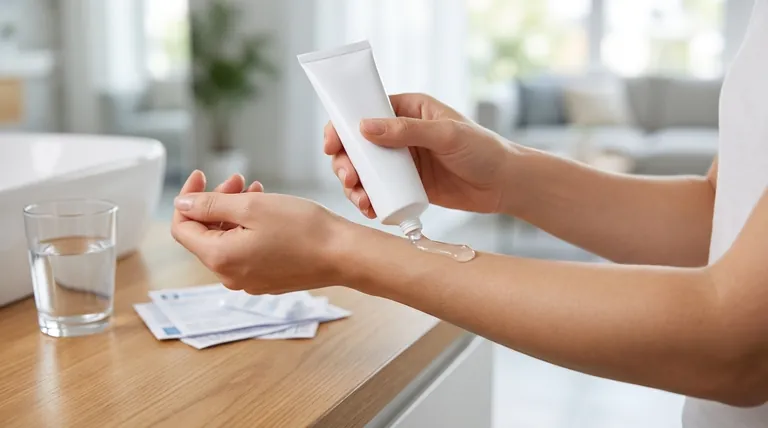
Oxybutynin topical gel is absorbed directly through the skin and into the bloodstream. This transdermal route completely bypasses the initial, aggressive metabolism by the liver.
As a result, more of the active parent drug (oxybutynin) circulates in the body, and far less of the problematic metabolite is created.
This creates what medical literature calls a "favorable metabolite-to-parent plasma concentration," which is the direct mechanism behind the gel's superior tolerability.
The Practical Impact for Patients
This fundamental difference in metabolism translates into tangible benefits for individuals being treated for Overactive Bladder (OAB).
Improved Tolerability and Fewer Side Effects
By reducing the concentration of the side-effect-causing metabolite, patients using the topical gel are much less likely to experience the classic anticholinergic side effects that make the oral version difficult to take long-term.
Better Adherence to Treatment
When a medication has fewer disruptive side effects, patients are far more likely to use it consistently as prescribed. This adherence is critical for effectively managing chronic conditions like OAB.
Enhanced Quality of Life
The goal of OAB treatment is not just to reduce urinary urgency and frequency, but to improve overall quality of life. By providing an effective treatment with a more tolerable side effect profile, the topical gel helps achieve both objectives.
Making the Right Choice for Your Treatment
Both oral and topical oxybutynin are effective at treating the symptoms of OAB. The decision between them is almost entirely about balancing efficacy with side effects and personal preference.
- If your primary focus is minimizing side effects: The topical gel is the clear choice, as it is specifically designed to reduce the metabolite that causes issues like dry mouth.
- If your primary focus is proven effectiveness: Both formulations work well to control OAB symptoms, so the choice can be guided by your sensitivity to side effects.
- If your primary focus is convenience: This is subjective. Some may find a daily pill simpler, while others may prefer a once-daily gel application to avoid systemic side effects.
Ultimately, the topical gel provides a crucial alternative for patients who cannot tolerate or wish to avoid the side effects of oral oxybutynin.
Summary Table:
| Feature | Oral Oxybutynin | Topical Oxybutynin Gel |
|---|---|---|
| Primary Route | Swallowed (Oral) | Applied to Skin (Transdermal) |
| Liver Metabolism | High (First-Pass) | Bypassed |
| Problematic Metabolite (N-desethyloxybutynin) | High Concentration | Significantly Reduced |
| Common Side Effects (e.g., Dry Mouth) | More Frequent & Severe | Less Frequent & Severe |
| Treatment Adherence | Often Lower Due to Side Effects | Typically Higher |
Are you a healthcare distributor or brand looking for a reliable transdermal patch or topical gel partner?
At Enokon, we are a bulk manufacturer specializing in the development and production of high-quality transdermal drug delivery systems, like the oxybutynin gel discussed here. We understand the critical importance of delivery mechanisms for patient outcomes.
Partner with us to:
- Leverage our technical expertise in custom R&D and formulation development.
- Access reliable, large-scale manufacturing for your topical pain plasters and medicated patches.
- Enhance your product portfolio with patient-friendly solutions that improve adherence.
Let's discuss how we can support your next project. Contact our team today for a consultation!
Visual Guide
Related Products
- Menthol Gel Pain Relief Patch
- Herbal Pain Relief Cream Pain Relieving Creams
- Icy Hot Menthol Medicine Pain Relief Patch
- Asthma Cough and Pain Relief Patch for Adults and Kids
- Natural Herbal Tube Cream for Pain Relief Analgesic Cream
People Also Ask
- How do pain relief patches compare to other pain relief methods? Discover Targeted, Long-Lasting Relief
- How effective are pain relief patches for muscle pain? Target Localized Pain with Transdermal Delivery
- Who should consult a healthcare professional before using pain relief patches? Ensure Your Safety with Medical Advice
- What are pain relief patches and how do they work? Discover Non-Invasive Pain Management
- Can pregnant women use pain relief patches? Your Essential Guide to Safe Pain Management