
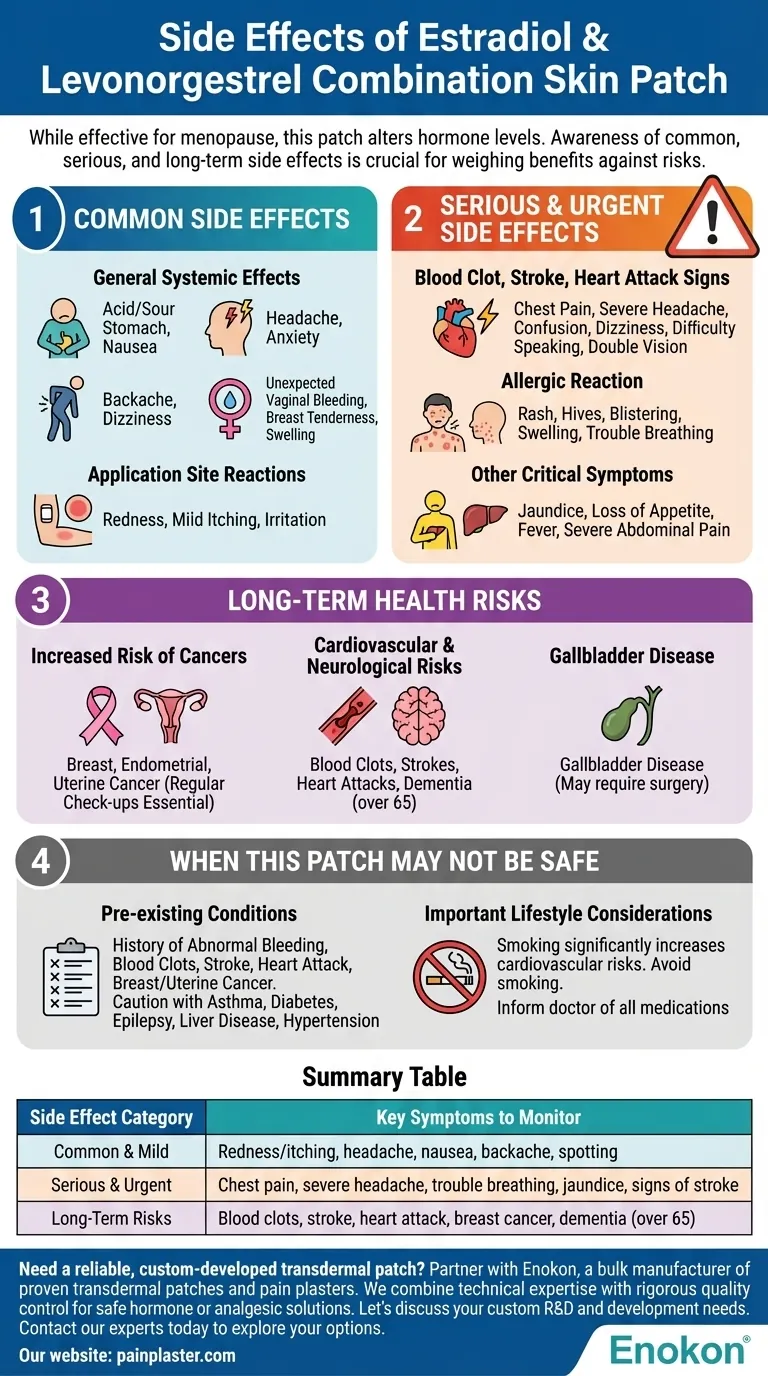
The most common side effects of the estradiol and levonorgestrel combination skin patch include application site reactions like redness or itching, as well as systemic effects such as headache, nausea, backache, and vaginal bleeding. While many side effects are mild, it is critical to be aware of serious symptoms that require immediate medical attention.
While this patch is effective for managing menopause symptoms, it fundamentally alters your body's hormone levels. Understanding this trade-off is key, as the benefits must be carefully weighed against a known increase in risk for serious conditions like blood clots, stroke, and certain cancers.

A Closer Look at Common Side Effects
Many users experience mild to moderate side effects as their body adjusts to the hormones. These are typically not life-threatening but should be monitored.
General Systemic Effects
Common side effects can affect your entire system. These often include acid or sour stomach, nausea, headache, anxiety, backache, and dizziness.
Some women also report unexpected vaginal bleeding or spotting, breast tenderness, and swelling in the hands or feet.
Application Site Reactions
Because the medication is delivered through a skin patch, local reactions are possible. You may notice redness, mild itching, or irritation directly where the patch is applied.
Recognizing Serious and Urgent Side Effects
Certain side effects are signs of a dangerous medical event and require immediate professional help. Do not wait for these symptoms to resolve on their own.
Signs of a Blood Clot, Stroke, or Heart Attack
Seek emergency medical attention if you experience chest pain, a severe headache, confusion, dizziness, difficulty speaking, or double vision. These can be indicators of a stroke or heart attack.
Signs of an Allergic Reaction
A severe allergic reaction is rare but possible. Symptoms include a widespread rash, hives, blistering, severe dizziness, swelling of the face, tongue, or throat, and trouble breathing.
Other Critical Symptoms
Immediate medical care is also necessary if you develop symptoms of liver problems, such as jaundice (yellowing of the skin or eyes), loss of appetite, fever, or severe abdominal pain.
Understanding the Long-Term Health Risks
Using combination hormone therapy like this patch is associated with an increased risk of developing several serious health conditions over time. This is the most important aspect to discuss with your doctor.
Increased Risk of Cancers
Long-term use may increase the risk of developing breast cancer, endometrial cancer, and uterine cancer. Regular check-ups and mammograms are essential.
Cardiovascular and Neurological Risks
This medication is known to elevate the risk of blood clots, strokes, and heart attacks, particularly in women with other risk factors.
Furthermore, studies have shown that for women over 65, there may be an increased risk of developing dementia.
Gallbladder Disease
Users of hormone therapy may have a higher likelihood of developing gallbladder disease that requires surgery.
When This Patch May Not Be Safe
This medication is not appropriate for everyone. Certain pre-existing conditions and lifestyle factors can make its use unacceptably dangerous.
Pre-existing Medical Conditions
You should not use this patch if you have a history of abnormal vaginal bleeding, blood clots, stroke, heart attack, or cancers of the breast or uterus.
Caution is also required for those with asthma, diabetes, epilepsy, liver disease, or hypertension, as the patch could worsen these conditions.
Important Lifestyle Considerations
Smoking significantly increases the risk of serious cardiovascular side effects like blood clots and stroke while using this patch. It is strongly advised to avoid smoking. Always inform your doctor of all other medications and supplements you are taking to prevent harmful interactions.
Making the Right Choice for Your Goal
Your personal health profile and goals are central to determining if this medication is the right choice. This decision must be made in close partnership with your healthcare provider.
- If your primary focus is managing severe hot flashes: The patch can be highly effective, but you must weigh this relief against the serious long-term risks and commit to regular medical monitoring.
- If your primary focus is preventing postmenopausal osteoporosis: This is an approved use, but you should discuss if the increased risk of cancer and cardiovascular events is an acceptable trade-off compared to other osteoporosis treatments.
- If you have a history of the conditions mentioned above: This medication is likely not a safe option, and you should explore non-hormonal alternatives with your doctor.
Ultimately, making an informed decision requires a transparent conversation about your personal health risks and treatment priorities.
Summary Table:
| Side Effect Category | Key Symptoms to Monitor |
|---|---|
| Common & Mild | Redness/itching at application site, headache, nausea, backache, vaginal spotting. |
| Serious & Urgent | Chest pain, severe headache, trouble breathing, jaundice, signs of a stroke. |
| Long-Term Risks | Increased risk of blood clots, stroke, heart attack, breast cancer, dementia (over 65). |
Need a reliable, custom-developed transdermal patch? Partner with Enokon, a bulk manufacturer of proven transdermal patches and pain plasters. We combine technical expertise with rigorous quality control to deliver safe and effective hormone or analgesic solutions for healthcare and pharma brands. Let's discuss your custom R&D and development needs.
Contact our experts today to explore your options
Visual Guide
Related Products
- Menthol Gel Pain Relief Patch
- Icy Hot Menthol Medicine Pain Relief Patch
- Heating Pain Relief Patches for Menstrual Cramps
- Cooling Fever Patches Color Change Cold Fever Patch
- Silicone Scar Sheets Patch Transdermal Drug Patch
People Also Ask
- How do pain relief patches compare to other pain relief methods? Discover Targeted, Long-Lasting Relief
- How effective are pain relief patches for muscle pain? Target Localized Pain with Transdermal Delivery
- Who should consult a healthcare professional before using pain relief patches? Ensure Your Safety with Medical Advice
- What are some common applications of pain relief patches? Effective Relief for Muscle & Joint Pain
- What are pain relief patches and how do they work? Discover Non-Invasive Pain Management









