
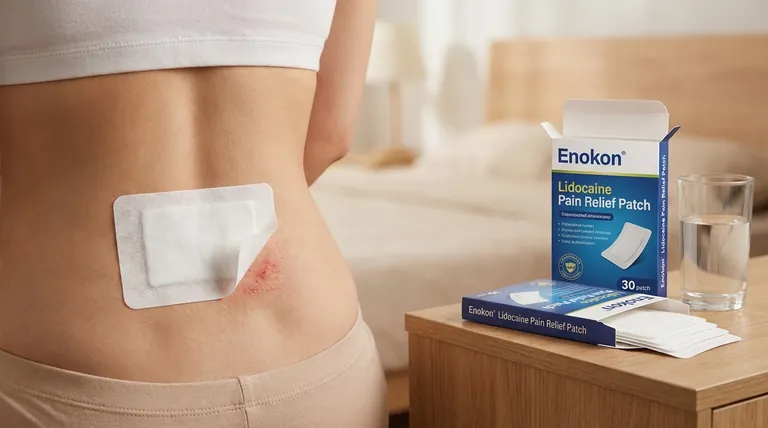
The most common localized skin reactions from a lidocaine patch are typically mild and temporary, manifesting as redness, itching, burning, or swelling directly at the application site. These effects are generally expected and tend to resolve on their own shortly after the patch is removed.
While minor skin irritation at the patch site is a common and manageable side effect, the critical skill is learning to distinguish these benign reactions from the rare but serious signs of a true allergic reaction or systemic toxicity.
Deconstructing Common Skin Reactions
When you apply a lidocaine patch, the medication and the adhesive interact with your skin. This can lead to several predictable, localized responses.
Irritation and Redness (Erythema)
This is the most frequent reaction. The skin under and around the patch may appear red or discolored, which is a simple sign of irritation from the product's components.
Burning or Stinging Sensations
A mild burning or stinging feeling can sometimes occur when the patch is first applied. This sensation is usually short-lived and subsides as your skin adjusts.
Itching and Discomfort (Pruritus)
Itching is another very common side effect. It is often a direct result of the skin irritation caused by the adhesive or the medication itself.
Swelling, Bumps, or Blisters
Less frequently, you might notice localized swelling, small bumps, or even blisters. While these are more pronounced than simple redness, they are typically confined to the patch area and resolve after discontinuation.
Understanding the Trade-offs: Mild vs. Serious Reactions
Recognizing the difference between a normal, localized side effect and a more significant problem is essential for using lidocaine patches safely.
The Profile of a Typical Reaction
A common, expected reaction is strictly localized to the patch area, mild to moderate in intensity, and temporary, disappearing after the patch is removed.
Warning Signs of an Allergic Reaction
An allergic reaction is a systemic issue, not just a local one. Seek immediate medical attention if you experience symptoms like widespread hives or rash, swelling (especially of the face, lips, or throat), hoarseness, or difficulty breathing or swallowing.
Symptoms of Systemic Toxicity
Absorbing too much lidocaine is rare but serious. Emergency symptoms include severe dizziness or fainting, confusion, nausea, unusual weakness, or a rapid pulse. This requires immediate medical help.
How to Proactively Manage Skin Irritation
You can take simple steps to minimize the most common side effects and improve your experience.
Rotate Application Sites
The most effective strategy is to rotate where you place the patch. Avoid applying a new patch to the same spot of skin repeatedly to give the area time to recover.
Clean and Moisturize Skin
After you remove a patch, gently clean the skin. Applying a simple, fragrance-free moisturizer can help soothe any residual irritation.
Consult a Professional
If local irritation is persistent, worsens over time, or becomes severe, stop using the patch and consult your doctor. It may indicate a sensitivity that requires an alternative pain management strategy.
Making the Right Choice for Your Situation
Your response to any side effect should be guided by its severity and location.
- If your primary focus is managing mild redness or itching: This is a common reaction that can often be managed by rotating patch sites and moisturizing after use.
- If your primary focus is addressing persistent or blistering skin: Discontinue use and consult your healthcare provider, as this indicates a more significant sensitivity.
- If your primary focus is responding to hives, swelling, or breathing issues: This signals a potential allergic reaction, and you must seek immediate medical attention.
Understanding the difference between expected irritation and serious warning signs empowers you to use lidocaine patches both safely and effectively.
Summary Table:
| Common Reaction | Description | Typical Severity |
|---|---|---|
| Redness (Erythema) | Skin discoloration under/around the patch from irritation. | Mild to Moderate |
| Itching (Pruritus) | Discomfort caused by the adhesive or medication. | Mild to Moderate |
| Burning/Stinging | Sensation often occurring upon initial application. | Mild, usually temporary |
| Swelling/Blisters | Less frequent, localized response. | Moderate, requires monitoring |
Need a reliable, skin-friendly transdermal patch?
At Enokon, we are a bulk manufacturer of reliable transdermal patches and pain plasters for healthcare and pharma distributors and brands. Our technical expertise ensures formulations that prioritize patient comfort and minimize skin irritation.
Benefit from our custom R&D and development services to create the ideal patch for your needs.
Contact our experts today to discuss your project and discover how we can support your brand with high-quality, effective transdermal solutions.
Visual Guide

Related Products
- Lidocaine Hydrogel Pain Relief Patch for Pain Relief
- Menthol Gel Pain Relief Patch
- Herbal Medicated Anti Diarrhea Patch for Digestive Relief
- Icy Hot Menthol Medicine Pain Relief Patch
- Asthma Cough and Pain Relief Patch for Adults and Kids
People Also Ask
- How does the aqueous base in a lidocaine patch contribute to drug delivery? Unlocking Sustained Pain Relief Technology
- What are the advantages of topical anesthetics over invasive Lidocaine infiltration? Discover Safer, Scalable Relief
- Which pain patch is most effective for arthritis? Find the Best Relief for Your Joint Pain
- Will a GP routinely continue prescribing lidocaine patches after the initial period? Understanding Short-Term Pain Relief
- Why are lidocaine patches preferred over oral medications? Targeted Relief & Scale Your Brand with OEM R&D Solutions



















