
Lidocaine transdermal patches are primarily available in three strengths: 5%, 4%, and 1.8%. These formulations are designed as patches or topical systems that adhere to the skin to deliver medication directly to the site of pain over a specific period.
The key distinction lies between prescription and over-the-counter (OTC) options. While the percentage strengths differ, the most critical factors for safe use are adhering to the maximum number of patches and the strict 12-hour application limit to avoid systemic toxicity.
Understanding Lidocaine Patch Formulations
Lidocaine patches work by delivering a local anesthetic directly through the skin, numbing the nerves in a targeted area. The right formulation depends entirely on the type and severity of the pain being treated.
Prescription-Strength Patches (5% and 1.8%)
Prescription lidocaine patches are specifically indicated for relieving the nerve pain associated with post-herpetic neuralgia (PHN), the persistent pain that can follow a shingles infection.
The two common prescription forms are the 5% patch (containing 700 mg of lidocaine) and the 1.8% topical system (containing 36 mg of lidocaine).
Despite the significant difference in drug content, a single 1.8% patch is designed to provide an equivalent systemic exposure to one 5% patch.
Over-the-Counter (OTC) Patches (4%)
Non-prescription lidocaine patches, typically at a 4% strength, are available for the temporary relief of minor aches and pains.
These are intended for use on areas like the shoulders, arms, neck, and legs in adults and children 12 years of age and older.
Core Principles of Safe and Effective Application
Improper application is the most common source of risk with any transdermal patch. Following these rules is essential for both safety and efficacy.
The 12-Hour Rule
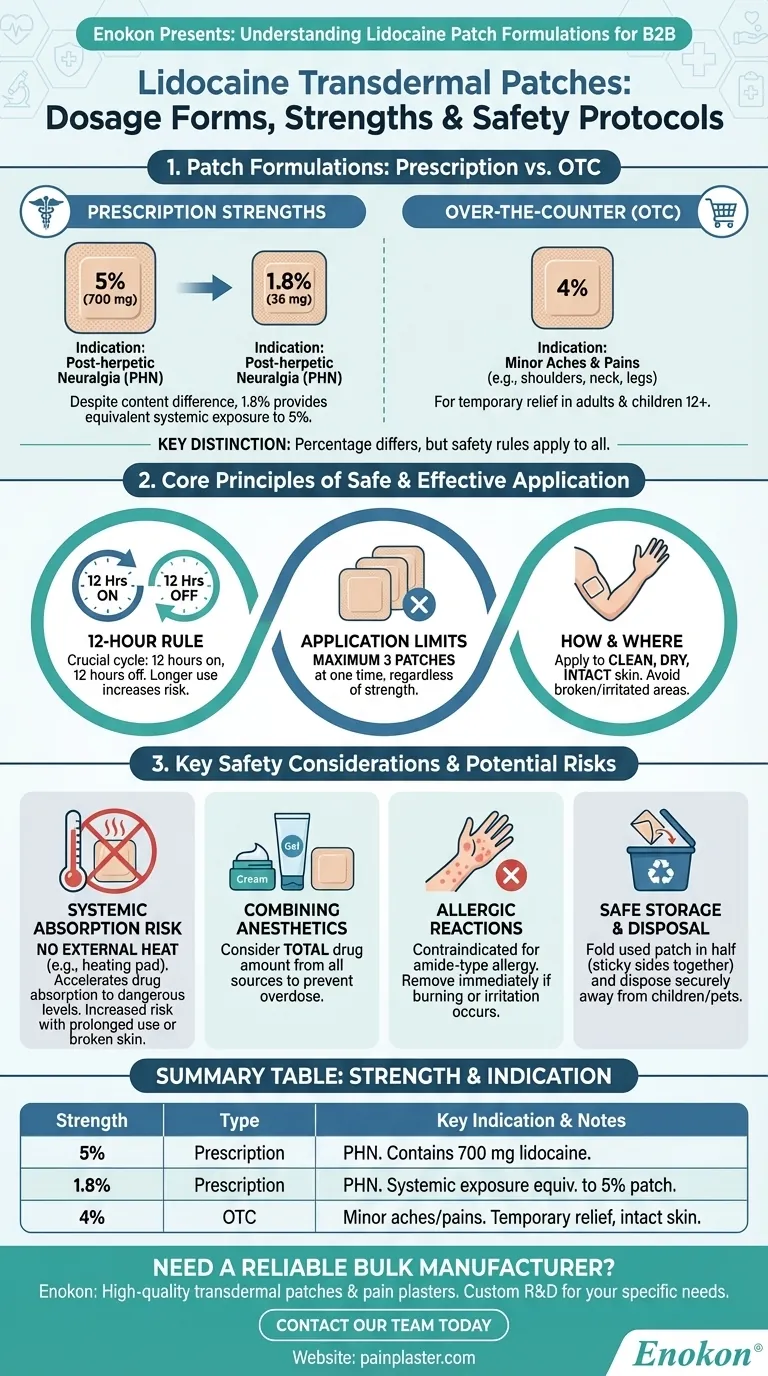
The single most important guideline is the application cycle: 12 hours on, followed by 12 hours off. Wearing patches for longer than 12 hours significantly increases the risk of absorbing too much medication into your bloodstream.
Patch Application Limits
Do not apply more than three patches at one time, regardless of the strength. Using more patches than recommended does not improve pain relief but does increase the risk of side effects.
How and Where to Apply
Apply the patch to a clean, dry, and intact area of skin over the painful location. Ensure the skin is not broken, inflamed, or irritated, as this can cause the body to absorb the drug too quickly.
Key Safety Considerations and Potential Risks
While lidocaine patches target a local area, the drug can be absorbed systemically. Understanding the factors that increase this absorption is critical.
Risk of Systemic Absorption
External heat sources, like a heating pad, should never be placed over a patch. Heat dramatically increases blood flow to the skin, accelerating drug absorption to potentially dangerous levels.
Factors like longer application times, using more patches than recommended, or applying to broken skin all increase this risk. Patients with severe liver problems may also have difficulty eliminating the drug from their system.
Combining with Other Anesthetics
If you are using other products that contain local anesthetics (such as creams or gels), you must consider the total amount of drug being absorbed from all sources to prevent an overdose.
Allergic Reactions and Irritation
Lidocaine patches are contraindicated for anyone with a known allergy to amide-type local anesthetics. If you experience a burning sensation or skin irritation, remove the patch immediately and do not reapply until the irritation subsides.
Safe Storage and Disposal
Used patches still contain a significant amount of lidocaine. To prevent accidental exposure to children or pets, fold the used patch in half with the sticky sides together and dispose of it immediately and securely.
Making the Right Choice for Your Pain
Your approach should be guided by the nature of your pain and consultation with a healthcare professional.
- If you are managing pain from shingles (PHN): You require a prescription-strength patch (5% or 1.8%) and must follow your doctor's specific instructions.
- If you are treating minor muscle or joint pain: An over-the-counter 4% patch is the appropriate starting point, but the 12-hour safety rule is still mandatory.
- If you are using any lidocaine patch: Your absolute priority must be to adhere strictly to the application limits—both the number of patches and the duration—to prevent toxic side effects.
Understanding these formulations and their rules empowers you to manage your pain safely and effectively.
Summary Table:
| Strength | Type | Key Indication | Notes |
|---|---|---|---|
| 5% | Prescription | Post-herpetic neuralgia (PHN) | Contains 700 mg lidocaine |
| 1.8% | Prescription | Post-herpetic neuralgia (PHN) | Systemic exposure equivalent to 5% patch |
| 4% | Over-the-Counter (OTC) | Minor aches and pains | For temporary relief on intact skin |
Need a reliable supplier for lidocaine or other transdermal patches?
As Enokon, a bulk manufacturer of high-quality transdermal patches and pain plasters, we provide pharmaceutical distributors and healthcare brands with dependable, consistent products. Our technical expertise ensures robust custom R&D and development to meet your specific formulation and delivery needs.
Contact our team today to discuss your requirements and benefit from our manufacturing excellence.
Visual Guide
Related Products
- Lidocaine Hydrogel Pain Relief Patch for Pain Relief
- Far Infrared Heat Pain Relief Patches Transdermal Patches
- Silicone Scar Sheets Patch Transdermal Drug Patch
- Icy Hot Menthol Medicine Pain Relief Patch
- Menthol Gel Pain Relief Patch
People Also Ask
- How does the aqueous base in a lidocaine patch contribute to drug delivery? Unlocking Sustained Pain Relief Technology
- What are the advantages of topical anesthetics over invasive Lidocaine infiltration? Discover Safer, Scalable Relief
- Which pain patch is most effective for arthritis? Find the Best Relief for Your Joint Pain
- Why are lidocaine patches preferred over oral medications? Targeted Relief & Scale Your Brand with OEM R&D Solutions
- How should lidocaine patches be applied for optimal use? Maximize Pain Relief with Proper Application












