
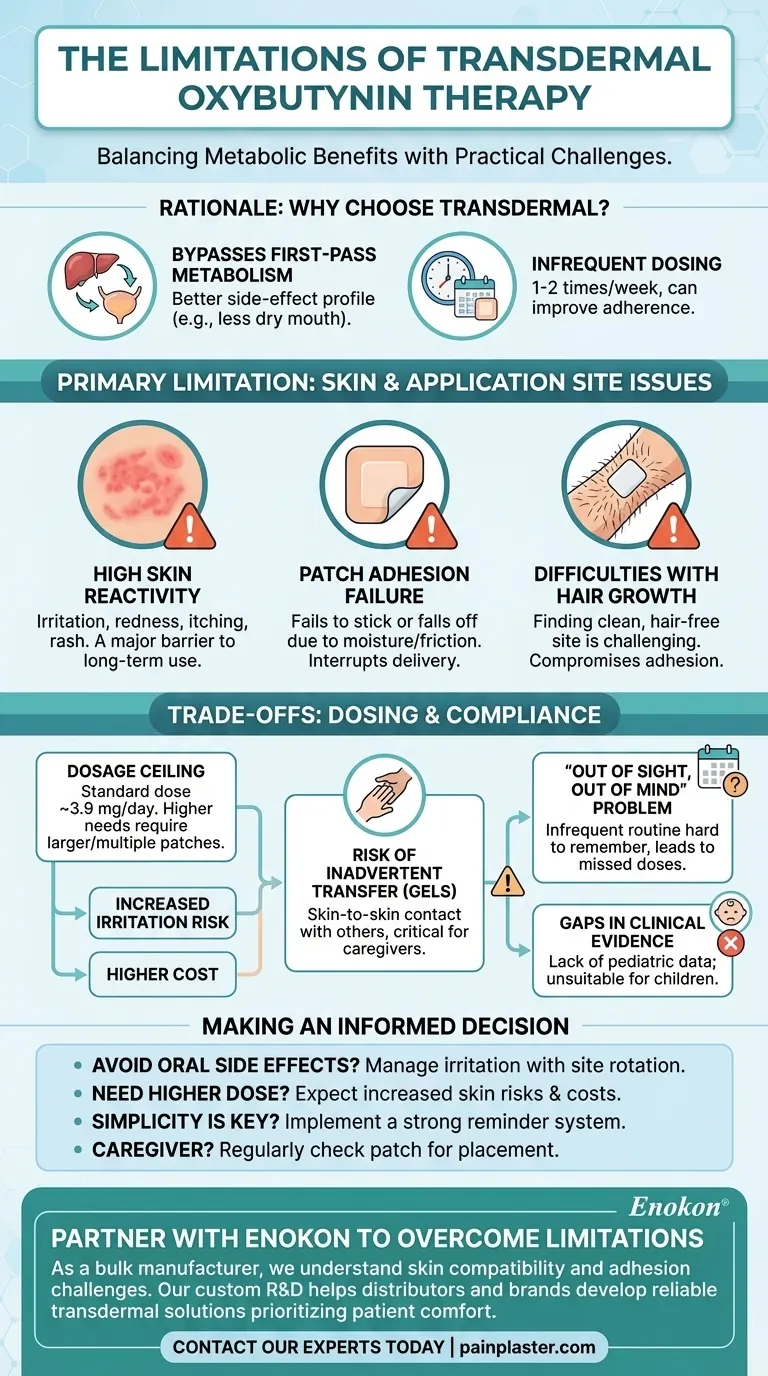
The primary limitations of transdermal oxybutynin therapy are skin reactivity at the application site, practical dosage ceilings due to patch size, issues with patch adhesion, and unsuitability for certain patient populations. While it offers a valuable alternative to oral medication by avoiding first-pass metabolism, its real-world effectiveness is often constrained by these physical and logistical challenges.
Transdermal oxybutynin successfully reduces systemic side effects compared to its oral counterpart, but this benefit comes at the cost of potential application site issues, which can be a significant barrier to long-term use for many patients.
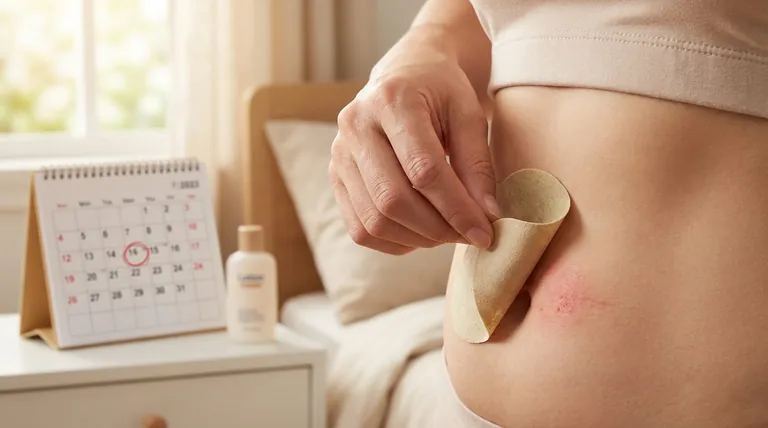
The Rationale: Why Choose Transdermal Therapy?
To understand the limitations, it's essential to first recognize why transdermal oxybutynin is prescribed. Its core purpose is to treat overactive bladder by delivering the drug directly through the skin.
Bypassing an Inefficient Pathway
The primary advantage of transdermal delivery is avoiding first-pass metabolism. When taken orally, oxybutynin is heavily processed by the liver, creating metabolites that are often responsible for side effects like dry mouth. The patch or gel bypasses this, leading to a better side-effect profile.
The Convenience of Infrequent Dosing
Transdermal patches offer a simplified dosing schedule. Instead of taking a pill multiple times a day, patients typically only need to change their patch once or twice per week, which can improve adherence for some.
Primary Limitation: Skin and Application Site Issues
The most common and significant challenges with transdermal oxybutynin are directly related to the interface between the product and the patient's skin.
High Rate of Skin Reactivity
A substantial number of patients experience skin irritation, such as redness, itching, or rash, at the application site. For some, this reactivity can be severe enough to be an "insurmountable" reason to discontinue therapy.
The Challenge of Adhesion
Patches can simply fail to stick properly or may fall off, especially with exposure to moisture or friction from clothing. This interrupts the delivery of the medication and can be a consistent source of frustration.
Difficulties with Hair Growth
For male patients or individuals with significant body hair, finding a clean, dry, and hair-free application site can be a major challenge. Applying patches to hairy skin compromises adhesion and effectiveness.
Understanding the Trade-offs: Dosing and Compliance
Beyond skin-level problems, transdermal therapy introduces unique trade-offs related to dosage flexibility and patient behavior.
A Practical Ceiling on Dosage
The standard patch is designed to deliver a specific dose (e.g., 3.9 mg/day). Requirements above this level necessitate larger or multiple patches, which not only increases the cost but also magnifies the risk of skin irritation by covering a larger surface area.
Risk of Inadvertent Transfer (Gels)
While patches are self-contained, transdermal gels carry a risk of inadvertent drug administration to others through skin-to-skin contact. This is a critical safety consideration for patients who have close contact with partners, children, or pets.
The "Out of Sight, Out of Mind" Problem
Compared to a daily oral routine, a twice-weekly patch change can be difficult to remember. This can lead to missed doses or inconsistent therapy, undermining the treatment's effectiveness. Unfamiliarity with this type of therapy can also be a barrier for new users.
Gaps in Clinical Evidence
It is important to note that there is a lack of data on pediatric use. The safety and efficacy of transdermal oxybutynin have not been established in children, making it an unsuitable option for this population.
Making an Informed Decision
Choosing the right therapy requires balancing the metabolic benefits of transdermal delivery against its practical limitations.
- If your primary focus is avoiding oral side effects: Transdermal therapy is a strong alternative, but you must be prepared to manage potential skin irritation by rotating application sites.
- If you require a dose higher than 3.9 mg/day: Be aware that you will face an increased risk of skin reactions and higher costs associated with using larger or multiple patches.
- If simplicity and routine are critical for you: The less-frequent patch schedule may require a dedicated reminder system to ensure consistent application.
- If you are a caregiver for a patient: Be mindful that the patch may be inadvertently removed by the patient, requiring regular checks to ensure it remains in place.
By understanding these practical limitations, you can proactively address them and determine if transdermal oxybutynin is the right long-term solution for your needs.
Summary Table:
| Limitation | Key Challenge | Impact on Patient |
|---|---|---|
| Skin Reactivity | Redness, itching, or rash at application site | May lead to therapy discontinuation |
| Patch Adhesion | Patches fall off due to moisture or friction | Interrupted drug delivery, frustration |
| Dosage Ceiling | Higher doses require larger/multiple patches | Increased skin irritation & cost |
| Patient Compliance | Infrequent dosing can be hard to remember | Inconsistent therapy, reduced effectiveness |
Struggling with the limitations of transdermal therapy? Partner with Enokon.
As a bulk manufacturer of reliable transdermal patches and pain plasters, we understand the critical challenges of skin compatibility and adhesion. Our technical expertise is dedicated to custom R&D and development, helping healthcare and pharma distributors and brands overcome these very limitations.
We can work with you to develop a transdermal solution that prioritizes patient comfort and consistent delivery. Let's enhance your product's effectiveness—contact our experts today to discuss your custom patch needs.
Visual Guide
Related Products
- Silicone Scar Sheets Patch Transdermal Drug Patch
- Far Infrared Heat Pain Relief Patches Transdermal Patches
- Menthol Gel Pain Relief Patch
- Icy Hot Menthol Medicine Pain Relief Patch
- Mugwort Wormwood Pain Relief Patch for Neck Pain
People Also Ask
- What role does a silicone-based transdermal delivery system play in Parkinson's? Enhancing Early-Stage Patient Care
- How is the long-term skin tolerance of silicone-based transdermal patches evaluated in clinical settings? R&D and Safety
- Why is a polarizing microscope used to evaluate the long-term stability of transdermal drug patches? Ensure Efficacy.
- What are common adverse effects of transdermal drug delivery? Risks & Prevention Tips
- What are the advantages of transdermal drug patches? Optimize Medication Delivery with Patches



















