In short, topical patches are a medical tool used to deliver medication directly through the skin. They are most commonly used for targeted, localized pain relief for issues like muscle strains and arthritis, but are also used to deliver systemic medications like hormones for menopause symptoms.
The core value of a topical patch is its ability to provide a steady, controlled dose of medication directly to a specific area or into the bloodstream, bypassing the digestive system and minimizing many of the side effects associated with oral pills.
The Two Primary Functions of Topical Patches
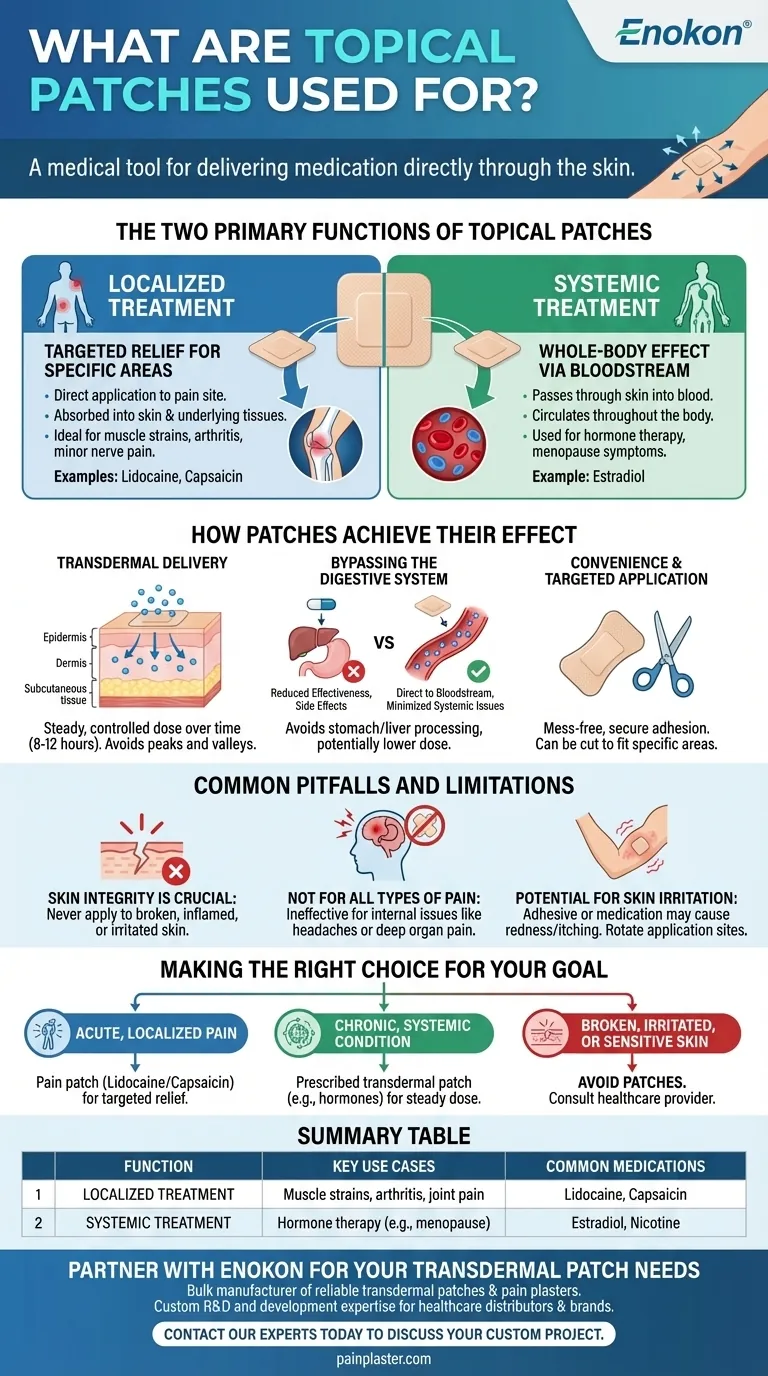
Topical patches are not a one-size-fits-all solution. Their function depends entirely on the medication they contain and how they are designed to interact with the skin. They generally fall into two distinct categories.
H3: Localized Treatment for Targeted Relief
This is the most common use for over-the-counter patches. The goal is to treat a specific, localized area of the body without affecting the rest of the system.
The patch contains medication, such as the anesthetic lidocaine or the warming agent capsaicin, which is absorbed into the skin and underlying tissues right where it is applied.
This makes them ideal for treating sore muscles in the back, neck, or shoulders, as well as pain from conditions like arthritis or minor nerve pain.
H3: Systemic Treatment for Whole-Body Effect
Some patches are designed for the medication to pass through the skin and into the bloodstream, where it circulates throughout the entire body.
A prime example is the estradiol patch, which delivers hormones to manage menopause symptoms like hot flashes or to prevent osteoporosis.
In this case, the skin is simply a convenient entry point for the medication to achieve a systemic, or whole-body, effect.
How Patches Achieve Their Effect
The technology behind a simple patch is designed for efficiency and convenience, offering several advantages over traditional oral medications.
H3: The Principle of Transdermal Delivery
A patch acts as a small, adhesive reservoir of medication. Once applied, the drug slowly and continuously absorbs through the skin's layers over a prolonged period, often 8 to 12 hours.
This method ensures a steady, consistent level of medication in the target tissue or bloodstream, avoiding the peaks and valleys often associated with taking pills.
H3: Bypassing the Digestive System
One of the most significant benefits is avoiding the digestive tract. When you swallow a pill, it has to be processed by the stomach and liver, which can reduce its effectiveness and cause side effects like nausea.
Patches deliver the medication directly, minimizing these systemic issues and often allowing for a lower overall dose.
H3: Convenience and Targeted Application
Patches are mess-free and adhere securely to areas like the arms, legs, or back. Many can even be cut to fit a specific, smaller area, ensuring the treatment is precisely where you need it.
Common Pitfalls and Limitations
While effective, topical patches are not appropriate for every situation and have important limitations that must be respected for safety.
H3: Skin Integrity is Crucial
A patch should never be applied to broken skin. This includes open wounds, rashes, severe burns, or any area that is already inflamed or irritated. Applying a patch to compromised skin can lead to excessive medication absorption and adverse reactions.
H3: Not for All Types of Pain
Patches are designed for localized, surface-level conditions. They are not effective for internal issues like headaches, migraines, or deep organ pain. The medication simply cannot reach those areas.
H3: Potential for Skin Irritation
The adhesive on the patch or the medication itself can sometimes cause redness, itching, or irritation at the application site. It is important to rotate the location of patches if you use them frequently.
Making the Right Choice for Your Goal
Understanding the different functions of topical patches allows you to use them effectively for the right purpose.
- If your primary focus is acute, localized pain: A pain patch with lidocaine or capsaicin offers targeted relief directly where it hurts, making it ideal for muscle strains or joint discomfort.
- If your primary focus is managing a chronic, systemic condition: A transdermal patch prescribed by a doctor can provide a steady, convenient dose of medication like hormones, improving consistency and reducing side effects.
- If your skin is broken, irritated, or sensitive: You should avoid topical patches and consult a healthcare provider for an alternative form of treatment.
Ultimately, choosing the right delivery method for your medication is a decision best made with the guidance of a healthcare professional.
Summary Table:
| Function | Key Use Cases | Common Medications |
|---|---|---|
| Localized Treatment | Muscle strains, arthritis, joint pain | Lidocaine, Capsaicin |
| Systemic Treatment | Hormone therapy (e.g., menopause) | Estradiol, Nicotine |
Partner with Enokon for Your Transdermal Patch Needs
As a bulk manufacturer of reliable transdermal patches and pain plasters, Enokon provides healthcare and pharmaceutical distributors and brands with custom R&D and development expertise. Benefit from our technical knowledge to create effective, high-quality patches tailored to your market.
Contact our experts today to discuss your custom patch project.
Visual Guide
Related Products
- Capsaicin Chili Medicated Pain Relief Patches
- Icy Hot Menthol Medicine Pain Relief Patch
- Menthol Gel Pain Relief Patch
- Mugwort Wormwood Pain Relief Patch for Neck Pain
- Asthma Cough and Pain Relief Patch for Adults and Kids
People Also Ask
- What conditions should be reported to a care team before using capsaicin patches? Ensure Safe Pain Relief
- What conditions can capsaicin creams and patches help relieve? Find Targeted Pain Relief for Nerves & Joints
- What are the uses of nonprescription capsaicin patches? Natural Pain Relief for Muscles & Joints
- What should be avoided while using capsaicin patches? Essential Safety Tips for Effective Pain Relief
- What less common side effects may occur with the capsaicin patch? Recognizing Systemic & Rare Reactions