
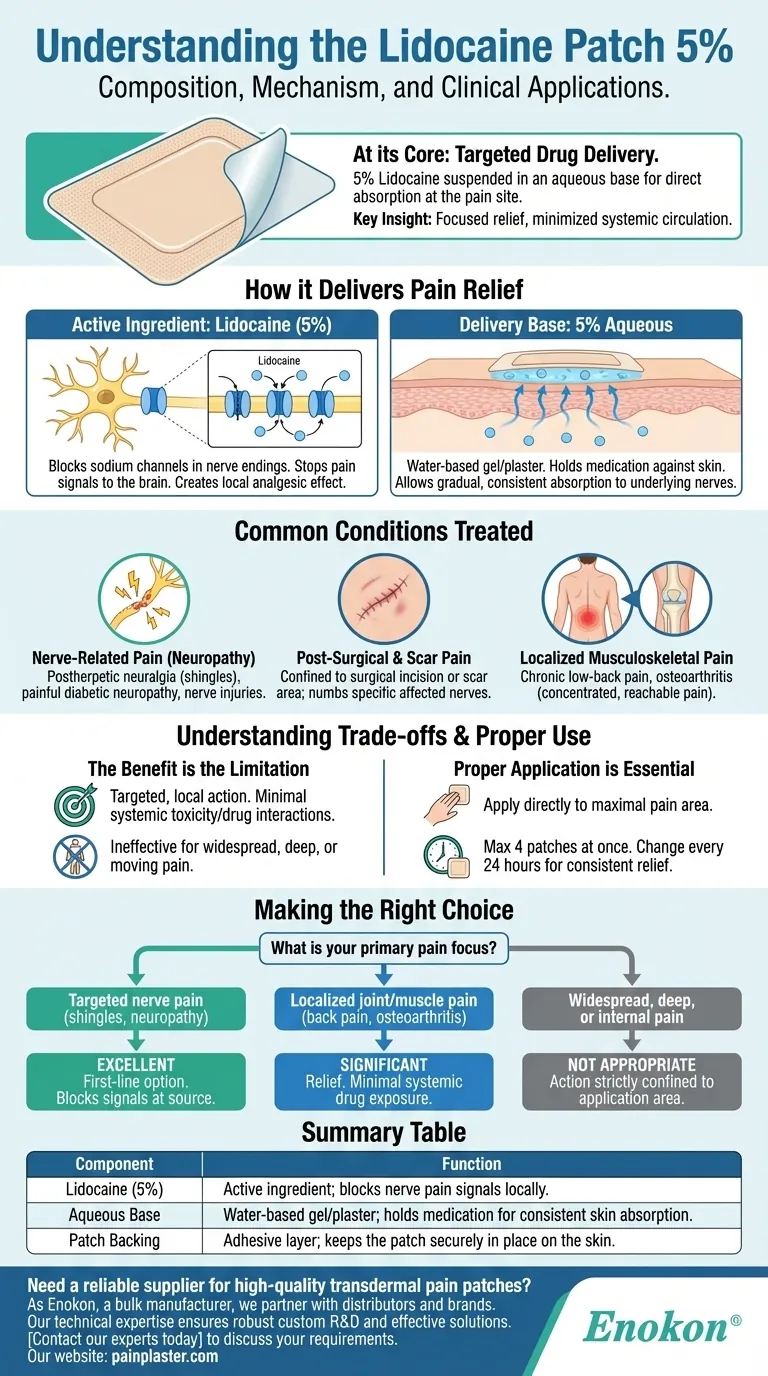
At its core, a lidocaine patch 5% is a targeted drug delivery system. It consists of a 5% concentration of lidocaine, a synthetic local anesthetic, suspended in an aqueous (water-based) solution that allows the medication to be absorbed through the skin directly at the site of pain.
The key insight is that the patch isn't just about the medication; it's about the delivery method. By applying the anesthetic directly to the skin, it provides focused pain relief to a specific area while minimizing the amount of drug that circulates throughout your entire body.
How the Lidocaine Patch Delivers Pain Relief
The effectiveness of the patch lies in its simple but precise composition. It has two main components: the active ingredient and the delivery base.
The Active Ingredient: Lidocaine
Lidocaine is a well-established local anesthetic. Its primary function is to block the sodium channels in nerve endings.
By blocking these channels, lidocaine stops nerves from sending pain signals to your brain. This creates a numbing or analgesic effect, but only in the area directly beneath the patch.
The 5% Aqueous Base
The term "5% aqueous base" simply means the lidocaine is mixed into a water-based gel or plaster. This base holds the medication against your skin.
This vehicle is designed to allow the lidocaine to gradually and consistently absorb through the skin layers to reach the underlying nerves where the pain originates.
Common Conditions Treated with the Patch
The patch is designed for localized pain, particularly pain that originates from nerves close to the skin's surface.
Nerve-Related Pain (Neuropathy)
This is a primary application for the patch. It is often used to manage pain from conditions like postherpetic neuralgia (lingering pain after shingles), painful diabetic neuropathy, and other nerve injuries.
Post-Surgical and Scar Pain
Pain that is confined to the area of a surgical incision or a scar can be effectively managed with a lidocaine patch, as it numbs the specific nerves that were affected.
Localized Musculoskeletal Pain
Studies have also shown its effectiveness in reducing pain intensity for conditions like chronic low-back pain and osteoarthritis when the pain is concentrated in a specific, reachable area.
Understanding the Trade-offs and Proper Use
While effective, the patch is a specialized tool with clear boundaries for its use. Understanding its limitations is critical for success.
The Benefit is Also the Limitation
The patch's greatest strength is its targeted, local action, which results in minimal systemic toxicity or drug interactions.
However, this also means it is ineffective for widespread pain, deep internal pain, or pain that moves around the body. It only works where you place it.
Proper Application is Essential
For best results, the patch should be applied directly to the area of maximal pain.
Clinical use often involves applying no more than four patches at one time, with each patch being changed every 24 hours to maintain a consistent level of relief.
Making the Right Choice for Your Goal
Deciding if the patch is a suitable option depends entirely on the nature and location of your pain.
- If your primary focus is targeted nerve pain (like from shingles or diabetic neuropathy): The patch is an excellent first-line option, as it is designed to block these specific pain signals at their source.
- If your primary focus is localized joint or muscle pain (like low-back pain or osteoarthritis): The patch can provide significant relief by numbing the affected area with minimal exposure to systemic drugs.
- If your primary focus is widespread, deep, or internal pain: This is not the appropriate tool, as its anesthetic action is strictly confined to the area where it is applied.
Ultimately, understanding the patch's targeted mechanism is the key to using it effectively for localized pain management.
Summary Table:
| Component | Function |
|---|---|
| Lidocaine (5%) | Active ingredient; blocks nerve pain signals locally. |
| Aqueous Base | Water-based gel/plaster; holds medication for consistent skin absorption. |
| Patch Backing | Adhesive layer; keeps the patch securely in place on the skin. |
Need a reliable supplier for high-quality transdermal pain patches?
As Enokon, a bulk manufacturer of reliable transdermal patches and pain plasters, we partner with healthcare and pharmaceutical distributors and brands. Our technical expertise ensures robust custom R&D and development to create effective pain management solutions tailored to your market's needs.
Contact our experts today to discuss your requirements and benefit from our manufacturing excellence.
Visual Guide
Related Products
- Lidocaine Hydrogel Pain Relief Patch for Pain Relief
- Capsaicin Chili Medicated Pain Relief Patches
- Menthol Gel Pain Relief Patch
- Icy Hot Menthol Medicine Pain Relief Patch
- Herbal Medicated Anti Diarrhea Patch for Digestive Relief
People Also Ask
- How does the aqueous base in a lidocaine patch contribute to drug delivery? Unlocking Sustained Pain Relief Technology
- What are the advantages of topical anesthetics over invasive Lidocaine infiltration? Discover Safer, Scalable Relief
- Which pain patch is most effective for arthritis? Find the Best Relief for Your Joint Pain
- Why are lidocaine patches preferred over oral medications? Targeted Relief & Scale Your Brand with OEM R&D Solutions
- Will a GP routinely continue prescribing lidocaine patches after the initial period? Understanding Short-Term Pain Relief




