
Based on postmarketing reports, the use of lidocaine transdermal patches has been associated with a range of adverse events. These primarily involve systemic reactions such as dizziness, confusion, headache, nausea, and taste alterations, as well as various application site reactions.
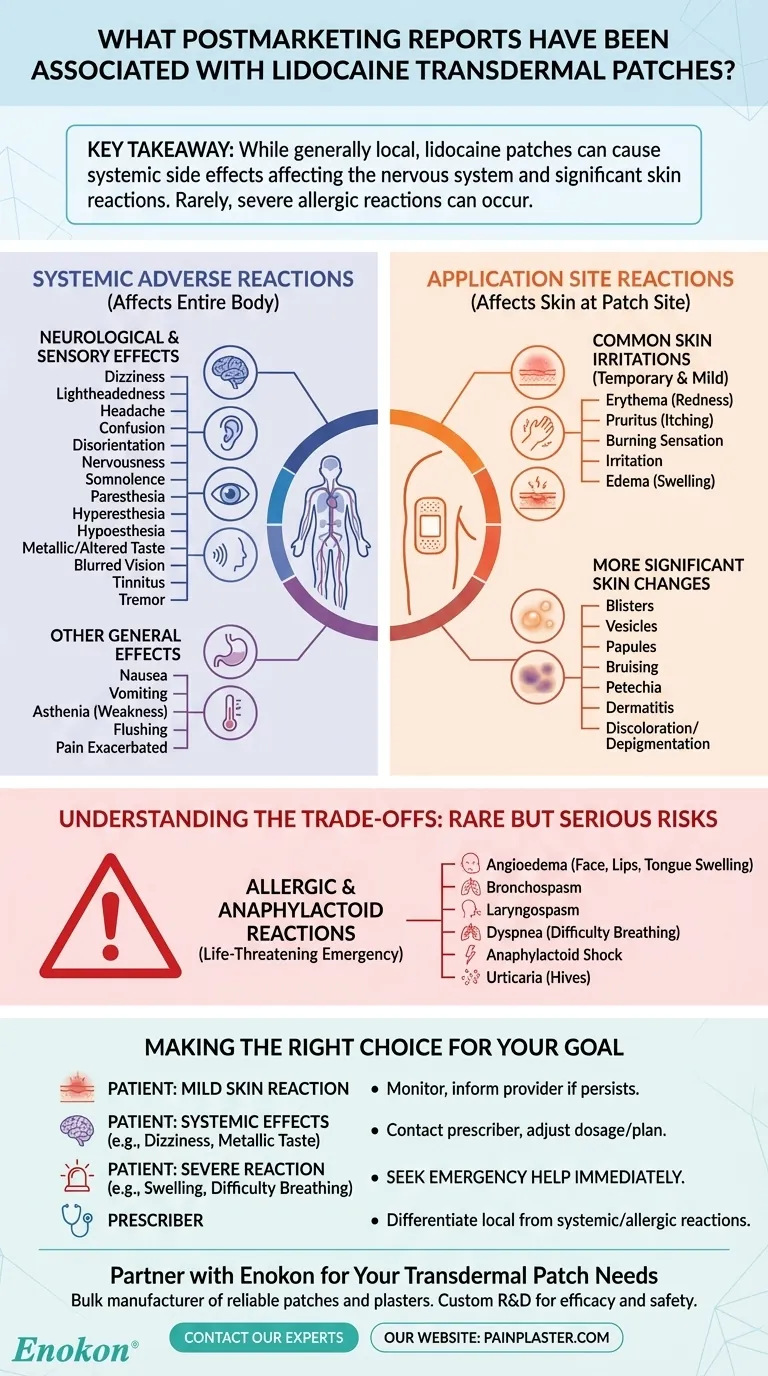
The key takeaway is that while lidocaine patches are generally applied locally, they can produce systemic side effects affecting the nervous system, as well as significant skin reactions at the application site. In rare instances, severe allergic reactions can occur.

Systemic Adverse Reactions
Systemic reactions occur when the medication is absorbed into the bloodstream and affects the entire body. These are typically related to the central nervous system but can involve other systems as well.
Neurological and Sensory Effects
The most frequently reported systemic effects involve the central nervous system. Patients have reported dizziness, lightheadedness, headache, confusion, disorientation, nervousness, and somnolence (drowsiness).
Sensory changes are also noted. These can include paresthesia (tingling or numbness), hyperesthesia (increased sensitivity), hypoesthesia (decreased sensitivity), and a metallic or altered taste.
Visual and auditory disturbances have been documented, such as blurred vision and tinnitus (ringing in the ears). Other neurological effects like tremor have also been observed.
Other General Effects
Gastrointestinal issues are a known possibility, including nausea and vomiting.
General feelings of weakness, reported as asthenia, have been linked to patch use. Some reports also mention flushing of the skin. Paradoxically, a condition described as pain exacerbated has also been noted.
Application Site Reactions
Reactions occurring directly on the skin where the patch is applied are common. These can range from mild and temporary to more significant skin changes.
Common Skin Irritations
Many users experience temporary and mild skin reactions. These include erythema (redness), pruritus (itching), a burning sensation, general irritation, and edema (swelling).
More Significant Skin Changes
In some cases, more pronounced reactions can develop at the application site. These reports include the formation of blisters, vesicles, or papules.
Other documented skin changes are bruising, petechia (small red or purple spots), dermatitis, and changes in skin color, such as discoloration or depigmentation.
Understanding the Trade-offs: Rare but Serious Risks
While most adverse events are mild to moderate, it is critical to be aware of the potential for rare but serious hypersensitivity reactions.
Allergic and Anaphylactoid Reactions
Severe, whole-body allergic reactions are a rare but serious risk. These require immediate medical attention.
Signs of a severe reaction include angioedema (swelling of the face, lips, and tongue), bronchospasm or laryngospasm (constriction of the airways), and dyspnea (difficulty breathing).
In the most extreme cases, anaphylactoid shock can occur, which is a life-threatening emergency. Other allergic skin manifestations like urticaria (hives) have also been reported.
Making the Right Choice for Your Goal
Understanding this safety profile is essential for both patients and prescribers to ensure the benefits of pain relief outweigh the potential risks.
- If you are a patient experiencing mild skin redness or itching: This is a common local reaction, but you should monitor the site and inform your healthcare provider if it worsens or persists.
- If you are a patient experiencing dizziness, confusion, or a metallic taste: These are systemic effects and you must contact your prescriber, as your dosage or treatment plan may need adjustment.
- If you experience swelling of the face, lips, or have difficulty breathing: This indicates a severe allergic reaction, and you must seek emergency medical help immediately.
- If you are a prescriber: It is crucial to differentiate between expected local irritation and signs of a more serious systemic or allergic reaction when evaluating patient complaints.
Being informed about the full spectrum of potential reactions allows for the safe and effective use of lidocaine patch therapy.
Summary Table:
| Category | Reported Adverse Events |
|---|---|
| Systemic Reactions | Dizziness, headache, confusion, nausea, metallic taste, blurred vision, tinnitus |
| Application Site Reactions | Redness, itching, burning, blisters, swelling, skin discoloration |
| Rare but Serious | Severe allergic reactions (e.g., angioedema, difficulty breathing, anaphylaxis) |
Partner with Enokon for Your Transdermal Patch Needs
As a bulk manufacturer of reliable transdermal patches and pain plasters, Enokon provides healthcare and pharmaceutical distributors and brands with the technical expertise for safe and effective product development. Our custom R&D services ensure your patches meet the highest standards for efficacy and patient safety.
Contact our experts today to discuss your custom transdermal patch development and manufacturing requirements.
Visual Guide
Related Products
- Lidocaine Hydrogel Pain Relief Patch for Pain Relief
- Far Infrared Heat Pain Relief Patches Transdermal Patches
- Silicone Scar Sheets Patch Transdermal Drug Patch
- Icy Hot Menthol Medicine Pain Relief Patch
- Menthol Gel Pain Relief Patch
People Also Ask
- How does the aqueous base in a lidocaine patch contribute to drug delivery? Unlocking Sustained Pain Relief Technology
- What are the advantages of topical anesthetics over invasive Lidocaine infiltration? Discover Safer, Scalable Relief
- Which pain patch is most effective for arthritis? Find the Best Relief for Your Joint Pain
- Will a GP routinely continue prescribing lidocaine patches after the initial period? Understanding Short-Term Pain Relief
- Why are lidocaine patches preferred over oral medications? Targeted Relief & Scale Your Brand with OEM R&D Solutions












