
When using oxybutynin transdermal, it is crucial to understand that safety involves more than just applying the patch. You must ensure it is appropriate for your specific medical history, handle the patch correctly to maintain a consistent dose, and remain aware of potential interactions with other conditions or medications. Key precautions include avoiding use if you have urinary or gastric retention, discussing any neurological or gastrointestinal conditions with your doctor, and preventing the patch from being exposed to direct heat.
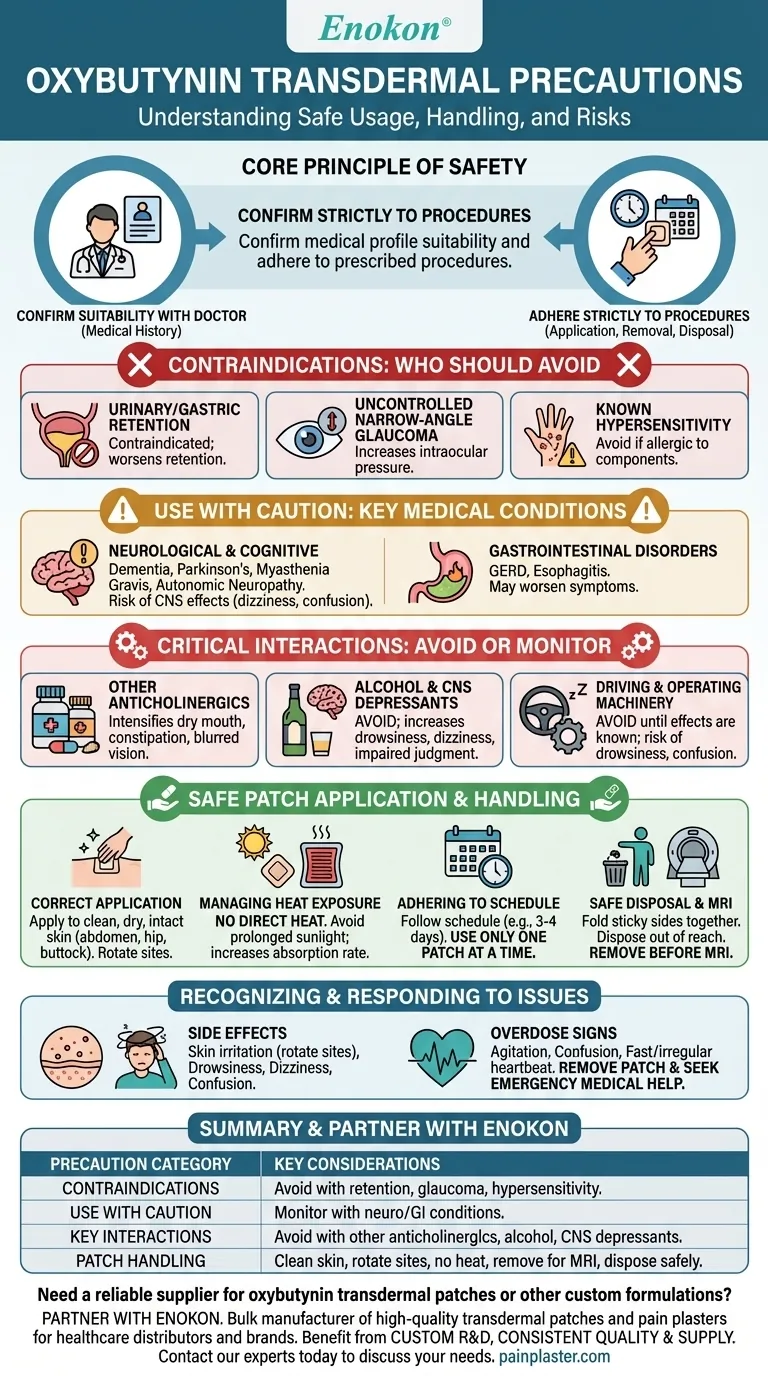
The core principle for safely using the oxybutynin patch is twofold: first, confirming with a healthcare professional that your medical profile is suitable for an anticholinergic drug, and second, adhering strictly to the prescribed procedures for application, removal, and disposal.

Who Should Avoid Oxybutynin Transdermal? (Contraindications)
Certain pre-existing conditions make the use of oxybutynin transdermal unsafe. These are known as contraindications, and you should not use this medication if you have any of them.
Urinary and Gastric Retention
Because oxybutynin relaxes the bladder muscle, it is contraindicated in patients with urinary retention or bladder outflow obstruction.
Similarly, it should not be used by individuals with gastric retention or other conditions that severely decrease gastrointestinal motility, as the drug can worsen these issues.
Uncontrolled Narrow-Angle Glaucoma
Oxybutynin can increase pressure inside the eye, making it dangerous for patients with uncontrolled narrow-angle glaucoma.
Known Hypersensitivity
If you have a known allergy or hypersensitivity to oxybutynin or any other component of the transdermal system, you must not use it.
Use With Caution: Key Medical Conditions
Even if you don't have a direct contraindication, certain medical conditions require careful monitoring and a thorough discussion with your doctor before starting oxybutynin.
Neurological and Cognitive Conditions
Patients with conditions like dementia, Parkinson's disease, myasthenia gravis, or autonomic neuropathy should use oxybutynin with caution.
The drug can cause or worsen Central Nervous System (CNS) effects like dizziness, drowsiness, or confusion, which can be particularly problematic in these populations.
Gastrointestinal Disorders
If you have gastroesophageal reflux disease (GERD), be aware that oxybutynin may worsen your symptoms. It should be used cautiously alongside other drugs known to cause or exacerbate esophagitis.
Understanding Critical Interactions
Oxybutynin's effects can be amplified or altered by other substances, making it essential to be aware of potential interactions.
Other Anticholinergic Medications
Using oxybutynin with other anticholinergic drugs can intensify side effects like dry mouth, constipation, and blurred vision. Always inform your doctor of all medications you are taking.
Alcohol and CNS Depressants
Avoid alcohol while using the oxybutynin patch. Combining them can significantly increase drowsiness and dizziness, impairing your judgment and coordination.
Driving and Operating Machinery
Do not drive or operate heavy machinery until you know how oxybutynin affects you. The potential for drowsiness and confusion makes these activities risky.
The Essentials of Safe Patch Application and Handling
Proper handling of the transdermal patch is fundamental to its safety and effectiveness.
Correct Application Technique
Apply the patch only to clean, dry, and unbroken skin on the abdomen, hip, or buttock. Rotate the application site with each new patch to avoid skin irritation.
Press the patch firmly in place to ensure it is sealed, and always wash your hands after handling it.
Managing Heat Exposure
Do not expose the patch to direct heat, such as from heating pads, electric blankets, or prolonged direct sunlight. Heat can increase the rate at which the medication is absorbed, potentially leading to an overdose.
Adhering to the Schedule
Follow the prescribed schedule precisely, typically replacing the patch every 72-96 hours (3-4 days). Use only one patch at a time unless specifically instructed otherwise by your physician.
Removal Before an MRI
The patch may contain aluminum or other metallic components. You must remove the patch before undergoing an MRI to prevent the risk of skin burns at the patch site.
Safe Disposal
After use, fold the patch in half with the sticky sides together. Dispose of it in a way that is out of reach of children and pets, as even used patches contain residual medication.
Recognizing and Responding to Potential Issues
Being prepared for potential side effects or problems is a key part of using this medication safely.
Skin Irritation
Redness, itching, or rash at the application site is a common side effect. Rotating patch locations can help minimize this.
Central Nervous System (CNS) Effects
Be vigilant for drowsiness, dizziness, and confusion. If these effects are severe or interfere with daily life, contact your healthcare provider immediately.
Signs of Overdose
An overdose can cause agitation, confusion, or a fast, irregular heartbeat. If you suspect an overdose, remove the patch and seek emergency medical attention.
Making the Right Choice for Your Goal
Your approach to using oxybutynin transdermal safely depends on your role and experience with the medication.
- If you are a new user: Your priority is to have a comprehensive discussion with your doctor about your complete medical history, including all other medications, to confirm this drug is safe for you.
- If you are a caregiver: Your focus should be on meticulous application, scheduled patch changes, safe disposal, and closely monitoring the individual for any new or worsening confusion or dizziness.
- If you are managing long-term use: Your goal is to remain consistent with application and be vigilant about potential interactions, especially if other medications are added or changed.
Ultimately, using oxybutynin transdermal safely is achieved by combining a clear understanding of its risks with disciplined and correct daily use.
Summary Table:
| Precaution Category | Key Considerations |
|---|---|
| Contraindications | Avoid if you have urinary/gastric retention, uncontrolled narrow-angle glaucoma, or a known hypersensitivity. |
| Use with Caution | Requires careful monitoring for patients with dementia, Parkinson's, GERD, or other neurological/GI conditions. |
| Key Interactions | Can intensify side effects with other anticholinergics; avoid alcohol and CNS depressants. |
| Patch Handling | Apply to clean, dry skin; rotate sites; avoid direct heat; remove before an MRI; dispose of safely. |
Need a reliable supplier for oxybutynin transdermal patches or other custom formulations?
Partner with Enokon, a bulk manufacturer of high-quality, reliable transdermal patches and pain plasters. We specialize in serving healthcare and pharmaceutical distributors and brands.
Benefit from our expertise:
- Custom R&D and Development: We can tailor formulations to meet your specific requirements.
- Consistent Quality & Supply: Ensure your patients receive safe and effective treatment with every batch.
Contact our technical experts today to discuss your transdermal product needs and how we can support your business.
Visual Guide
Related Products
- Silicone Scar Sheets Patch Transdermal Drug Patch
- Far Infrared Heat Pain Relief Patches Transdermal Patches
- Menthol Gel Pain Relief Patch
- Icy Hot Menthol Medicine Pain Relief Patch
- Mugwort Wormwood Pain Relief Patch for Neck Pain
People Also Ask
- What role does a silicone-based transdermal delivery system play in Parkinson's? Enhancing Early-Stage Patient Care
- How is the long-term skin tolerance of silicone-based transdermal patches evaluated in clinical settings? R&D and Safety
- Why is a polarizing microscope used to evaluate the long-term stability of transdermal drug patches? Ensure Efficacy.
- What are common adverse effects of transdermal drug delivery? Risks & Prevention Tips
- What are the advantages of transdermal drug patches? Optimize Medication Delivery with Patches














