
For nerve pain, lidocaine patches are generally the most effective over-the-counter option, as they directly block pain signals at the nerve level. Prescription options like opioid patches may be stronger but come with significant risks. Non-medicated patches like Icy Hot or Biofreeze provide only temporary distraction through temperature sensations. Severe or persistent nerve pain should be evaluated by a doctor, as it may indicate neuropathy requiring specialized treatment.
Key Points Explained:
-
Lidocaine Patches – Best for Nerve Pain
- Lidocaine is a local anesthetic that blocks sodium channels in nerves, preventing pain signal transmission.
- Clinically proven for neuropathic pain, including postherpetic neuralgia and diabetic neuropathy.
- Available in 5% concentration patches (e.g., Lidoderm), which adhere to the skin for up to 12 hours.
- Unlike menthol-based patches, lidocaine treats the root cause rather than masking symptoms.
-
Non-Medicated Patches (Icy Hot, Biofreeze) – Limited Effectiveness
- Rely on menthol or methyl salicylate to create cooling/warming sensations that distract from pain.
- Do not address nerve dysfunction—only provide temporary relief.
- Better suited for muscle soreness or arthritis than true neuropathic pain.
-
Prescription Options for Severe Cases
- Opioid patches (e.g., fentanyl): Strongest pain relief but high risk of dependency and side effects.
- Capsaicin patches (e.g., Qutenza): Prescription-strength patches that deplete substance P (a pain neurotransmitter).
- Require medical supervision due to potential complications.
-
When to Seek Medical Evaluation
- If nerve pain is severe, persistent, or accompanied by numbness/tingling (possible neuropathy).
- Underlying conditions (e.g., diabetes, shingles) may need targeted treatment beyond patches.
-
Safety and Clinical Backing
- Lidocaine patches have a strong safety profile, with studies involving 800+ patients showing efficacy.
- Avoid combining multiple topical analgesics without consulting a doctor.
For long-term nerve pain management, a combination of lidocaine patches and oral medications (e.g., gabapentin) may be optimal. Always consult a healthcare provider to tailor treatment to your specific condition.
Summary Table:
| Patch Type | Best For | Key Benefits | Limitations |
|---|---|---|---|
| Lidocaine Patches | Nerve pain (neuropathy) | Blocks pain signals at nerve level, clinically proven, 12-hour relief | Requires proper application, may not suit all skin types |
| Non-Medicated (Icy Hot, Biofreeze) | Muscle soreness, temporary relief | Cooling/warming sensation, OTC availability | Does not treat nerve dysfunction, short-term relief only |
| Prescription (Fentanyl, Capsaicin) | Severe nerve pain | Strong pain relief, targets pain neurotransmitters | High risk of side effects, requires medical supervision |
Looking for reliable, clinically-backed pain patches for nerve pain? Enokon specializes in high-quality transdermal patches for healthcare distributors and brands. Our expertise in custom R&D ensures optimal pain management solutions tailored to your needs. Contact us today to discuss bulk orders or custom formulations!
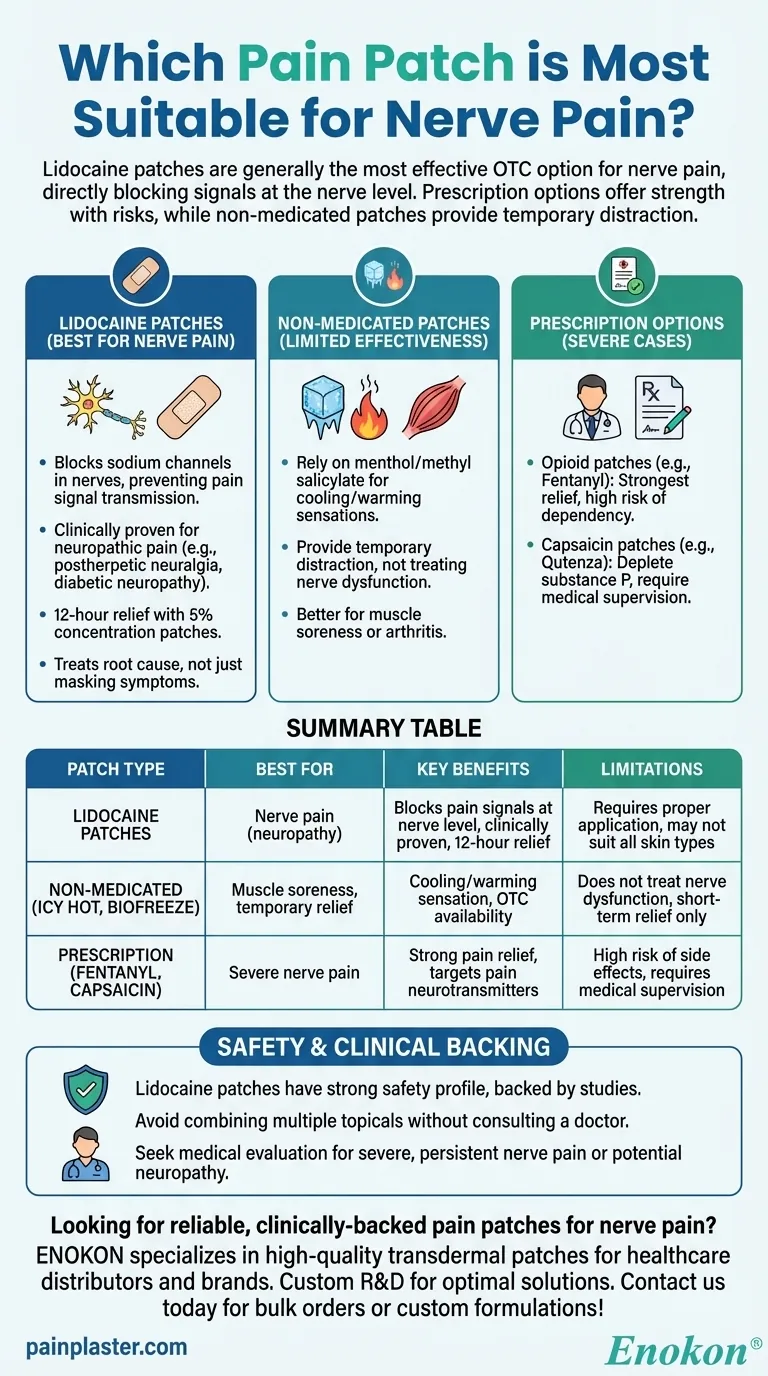
Visual Guide
Related Products
- Lidocaine Hydrogel Pain Relief Patch for Pain Relief
- Menthol Gel Pain Relief Patch
- Icy Hot Menthol Medicine Pain Relief Patch
- Far Infrared Pain Patch Relief Pain Reliever for Back
- Capsaicin Chili Medicated Pain Relief Patches
People Also Ask
- How does the aqueous base in a lidocaine patch contribute to drug delivery? Unlocking Sustained Pain Relief Technology
- What are the advantages of topical anesthetics over invasive Lidocaine infiltration? Discover Safer, Scalable Relief
- Which pain patch is most effective for arthritis? Find the Best Relief for Your Joint Pain
- Will a GP routinely continue prescribing lidocaine patches after the initial period? Understanding Short-Term Pain Relief
- Why are lidocaine patches preferred over oral medications? Targeted Relief & Scale Your Brand with OEM R&D Solutions














