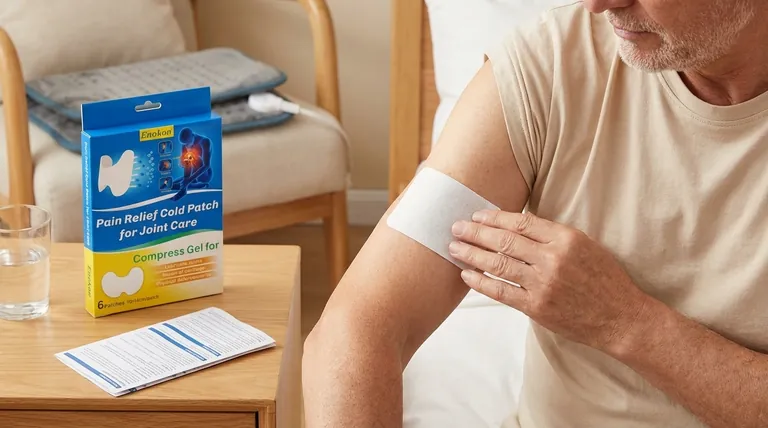
The Illusion of Simplicity
A transdermal patch is a marvel of medical engineering. It promises a steady, controlled release of medication, bypassing the digestive system and the need for daily pills or injections. Its appeal lies in this elegant simplicity: apply it and forget it.
But this simplicity is deceptive. It masks a complex, silent contract between the device, your body, and the environment. Every patch, like an estradiol patch for hormone therapy, operates on precise principles of chemistry and physics. Honoring this contract is the key to safety and efficacy, and it starts long before the patch ever touches your skin.
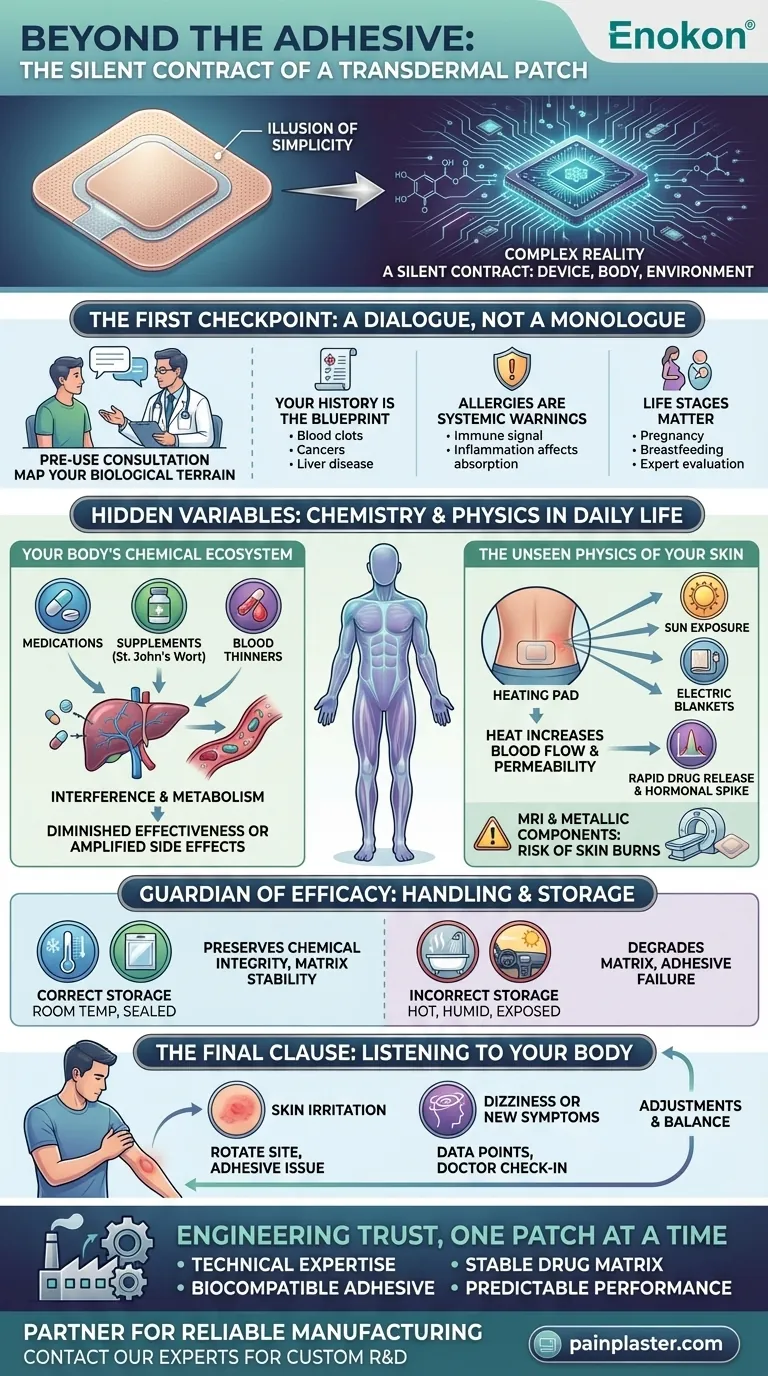
The First Checkpoint: A Dialogue, Not a Monologue
We often view the pre-use consultation as a procedural hurdle—a list of questions to get through. Psychologically, we're prone to under-reporting, thinking a past condition or a minor allergy is irrelevant.
This is a mistake. The initial conversation with a physician is the most critical step. It’s not a monologue where you passively receive instructions; it's a dialogue to map your unique biological terrain.
- Your History is the Blueprint: Conditions like a history of blood clots, certain cancers, or liver disease aren't just items on a checklist. They are fundamental parameters that can alter the risk-benefit equation of hormone therapy.
- Allergies are Systemic Warnings: An allergy to an adhesive isn't just a local skin reaction. It's a signal from your immune system. Ignoring it can lead to inflammation that affects both comfort and drug absorption.
- Life Stages Matter: Pregnancy and breastfeeding are profound physiological states. Hormones like estradiol can cross the placental barrier or pass into breast milk, making their use a decision that requires careful, expert evaluation.
The Hidden Variables: When Chemistry Meets Daily Life
Once applied, the patch is no longer an inert object. It's an active system interacting with your body's chemistry and the physics of your daily routine.
Your Body's Chemical Ecosystem
Think of your body as a complex chemical ecosystem. Introducing a new substance, even one delivered through the skin, can have ripple effects.
Certain medications, and even herbal supplements like St. John's wort, can interfere with how your body metabolizes estradiol. Blood thinners, anticonvulsants, and others can interact in ways that either diminish the patch's effectiveness or amplify its side effects. A complete list of your medications isn't red tape; it's essential data for predicting these interactions.
The Unseen Physics of Your Skin
Consider a common scenario: you apply an estradiol patch to your lower back and later use a heating pad for muscle soreness. It seems harmless.
However, heat fundamentally changes the physics of transdermal delivery. It increases blood flow to the skin and makes the skin more permeable. This can cause the patch to release its medication far more rapidly than intended, leading to a sudden hormonal spike—an overdose delivered by a simple heating pad.
This same principle applies to:
- Hot tubs and saunas
- Prolonged, direct sun exposure
- Electric blankets
Another critical physical interaction involves the metallic components present in some patches. During an MRI or cardioversion, these metals can conduct electricity and heat up, causing serious skin burns. The simple act of removing the patch beforehand is a crucial safety measure rooted in physics.
The Guardian of Efficacy: Handling and Storage
The instructions to "store at room temperature" and "keep sealed" feel mundane, easy to dismiss. But they are safeguards for the patch's chemical integrity.
A patch left in a hot car or a steamy bathroom is no longer the same device. Its matrix, the structure holding and regulating the drug, can degrade. The adhesive can lose its effectiveness. These are not just packages; they are precisely engineered systems. Treating them with care ensures they work as intended.
The Final Clause: Listening to Your Body
The contract doesn't end upon application. Your body provides constant feedback.
Skin irritation is more than an annoyance; it's a sign that the application site needs to be rotated or that the adhesive formulation may not be right for you. Dizziness or other new symptoms are data points that require attention. Regular check-ins with your doctor close this feedback loop, allowing for adjustments that maintain the delicate balance the patch is meant to provide.
Engineering Trust, One Patch at a Time
The quiet reliability of a transdermal patch is born from a deep understanding of this entire system—from material science and pharmacology to human behavior. The user's responsibility is to respect the silent contract. The manufacturer's responsibility is to engineer a product so reliable and consistent that this contract is easy to uphold.
This is where technical expertise in development and manufacturing becomes paramount. A well-designed patch has a stable drug matrix, a biocompatible adhesive, and predictable performance under real-world conditions. For distributors and brands in the healthcare space, partnering with a manufacturer who masters these technical nuances is the foundation of patient safety and trust.
At Enokon, we specialize in the bulk manufacturing of transdermal systems built on a foundation of reliability and precision. If you are developing or sourcing transdermal solutions, our expertise in custom R&D can help ensure your product is engineered for success. Contact Our Experts
Visual Guide
Related Products
- Far Infrared Heat Pain Relief Patches Transdermal Patches
- Silicone Scar Sheets Patch Transdermal Drug Patch
- Icy Hot Menthol Medicine Pain Relief Patch
- Menthol Gel Pain Relief Patch
- Mugwort Wormwood Pain Relief Patch for Neck Pain
Related Articles
- Engineering Certainty: The Invisible Architecture of a Gold-Standard Clinical Trial
- The Silent Workhorse: How Transdermal Patches Rewrote the Rules of Pain Management
- Beyond the Pill: The Silent Engineering of Safer Pain Relief
- Beyond Efficacy: The Psychology of Adherence in Topical Pain Relief
- Beyond the Molecule: The Behavioral Science of the Simple Pain Patch



















