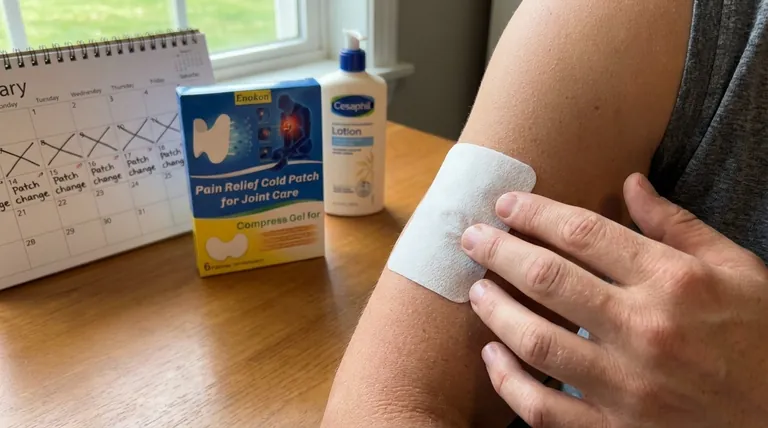
The Unseen Complexity of a Simple Patch
A transdermal patch seems deceptively simple. A small, adhesive square that delivers medicine through the skin. It’s an elegant solution that bypasses the digestive system and provides a steady, controlled dose over days.
Yet, in medicine and engineering, the most sophisticated systems often find their greatest point of failure at the simplest human interface.
The effectiveness of a multi-million dollar pharmaceutical formulation contained within an estradiol patch can be entirely undermined by one person forgetting which day to change it, or pressing it on for two seconds instead of ten. This isn't a failure of the patient, but a failure to appreciate the psychology and precision behind the system.
The Anatomy of Adhesion: More Than Just Glue
When a user presses a patch onto their skin, they are not just making it stick. They are initiating a complex biophysical process. The warmth and pressure create an intimate, micro-level contact between the patch's drug-infused adhesive and the skin's outermost layer, the stratum corneum.
This 10-second press is the critical handshake that begins the process of passive diffusion, allowing the estradiol molecules to begin their slow, steady journey into the bloodstream.
The Canvas: Why Skin Preparation is a System Prerequisite
The instructions are always clear: apply to clean, dry, lotion-free skin. This isn't about hygiene; it's about pharmacokinetics.
- Oils and Lotions: Create an invisible barrier, fundamentally altering the absorption profile. They are an unpredictable variable in a system that demands predictability.
- Irritated Skin: A compromised skin barrier is like a dam with a crack in it. Drug absorption can become erratic and dangerously accelerated.
- Hair: Prevents the full contact necessary for the "handshake," creating air pockets that inhibit drug transfer.
The skin is not a passive surface; it is the first and most critical component of the delivery mechanism.
The Rhythm of Replacement: Building a System for Success
Humans are creatures of habit, but we are also prone to error. A twice-weekly schedule—say, Monday and Thursday—seems simple. But life introduces chaos. A forgotten change can lead to a sudden drop in hormone levels, causing the very symptoms the patch is meant to prevent.
This is why the design of the patch itself, and the system around it, is so crucial.
Why Site Rotation is Non-Negotiable
Applying a patch to the same spot repeatedly is a recipe for skin fatigue and irritation. At a microscopic level, the occlusive nature of the patch traps moisture, which can over-hydrate and weaken the skin barrier.
When the barrier is weakened, the system breaks down. The patient experiences itching and redness, and the drug's absorption rate becomes unreliable. Rotating between the abdomen, buttocks, or upper torso gives the skin a crucial recovery period of at least a week, ensuring the "canvas" remains pristine for the next application.
Designing for Reality: The Manufacturer's Role
The ideal transdermal patch is designed with human fallibility in mind. The real engineering marvel is creating a system that is robust enough to handle the realities of daily life.
This involves a deep obsession with material science:
- The Adhesive: It must be biocompatible, non-irritating, and maintain its hold for up to seven days on a dynamic surface that stretches, sweats, and sheds. It is both the anchor and a key part of the drug delivery matrix.
- The Backing: It must be flexible, waterproof, and occlusive enough to aid drug penetration without causing skin damage.
- The Release Liner: It must protect the drug formulation but peel away cleanly without leaving residue or being difficult for a user with limited dexterity to remove.
At Enokon, our expertise as a bulk manufacturer is centered on this critical interface. We conduct R&D to create adhesive matrices and material combinations that build reliability directly into the patch, providing a consistent, predictable foundation for our healthcare and pharmaceutical partners.
A Practical Checklist for Precision
To honor the engineering of the patch, the user's role is to provide precision. This simple checklist ensures the system works as intended.
| Action | The Engineering Rationale |
|---|---|
| Prepare the Site | Select a clean, dry, lotion-free area (e.g., abdomen, buttocks) to ensure a predictable absorption surface. |
| Apply with Pressure | Press firmly for 10 seconds to establish full micro-contact for optimal drug diffusion. |
| Set a Schedule | Change on the same day(s) each week to maintain stable therapeutic hormone levels. |
| Rotate Sites | Always choose a new spot. Allow at least one week before reusing a site to preserve skin integrity. |
| Check Adhesion | Ensure edges are sealed. Clothing should not rub against the patch and compromise the seal. |
| Dispose Safely | Fold the used patch in half, adhesive sides together, to seal in any residual medication. |
The Partnership Between Patient and Patch
The transdermal patch is a silent, sophisticated partner in a patient's health. Its success relies on a covenant: the manufacturer provides a feat of reliable material engineering, and the user provides a few moments of careful, repeated procedure.
For brands and distributors committed to providing reliable, patient-centric transdermal solutions, the right manufacturing partner is key. Contact Our Experts
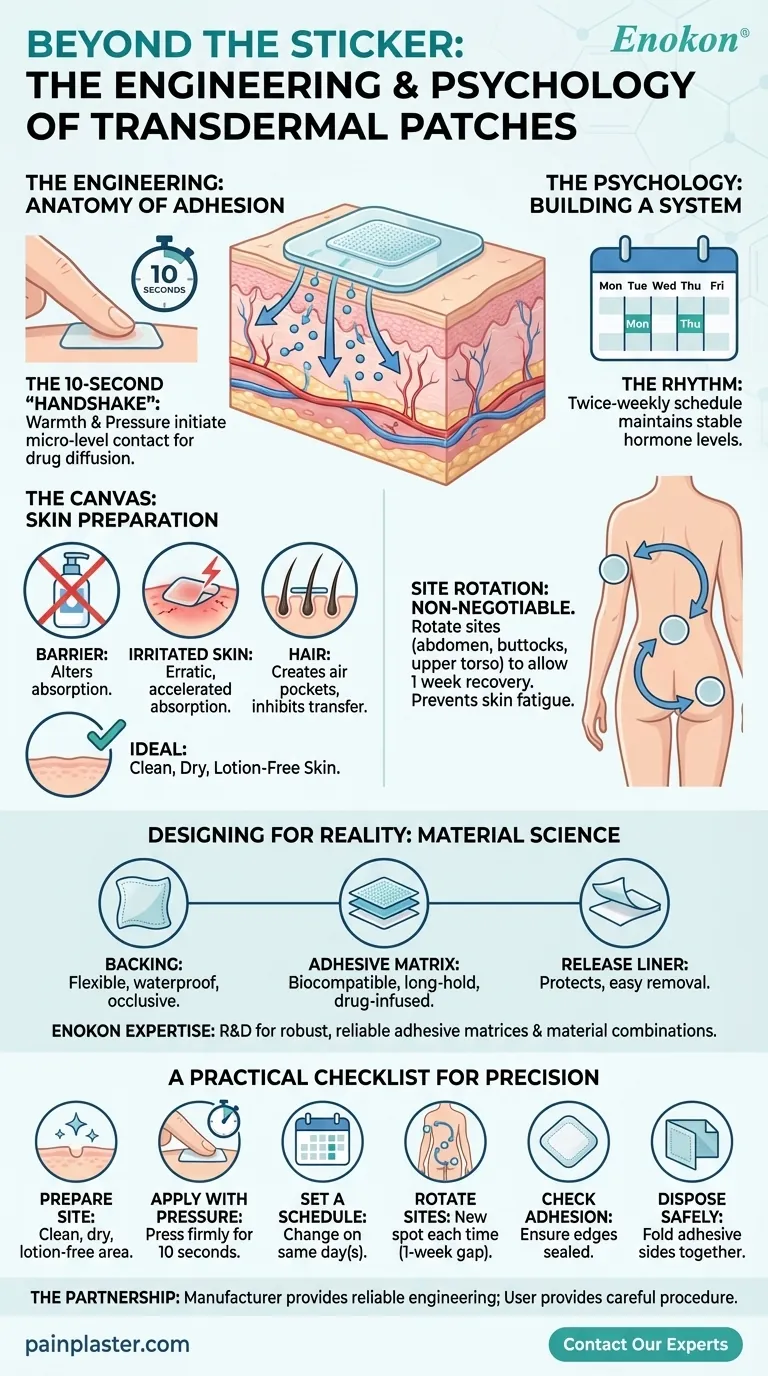
Visual Guide
Related Products
- Far Infrared Heat Pain Relief Patches Transdermal Patches
- Silicone Scar Sheets Patch Transdermal Drug Patch
- Icy Hot Menthol Medicine Pain Relief Patch
- Menthol Gel Pain Relief Patch
- Mugwort Wormwood Pain Relief Patch for Neck Pain
Related Articles
- Engineering Certainty: The Invisible Architecture of a Gold-Standard Clinical Trial
- The Silent Workhorse: How Transdermal Patches Rewrote the Rules of Pain Management
- Beyond the Pill: The Silent Engineering of Safer Pain Relief
- Beyond Efficacy: The Psychology of Adherence in Topical Pain Relief
- Beyond the Molecule: The Behavioral Science of the Simple Pain Patch



















