The Illusion of Simplicity
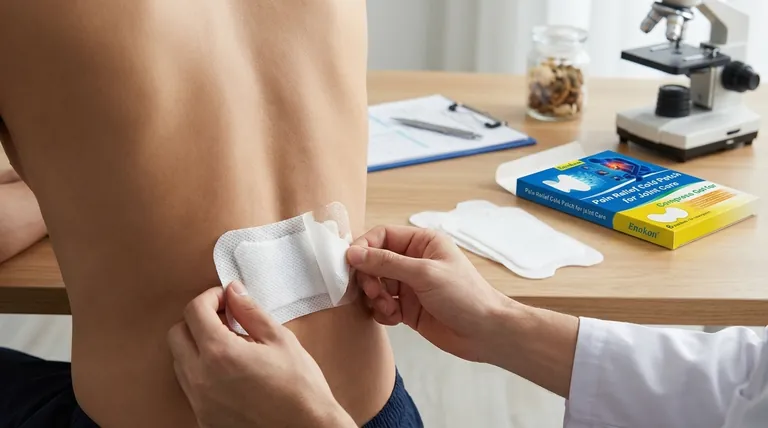
Imagine a person with a nagging lower backache. They reach for a medicated plaster, peel back the liner, and press it onto their skin. The act is mundane, almost identical to applying a simple bandage.
This familiarity is a psychological trap.
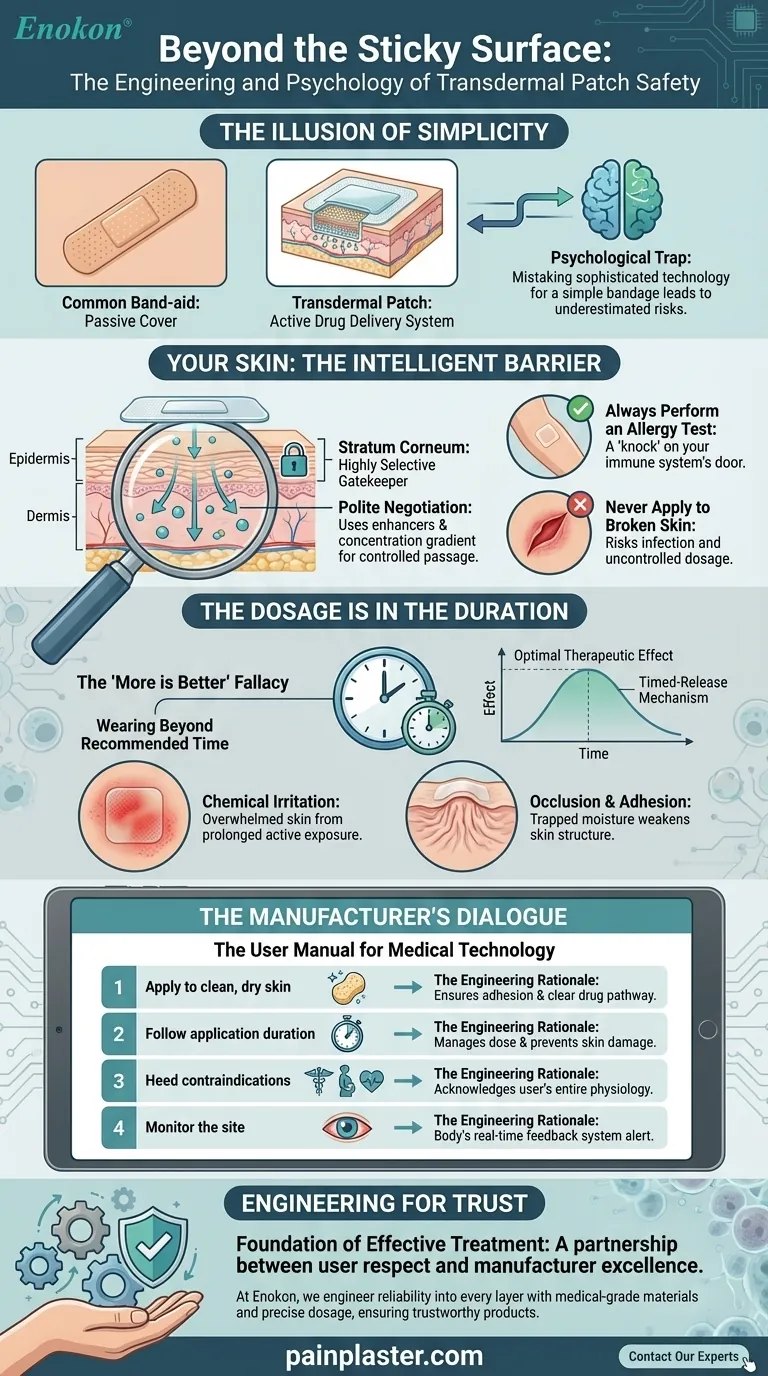
We instinctively categorize the medicated patch with the common band-aid, underestimating its nature. It is not a passive cover; it is an active, sophisticated drug delivery system. Each patch is a feat of material science and pharmaceutical engineering, designed to engage in a delicate, hours-long transaction with our body's largest organ: the skin.
Treating it with casualness is where safety risks begin.
Your Skin: The Intelligent Barrier
Your skin is not a simple wrapper. It is a formidable, intelligent barrier, with the outermost layer—the stratum corneum—acting as a highly selective gatekeeper. Its job is to keep things out.
A transdermal patch is engineered to politely negotiate passage through this gate. It uses a combination of chemical enhancers and a concentration gradient to deliver active ingredients in a controlled, steady dose. This is an elegant solution, but it relies on the barrier being intact and healthy.
This is why the first rule is non-negotiable:
- Always perform an allergy test. Applying a small piece to your skin is like knocking on the door before entering. It's a direct query to your immune system: "Is this new compound welcome?" A red, itchy response is a clear "no."
- Never apply to broken skin. An open wound, cut, or infected area is a compromised gate. Applying a patch here is like pouring potent compounds directly into an uncontrolled environment, risking infection and adverse reactions.
The Dosage is in the Duration
There's a common cognitive bias: if a little is good, more must be better. We apply this flawed logic to medicine all the time. If a patch is designed for 8 hours, surely wearing it for 24 will provide triple the relief, right?
This is fundamentally misunderstanding the engineering. The patch is a timed-release mechanism. The designers have calculated the precise duration for optimal therapeutic effect while minimizing skin irritation.
The Cumulative Effect of Adhesives and Actives
Wearing a patch beyond its recommended time creates two problems:
- Chemical Irritation: The active ingredients, while therapeutic, are still foreign substances. Prolonged, constant exposure can overwhelm the skin's ability to cope, leading to contact dermatitis.
- Occlusion & Adhesion: The adhesive that keeps the patch in place also traps moisture and heat. Over many hours, this macerates the skin, weakening its structure and making it more susceptible to tearing upon removal.
The manufacturer's guideline isn't a suggestion; it is the core operational parameter of the device.
The Manufacturer's Dialogue
The instruction leaflet inside the box is not just a legal formality. It is a direct communication from the engineers and pharmacists who designed the patch. It is the user manual for this piece of medical technology.
Ignoring it is like operating complex machinery without training. The key instructions represent critical system variables:
| Instruction | The Engineering Rationale |
|---|---|
| Apply to clean, dry skin | Ensures optimal adhesion and a clear pathway for drug delivery. Contaminants can interfere with both. |
| Follow application duration | Manages the dose and prevents skin damage from prolonged chemical and adhesive exposure. |
| Heed contraindications | Acknowledges that the "system" includes the user's entire physiology (e.g., pregnancy, other medical conditions). |
| Monitor the site | Your body provides real-time feedback. Redness or pain is a system alert that requires immediate attention. |
Engineering for Trust: The Foundation of Effective Treatment
The responsibility for safety is a partnership. While the user must respect the product's design, the foundation of that trust begins with the manufacturer. It begins with a deep understanding of this complex interplay between materials, chemistry, and human biology.
It means selecting medical-grade adhesives that are both tenacious and gentle. It means ensuring the purity of active ingredients and the precision of their dosage. It means designing a patch that releases its payload consistently and predictably, every single time. This commitment to quality transforms a simple plaster into a reliable therapeutic tool.
At Enokon, we engineer this reliability into every layer of our transdermal patches and pain plasters. For the healthcare distributors and brands we serve, this translates into products that are not only effective but also worthy of the user's trust. Building a safe and effective solution for your market starts with a foundation of engineering excellence. Contact Our Experts
Visual Guide
Related Products
- Far Infrared Heat Pain Relief Patches Transdermal Patches
- Silicone Scar Sheets Patch Transdermal Drug Patch
- Icy Hot Menthol Medicine Pain Relief Patch
- Menthol Gel Pain Relief Patch
- Mugwort Wormwood Pain Relief Patch for Neck Pain
Related Articles
- Engineering Certainty: The Invisible Architecture of a Gold-Standard Clinical Trial
- The Silent Workhorse: How Transdermal Patches Rewrote the Rules of Pain Management
- Beyond the Pill: The Silent Engineering of Safer Pain Relief
- Beyond Efficacy: The Psychology of Adherence in Topical Pain Relief
- Beyond the Molecule: The Behavioral Science of the Simple Pain Patch



















