The Silent Barrier to Treatment
A patient begins testosterone replacement therapy. They are told the transdermal patch is a simple, non-invasive way to restore balance. The clinical data is promising. But weeks into the treatment, the primary experience isn't one of renewed vitality, but of a persistent, low-grade itch at the application site.
This is the adherence paradox. The active pharmaceutical ingredient (API) is effective, but the delivery system creates a friction point—a small, daily annoyance that can be significant enough to make a patient abandon treatment altogether.
The problem isn't the medicine. It's the engineering.
The Psychology of Annoyance
The human mind is not well-equipped to ignore chronic, low-level discomfort. A sharp, temporary pain is memorable but finite. A constant, dull itch, a recurring rash, or even subtle mood irritability becomes a cognitive burden.
These "minor" side effects, often dismissed as things the body will "get used to," act as a constant, negative reinforcement. Each day, the patient is reminded not of the therapy's benefits, but of its drawbacks. This creates a psychological hurdle that efficacy data alone cannot overcome.
What begins as a minor skin reaction escalates into a major question in the user's mind: "Is this really worth it?"
Deconstructing the Point of Failure: The Skin-Patch Interface
For a transdermal patch to succeed, it must become an extension of the patient—something they can apply and forget. Most failures occur at the most critical junction: the delicate interface between the patch and the skin. This is a multi-faceted materials science challenge.
1. The Adhesive Compromise
The adhesive is the unsung hero or the primary villain. It must achieve a difficult balance:
- Adhesion: Strong enough to remain in place for 24 hours or more, through sweat, friction, and movement.
- Biocompatibility: Gentle enough to avoid causing contact dermatitis, redness, or itching.
- Breathability: Allow for the transfer of water vapor to prevent moisture buildup (maceration), which weakens both the skin and the bond.
A failure in any one of these areas results in discomfort and potential detachment, compromising the therapeutic dose.
2. The Formulation Matrix
How the testosterone is suspended within the patch and released over time is a marvel of polymer science. However, an improperly designed matrix can lead to:
- Dose Dumping: Too much of the hormone is released at once, overwhelming local skin tissue.
- Excipient Irritation: The non-active ingredients used to stabilize and deliver the drug may themselves be irritants for sensitive skin.
3. The Human Factor
No two patients have the same skin. Factors like pH, oiliness (sebum production), sweat rate, and underlying sensitivities create a vast range of variables. A patch designed for the "average" person may fail a significant portion of the population at the extremes.
Engineering for Invisibility: The Path to True Adherence
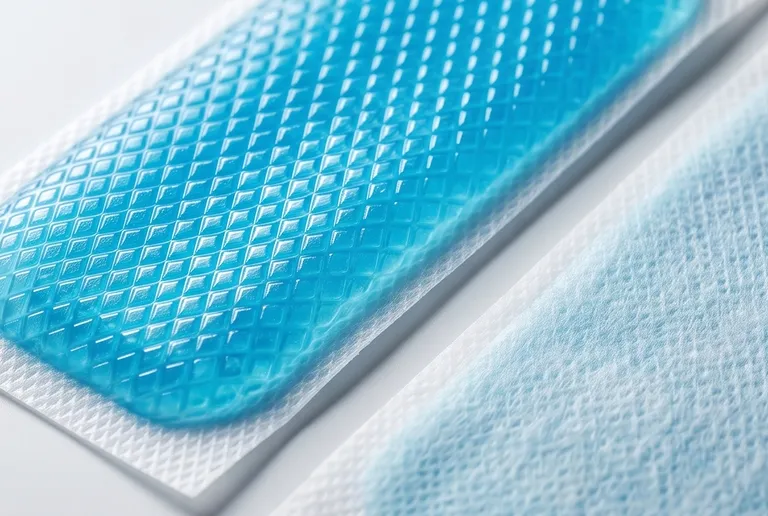
The ultimate goal of a transdermal patch isn't just to deliver a drug; it's to be forgotten. This "invisibility"—achieved through superior comfort and reliability—is the key to unlocking patient adherence. It requires moving beyond standard manufacturing and embracing a philosophy of user-centric design.
At Enokon, we treat the patch not as a commodity, but as a sophisticated medical device. Our approach targets the fundamental engineering problems that cause "minor" side effects.
| Challenge | Enokon's Engineered Solution |
|---|---|
| Skin Irritation & Allergy | Development of hypoallergenic, biocompatible adhesives that provide secure adhesion with minimal skin trauma upon removal. |
| Inconsistent Dosing | Custom R&D for optimized drug release profiles, ensuring a steady, controlled delivery that enhances efficacy and reduces local skin stress. |
| Poor Adhesion | Use of advanced backing materials and adhesives that conform to the body and manage moisture, maintaining integrity through daily life. |
| Patient Variability | Partnership with healthcare brands to tailor formulations and materials for specific patient populations, turning a one-size-fits-all problem into a custom solution. |
When a patch performs flawlessly, the psychological barrier to treatment dissolves. The patient is no longer focused on the itch or the inconvenience. They are free to experience the true therapeutic benefit.
This is the compounding effect of reliability. Better adherence leads to better clinical outcomes, which in turn builds patient trust and brand loyalty. It all begins with solving the "minor" problem of making the patch disappear from the user's consciousness.
For pharmaceutical brands and distributors dedicated to improving not just efficacy but the complete patient experience, the engineering behind the patch is paramount. Contact Our Experts to explore how superior design can solve the adherence paradox.
Related Products
- Far Infrared Heat Pain Relief Patches Transdermal Patches
- Silicone Scar Sheets Patch Transdermal Drug Patch
- Icy Hot Menthol Medicine Pain Relief Patch
- Menthol Gel Pain Relief Patch
- Mugwort Wormwood Pain Relief Patch for Neck Pain
Related Articles
- Engineering Certainty: The Invisible Architecture of a Gold-Standard Clinical Trial
- The Silent Workhorse: How Transdermal Patches Rewrote the Rules of Pain Management
- Beyond the Pill: The Silent Engineering of Safer Pain Relief
- Beyond Efficacy: The Psychology of Adherence in Topical Pain Relief
- Beyond the Molecule: The Behavioral Science of the Simple Pain Patch



















