The Elegant Deception of Simplicity
A transdermal patch is a marvel of medical engineering. It promises a simple solution to the complex problem of chronic pain: a steady, controlled release of medication directly into the bloodstream, bypassing the digestive system.
This simplicity is its greatest strength. But it's also a psychological trap.
Because the patch seems so passive—a simple sticker applied to the skin—we can underestimate the dynamic, intricate system we are engaging with. The patch is only one half of the equation. The other half is the patient's unique and ever-changing biology.
The Skin: A Living, Breathing Interface
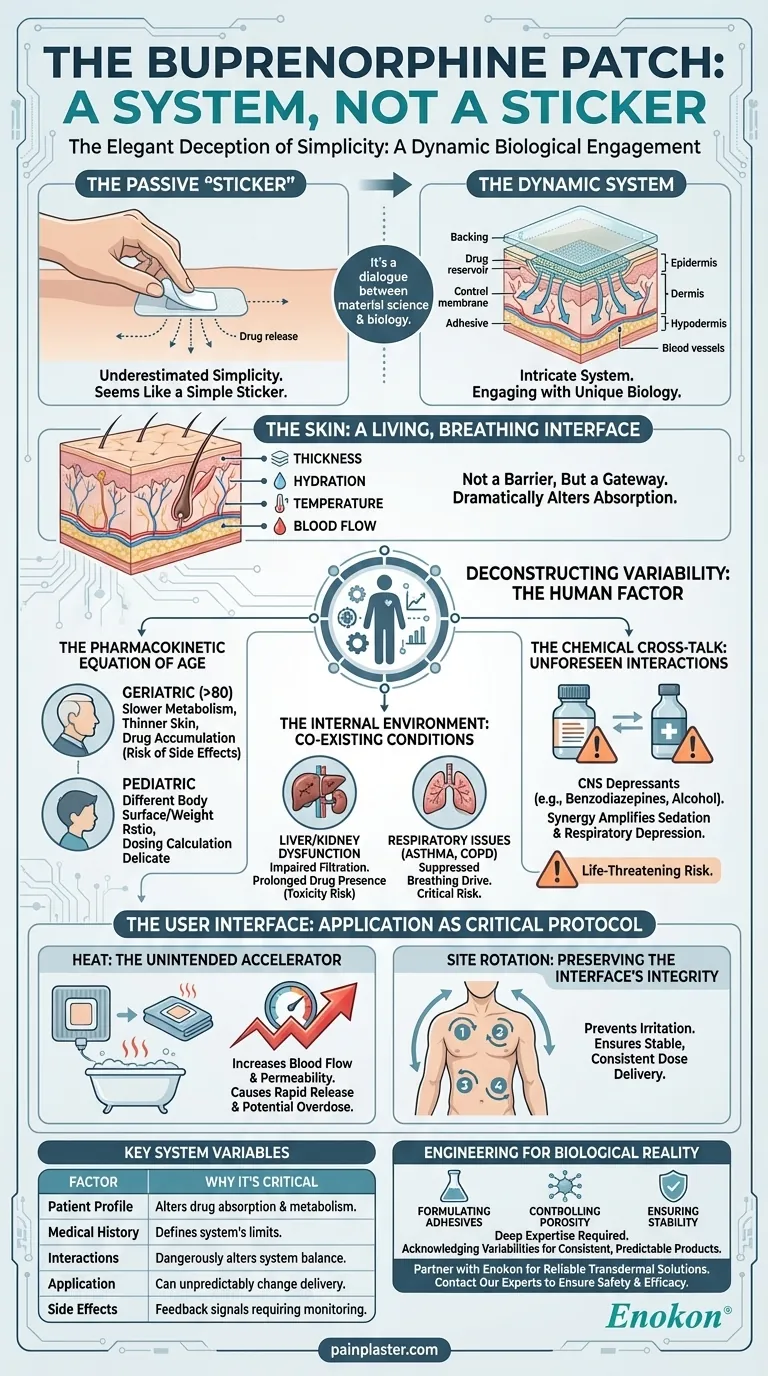
We tend to think of skin as a barrier. For a transdermal patch, it's the gateway. It's a living interface with its own rules. Factors like thickness, hydration, temperature, and blood flow dramatically alter how a drug is absorbed.
The engineering challenge isn't just creating a patch that releases a drug at a set rate. It's creating a patch that performs predictably across the vast spectrum of human skin physiology. This is a dialogue between material science and biology, and every patient's body speaks a slightly different dialect.
Deconstructing Variability: The Human Factor
The "standard" patient is a statistical myth. A successful therapeutic outcome depends on accounting for the variables that make each individual unique. The checklist of considerations for a buprenorphine patch isn't just a list of warnings; it's a map of the critical control points in a complex biological system.
The Pharmacokinetic Equation of Age
An 80-year-old’s skin is often thinner and less hydrated than a 30-year-old’s. Their metabolism is slower, and their ratio of fat to muscle has shifted. Each of these factors changes the absorption rate and clearance time of buprenorphine.
- Geriatric Patients: Slower metabolism can lead to drug accumulation, increasing the risk of side effects like dizziness or severe constipation.
- Pediatric Patients: The safety profile is often not well-established, as their body surface area to weight ratio is vastly different, making dosing a delicate, high-stakes calculation.
The patch remains the same, but the system it interacts with is fundamentally different.
The Internal Environment: Co-existing Conditions
Chronic pain rarely exists in a vacuum. A patient's medical history forms the landscape upon which the patch must function.
- Liver/Kidney Dysfunction: These organs are the body's filtration and clearance plants. If they are impaired, the drug stays in the system longer than designed, turning a therapeutic dose into a potentially toxic one.
- Respiratory Issues (Asthma, COPD): Opioids, including buprenorphine, can suppress the body's natural drive to breathe. For someone with already compromised lung function, this can be a critical, even fatal, risk.
The Chemical Cross-Talk: Unforeseen Interactions
The body is a web of chemical signals. Introducing a powerful medication like buprenorphine requires ensuring it doesn't create dangerous interference with other signals.
Combining it with other Central Nervous System (CNS) depressants—like benzodiazepines or even alcohol—doesn't just add their effects together. It multiplies them. This synergy can amplify sedation and respiratory depression to a life-threatening level.
The User Interface: Application as Critical Protocol
How a patient interacts with the patch is not a trivial matter. It's a crucial part of ensuring the system functions as designed.
Heat: The Unintended Accelerator
Placing a heating pad over the patch or taking a hot bath seems harmless. But from a thermodynamic perspective, you are overclocking the system.
Heat increases local blood flow and skin permeability. This causes the patch to release its medication far more rapidly than intended, creating a sudden spike in dosage that can lead to an overdose.
Site Rotation: Preserving the Interface's Integrity
Applying each new patch to a fresh, non-irritated patch of skin is more than a suggestion to prevent a rash. Damaged or irritated skin has compromised barrier function, making drug absorption erratic and unpredictable. Rotating sites ensures the "gateway" remains stable and the dose delivery consistent.
Summary: Key System Variables
| Factor | Why It's a Critical System Variable |
|---|---|
| Patient Profile | Age and underlying health conditions alter drug absorption and metabolism. |
| Medical History | Pre-existing conditions (heart, lung, liver) define the system's limits. |
| Interactions | Other substances (drugs, alcohol) can dangerously alter the system's balance. |
| Application | Heat and skin condition can unpredictably accelerate or change drug delivery. |
| Side Effects | These are feedback signals from the system that require careful monitoring. |
Engineering for Biological Reality
The reliability of a buprenorphine patch doesn't come from a single formula. It comes from deep expertise in formulating adhesives, controlling membrane porosity, and ensuring stability under diverse conditions. It requires acknowledging the immense variability of human biology and engineering a product that is as consistent and predictable as possible.
At Enokon, we specialize in manufacturing these sophisticated delivery systems. We partner with healthcare distributors and brands, providing the R&D and manufacturing excellence required to create transdermal patches that are both effective and reliable. The trust a patient places in a patch is immense, and that trust begins with the quality of its engineering.
For healthcare brands committed to providing the most reliable therapeutic systems, understanding these nuances is the first step. To explore how expert manufacturing can ensure the safety and efficacy of your transdermal solutions, Contact Our Experts.
Visual Guide
Related Products
- Menthol Gel Pain Relief Patch
- Asthma Cough and Pain Relief Patch for Adults and Kids
- Lidocaine Hydrogel Pain Relief Patch for Pain Relief
- Herbal Medicated Anti Diarrhea Patch for Digestive Relief
- Icy Hot Menthol Medicine Pain Relief Patch
Related Articles
- Beyond Efficacy: The Psychology of Adherence in Topical Pain Relief
- The 60-Minute Architecture: Engineering Predictability in Topical Pain Relief
- More Than a Feeling: The Precise Engineering of Cold vs. Hot Pain Relief
- Beyond the Molecule: The Behavioral Science of the Simple Pain Patch
- The Human Interface of Pain Relief: Why Delivery Systems Define Success



















