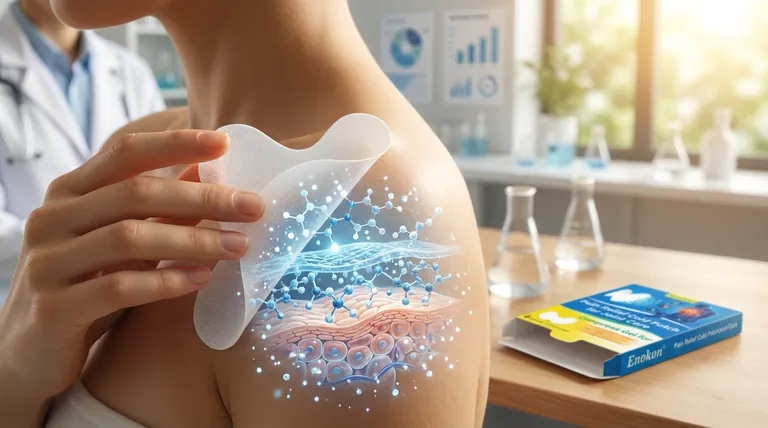
The Illusion of Simplicity
A transdermal patch looks deceptively simple. It’s a sticker that delivers medicine. We place it on our skin and, for the most part, forget it’s there.
But this simplicity is an illusion. It is the end result of navigating a labyrinth of regulatory, chemical, and psychological challenges. The quiet confidence a patient feels in a patch—that it will stick, that it will work, that it won’t cause harm—is not accidental. It is engineered.
This is the silent contract between the manufacturer and the patient, forged in material science and sealed with manufacturing precision.
The First Gatekeeper: The Gauntlet of Trust
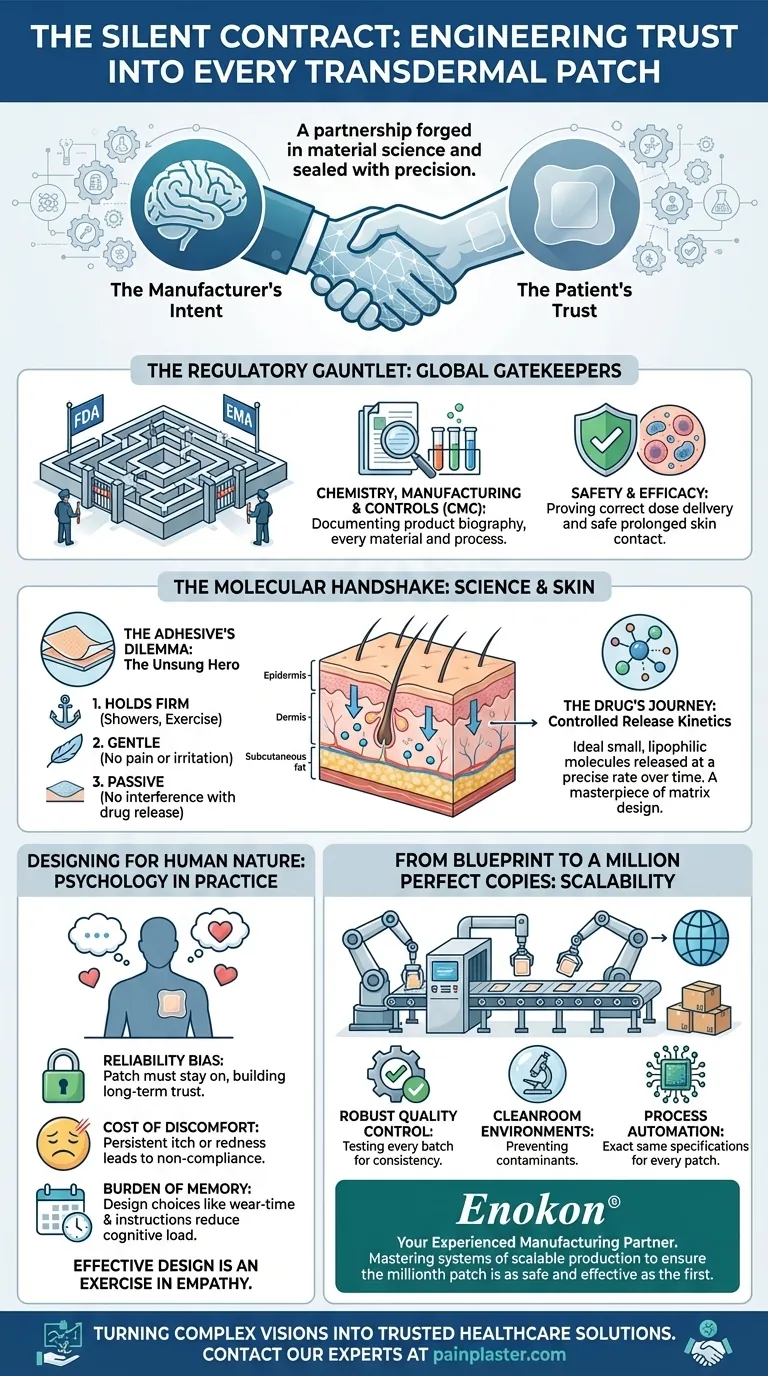
Before a patch ever touches a patient’s skin, it must pass a global gauntlet of trust. Regulatory bodies like the FDA and EMA aren't just bureaucratic hurdles; they are the codified expectations of a society that demands safety and efficacy.
- Chemistry, Manufacturing, and Controls (CMC): This is the product’s biography. Every material, every process, and every quality check must be documented with uncompromising detail.
- Safety and Efficacy: The patch must not only prove it delivers the correct dose but also that its components are safe for prolonged skin contact.
Navigating this landscape from day one is non-negotiable. An early misstep in regulatory strategy can send a promising product back to the drawing board, costing years and millions.
The Molecular Handshake: A Dialogue with the Body
At its core, a transdermal patch facilitates a dialogue between a drug formulation and the human body. The skin is a formidable barrier, designed to keep things out. Getting past it requires a deep understanding of biochemistry and material science.
The Adhesive's Dilemma
The adhesive is the patch's unsung hero. It performs a delicate balancing act:
- It must hold firm: Through showers, exercise, and the friction of clothing.
- It must be gentle: It cannot irritate the skin or cause pain upon removal.
- It must be passive: It cannot interfere with the drug's release profile.
This requires a hypoallergenic, flexible material that forms a "silent handshake" with the skin—strong but respectful.
The Drug's Journey
Not every drug is a candidate for transdermal delivery. The ideal molecule is small, lipophilic (fat-soluble), and potent in low doses. The patch's matrix must hold this molecule in a stable suspension, releasing it at a precise, predetermined rate over hours or days. This journey from patch to bloodstream is a masterpiece of controlled-release kinetics.
Designing for Human Nature, Not Just Human Skin
A technically perfect patch can still fail if it ignores the psychology of the person wearing it. Patient adherence is not just a clinical term; it's a reflection of human behavior.
- The Reliability Bias: Patients must trust that the patch will stay on. If it peels at the edges or falls off once, that trust is broken. Future compliance plummets.
- The Cost of Discomfort: A patch that causes a persistent itch or redness creates a negative feedback loop. The patient associates the therapy with discomfort, making them less likely to use it as prescribed.
- The Burden of Memory: Forgetting to apply or change a patch is a common point of failure. Design choices—like wear-time and clear instructions—must aim to reduce this cognitive load.
Effective patch design is, therefore, an exercise in empathy. It anticipates the realities of daily life and designs a product that fits seamlessly within it.
From Blueprint to a Million Perfect Copies
The journey from a flawless lab prototype to millions of identical, reliable patches is where most projects face their greatest test. This is the challenge of scalability.
Consistency is not a given; it is a discipline. It requires:
- Robust Quality Control: Testing every batch for adhesion, drug content, and release rate.
- Cleanroom Environments: Preventing microscopic contaminants that could compromise safety or efficacy.
- Process Automation: Ensuring every patch is cut, layered, and packaged to the exact same specifications.
This is where specialized expertise becomes critical. An experienced manufacturing partner like Enokon doesn't just assemble materials; they manage complexity. By mastering the systems of scalable production, we ensure that the millionth patch is as safe and effective as the first. This systematic approach transforms a brilliant R&D concept into a trusted healthcare solution.
| Challenge Domain | Key Engineering Consideration | The Human Impact |
|---|---|---|
| Regulatory | Adherence to FDA/EMA guidelines; comprehensive CMC documentation | Ensures patient safety and builds public trust. |
| Material Science | Biocompatible adhesives; optimized drug formulation & stability | Delivers comfort, reliability, and therapeutic efficacy. |
| Patient Psychology | Adhesion reliability; minimized irritation; intuitive design | Fosters compliance and a positive user experience. |
| Manufacturing | Scalable processes; stringent quality control; process consistency | Guarantees that every single patch is trustworthy. |
Ultimately, a transdermal patch is far more than the sum of its parts. It is a vessel of trust, a testament to precision engineering, and a silent partner in a patient's health. Turning this complex vision into a market-ready reality requires a partner with deep technical expertise. If you're ready to develop a transdermal solution built on a foundation of reliability and trust, Contact Our Experts.
Visual Guide
Related Products
- Far Infrared Heat Pain Relief Patches Transdermal Patches
- Silicone Scar Sheets Patch Transdermal Drug Patch
- Icy Hot Menthol Medicine Pain Relief Patch
- Menthol Gel Pain Relief Patch
- Mugwort Wormwood Pain Relief Patch for Neck Pain
Related Articles
- Engineering Certainty: The Invisible Architecture of a Gold-Standard Clinical Trial
- The Silent Workhorse: How Transdermal Patches Rewrote the Rules of Pain Management
- Beyond the Pill: The Silent Engineering of Safer Pain Relief
- Beyond Efficacy: The Psychology of Adherence in Topical Pain Relief
- Beyond the Molecule: The Behavioral Science of the Simple Pain Patch



















