
Yes, lidocaine patches can interact with other medications. While the risk is generally lower than with oral medications because the drug acts locally, a portion of the lidocaine is absorbed into your bloodstream. This systemic absorption is the source of potential interactions, primarily with medications that affect heart rhythm or are processed by the same liver enzymes.
The core issue is not the patch itself, but the amount of lidocaine that enters your system. When absorbed, lidocaine can have an additive effect with other drugs, most critically those used to control heart rhythm, leading to an increased risk of side effects and toxicity.
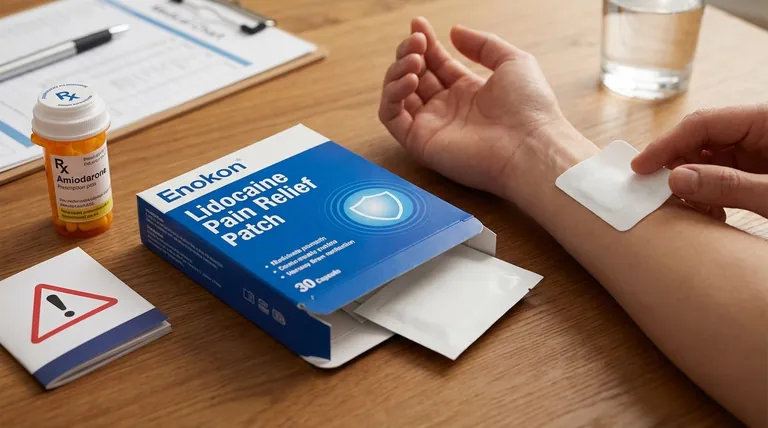
How Lidocaine Absorption Leads to Interactions
To understand the risk, you need to understand how the patch is designed to work—and how that can go wrong.
The Principle of Local Action
A lidocaine patch is a topical analgesic. Its primary goal is to deliver the anesthetic directly to the nerve endings in the skin over a painful area, providing targeted relief without affecting the entire body.
The Risk of Systemic Absorption
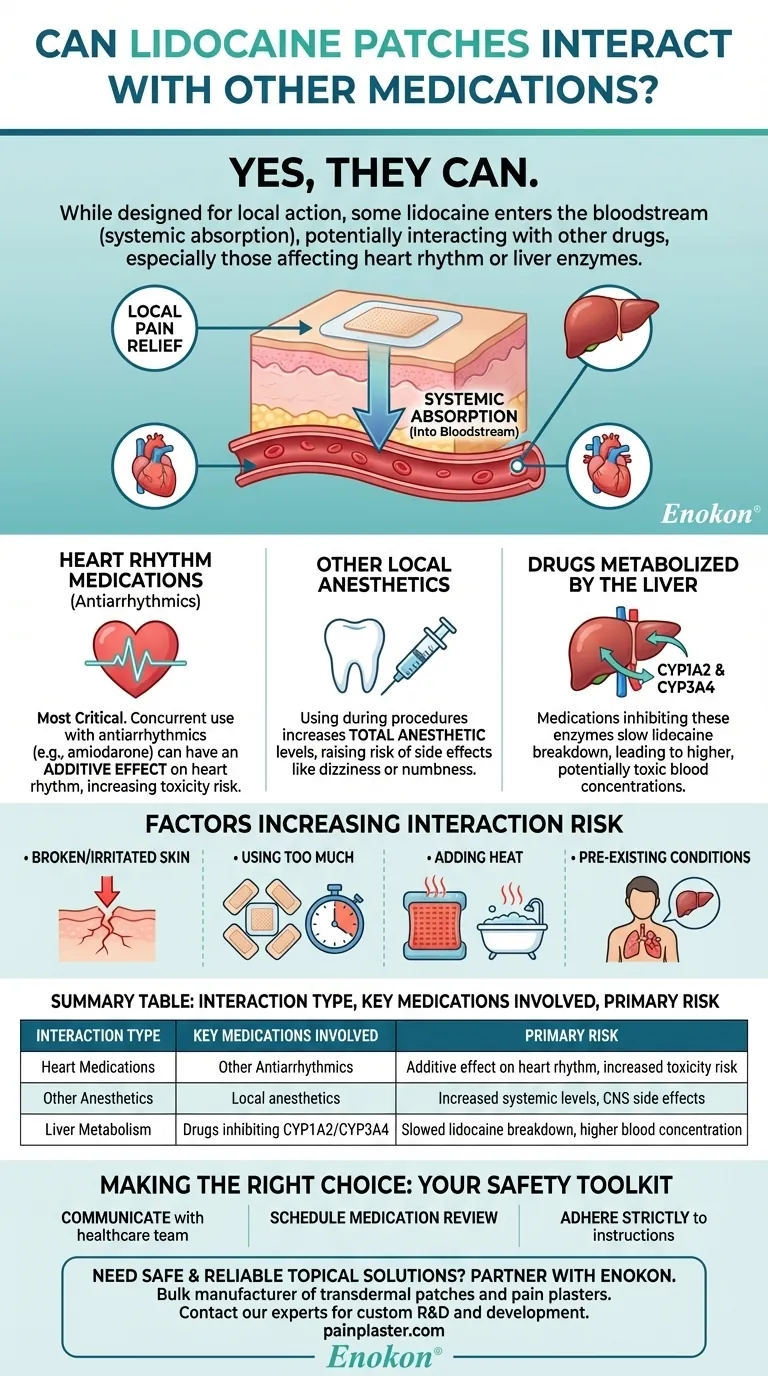
Despite its local design, a small amount of lidocaine inevitably passes through the skin and enters your bloodstream. This is known as systemic absorption. When this happens, the lidocaine circulates throughout your body and can interact with other medications, just as an oral drug would.
Key Medications That May Interact with Lidocaine
The most significant interactions involve drugs that share similar effects or metabolic pathways with lidocaine.
Heart Rhythm Medications (Antiarrhythmics)
This is the most critical category. Lidocaine itself is classified as a Class IB antiarrhythmic drug. Using it concurrently with other antiarrhythmics (like amiodarone, flecainide, or mexiletine) can have an additive effect. This can disrupt the heart's electrical activity and significantly increase the risk of toxicity.
Other Local Anesthetics
Using a lidocaine patch while also receiving other local anesthetics (for example, during a dental or minor surgical procedure) can increase the total amount of anesthetic in your system. This raises the risk of side effects like dizziness, numbness, or, in rare cases, more severe central nervous system effects.
Drugs Metabolized by the Liver
Lidocaine is broken down in the liver by specific enzymes, primarily CYP1A2 and CYP3A4. Medications that inhibit these enzymes can slow the breakdown of lidocaine, causing its levels in the blood to rise to potentially toxic levels.
Factors That Increase the Risk of Interaction
How you use the patch and your underlying health can dramatically change your risk profile. The goal is always to minimize systemic absorption.
Applying to Broken or Irritated Skin
The skin is a natural barrier. Applying a patch to skin that is cut, scraped, or inflamed allows for much faster and greater absorption of lidocaine into the bloodstream.
Using Too Much
Never use more patches than prescribed or apply them for longer than directed. An overdose of topical lidocaine can lead to serious systemic toxicity.
Adding Heat
Applying a heating pad over a lidocaine patch or taking a hot bath while wearing one is dangerous. Heat increases blood flow to the skin, which significantly accelerates lidocaine absorption.
Pre-existing Health Conditions
Individuals with severe liver disease may not be able to metabolize lidocaine effectively, leading to higher blood concentrations. Similarly, those with pre-existing heart conditions are more sensitive to the cardiac effects of lidocaine.
Making the Right Choice for Your Health
Your primary tool for safety is open and honest communication with your healthcare team.
- If your primary focus is managing pain while taking heart rhythm medication: You must speak with your cardiologist and prescribing doctor before using a lidocaine patch, as the risk of a serious interaction is highest for you.
- If your primary focus is safety while on multiple medications: Schedule a medication review with your doctor or pharmacist to specifically check for any drugs that affect liver enzymes or have central nervous system effects.
- If your primary focus is temporary relief for localized pain: Adhere strictly to the package instructions—apply only to intact skin, use the correct number of patches, and avoid any heat sources.
Ultimately, informing your healthcare provider about every medication you take, including over-the-counter patches, is the most effective way to ensure your safety.
Summary Table:
| Interaction Type | Key Medications Involved | Primary Risk |
|---|---|---|
| Heart Medications | Other antiarrhythmics (e.g., amiodarone) | Additive effect on heart rhythm, increased toxicity risk |
| Other Anesthetics | Local anesthetics from procedures | Increased systemic levels, CNS side effects |
| Liver Metabolism | Drugs that inhibit CYP1A2/CYP3A4 enzymes | Slowed lidocaine breakdown, higher blood concentration |
Need a Safe and Reliable Topical Pain Relief Solution? Partner with Enokon.
As a bulk manufacturer of transdermal patches and pain plasters, we understand the critical importance of precise drug delivery and safety. If you are a healthcare or pharmaceutical distributor or brand looking for custom R&D and development of topical analgesics, our technical expertise ensures your products are formulated for optimal efficacy and minimal interaction risk.
Contact our experts today to discuss your custom patch development needs.
Visual Guide
Related Products
- Lidocaine Hydrogel Pain Relief Patch for Pain Relief
- Herbal Medicated Anti Diarrhea Patch for Digestive Relief
- Menthol Gel Pain Relief Patch
- Icy Hot Menthol Medicine Pain Relief Patch
- Asthma Cough and Pain Relief Patch for Adults and Kids
People Also Ask
- How does the aqueous base in a lidocaine patch contribute to drug delivery? Unlocking Sustained Pain Relief Technology
- What are the advantages of topical anesthetics over invasive Lidocaine infiltration? Discover Safer, Scalable Relief
- Which pain patch is most effective for arthritis? Find the Best Relief for Your Joint Pain
- Will a GP routinely continue prescribing lidocaine patches after the initial period? Understanding Short-Term Pain Relief
- Why are lidocaine patches preferred over oral medications? Targeted Relief & Scale Your Brand with OEM R&D Solutions



















