
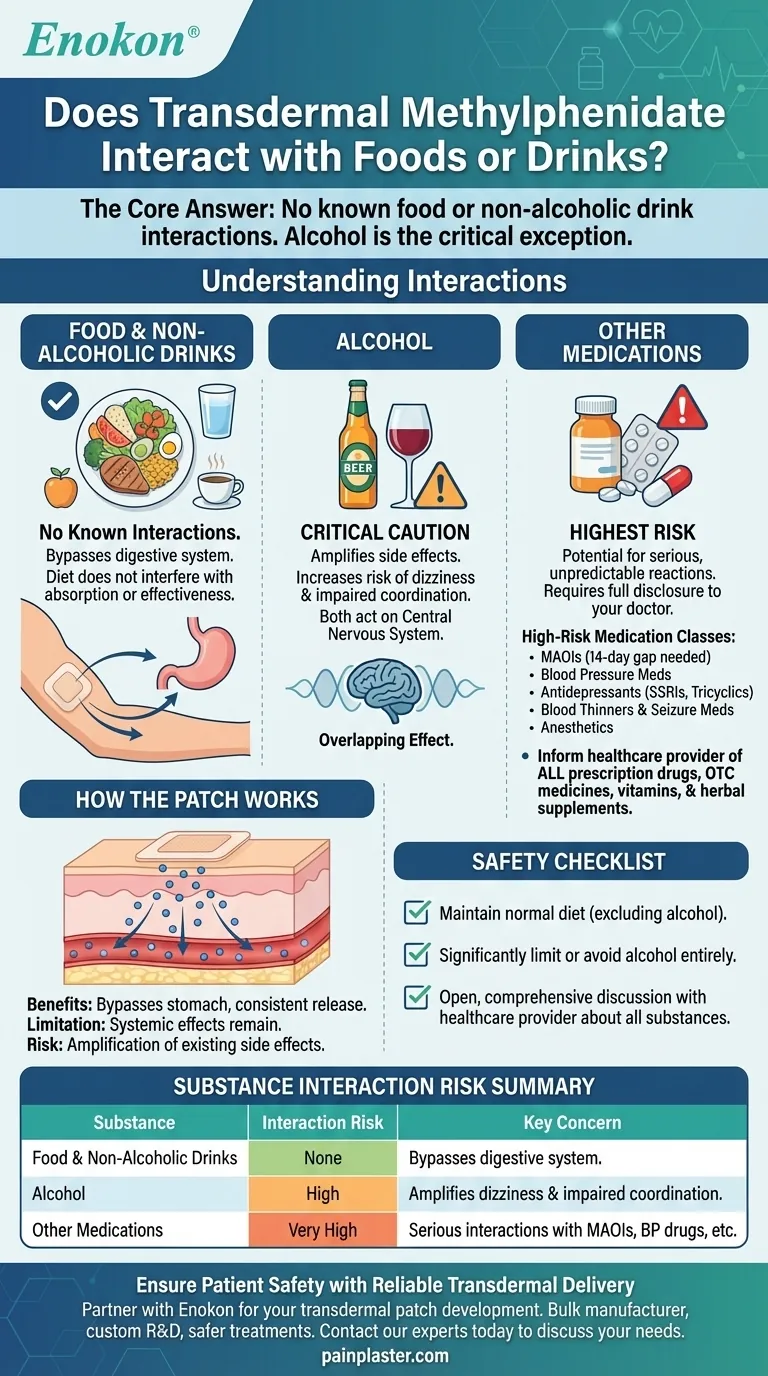
To be direct, transdermal methylphenidate does not have any known interactions with specific foods or non-alcoholic drinks. The medication is absorbed through the skin, bypassing the digestive system where most food-drug interactions occur. The critical exception to this rule, however, is alcohol, which can significantly increase certain side effects.
While your diet is not a concern, the true safety focus when using the methylphenidate patch shifts to alcohol consumption and, more importantly, potential interactions with other medications you may be taking.

The Core Answer: Food, Drinks, and Alcohol
Understanding how the patch delivers medication is key to understanding its interactions. Because it's absorbed transdermally (through the skin), it avoids the complexities of the stomach and liver on the first pass.
No Known Food Interactions
You do not need to alter your diet or avoid any specific foods while using the methylphenidate patch. The method of delivery means that what you eat will not interfere with the drug's absorption or effectiveness.
The Critical Role of Alcohol
Alcohol is the one substance you must be cautious with. Consuming alcohol while using methylphenidate can amplify side effects, most notably dizziness and impaired coordination.
This is not a unique chemical reaction but an overlapping effect. Both substances act on the central nervous system, and their combined impact can be greater than the sum of their parts, increasing the risk of accidents or falls.
The More Pressing Concern: Drug Interactions
While users often ask about food, the far more significant risk comes from interactions with other medications. Methylphenidate is a stimulant that has systemic effects on your brain and cardiovascular system.
Why Drug Interactions Are a Higher Risk
When combined with other drugs that also affect blood pressure, heart rate, or brain chemistry, the results can be unpredictable and potentially dangerous. This makes full disclosure to your doctor essential.
High-Risk Medication Classes
It is critical that your healthcare provider knows if you are taking any of the following, as they can have serious interactions with methylphenidate:
- MAOIs (Monoamine Oxidase Inhibitors): Should not be used within 14 days of methylphenidate.
- Blood Pressure Medications: Methylphenidate can interfere with their effectiveness.
- Antidepressants: Specifically SSRIs and tricyclic antidepressants.
- Blood Thinners and Seizure Medications.
- Anesthetics used for surgery.
The Importance of Full Disclosure
Always provide your healthcare team with a complete list of everything you take. This includes all prescription drugs, over-the-counter medicines, vitamins, and herbal supplements. What may seem harmless could be part of a dangerous combination.
Understanding the Trade-offs
Using a transdermal patch comes with a distinct set of benefits and considerations compared to oral medication.
The Benefit: Bypassing the Stomach
The primary advantage of the patch is avoiding the digestive tract. This eliminates food-related interaction issues and can provide a more consistent, steady release of medication throughout the day.
The Limitation: Systemic Effects Remain
Even though the patch is applied to your skin, the medication enters your bloodstream and affects your entire body. It is not a "local" treatment. This is why interactions with alcohol and other systemic drugs remain a primary safety concern.
The Risk: Side Effect Amplification
The main issue with alcohol is the amplification of existing side effects. If you are already prone to dizziness from methylphenidate, alcohol will almost certainly make it worse, compromising your safety and daily function.
A Practical Safety Checklist
Use these points to guide your conversations and daily habits while using the transdermal methylphenidate patch.
- If your primary focus is daily diet: You can maintain your normal eating and drinking habits (excluding alcohol) without concern for interactions.
- If you consume alcohol: You should significantly limit or avoid it entirely to prevent intensifying side effects like dizziness and impairing your coordination.
- If you take any other medication or supplement: You must have an open and comprehensive discussion with your healthcare provider to screen for potentially serious drug interactions.
Proactive communication with your healthcare team is the most effective way to ensure your treatment is both safe and successful.
Summary Table:
| Substance | Interaction Risk | Key Concern |
|---|---|---|
| Food & Non-Alcoholic Drinks | None | Bypasses digestive system; no known interactions. |
| Alcohol | High | Amplifies side effects like dizziness and impaired coordination. |
| Other Medications | Very High | Risk of serious interactions with MAOIs, blood pressure drugs, antidepressants, etc. |
Ensure Patient Safety with Reliable Transdermal Delivery
As a healthcare distributor or pharmaceutical brand, managing medication safety profiles is paramount. This article highlights the critical need for precise, consistent transdermal patch technology to avoid unintended interactions and ensure predictable therapeutic outcomes.
Partner with Enokon for your transdermal patch development. We are a bulk manufacturer of reliable transdermal patches and pain plasters. Our technical expertise supports custom R&D and development, helping you deliver safer, more effective treatments to your patients.
Let's collaborate to enhance your product line with trusted transdermal solutions. Contact our experts today to discuss your specific needs.
Visual Guide
Related Products
- Silicone Scar Sheets Patch Transdermal Drug Patch
- Menthol Gel Pain Relief Patch
- Far Infrared Heat Pain Relief Patches Transdermal Patches
- Icy Hot Menthol Medicine Pain Relief Patch
- Mugwort Wormwood Pain Relief Patch for Neck Pain
People Also Ask
- What role does a silicone-based transdermal delivery system play in Parkinson's? Enhancing Early-Stage Patient Care
- What are common adverse effects of transdermal drug delivery? Risks & Prevention Tips
- What are the advantages of transdermal drug patches? Optimize Medication Delivery with Patches
- Why is silicone adhesive preferred for high-performance transdermal patches? Superior Delivery & Patient Comfort
- How does n-octanol/water partition coefficient assist transdermal patch R&D? Optimize Formulas for Mass Production
















