
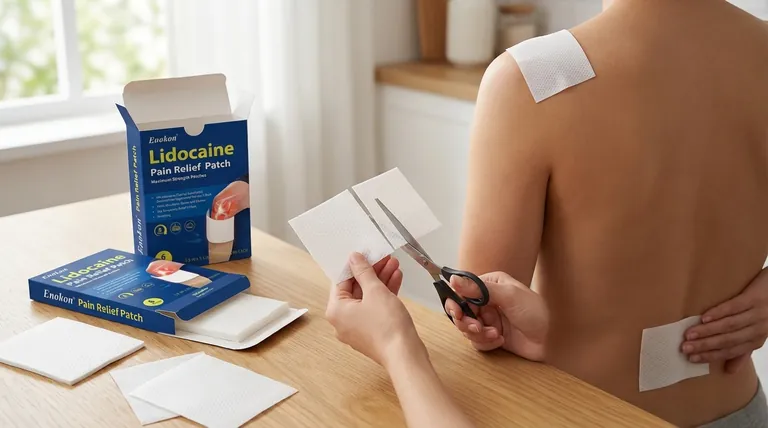
Yes, you can use lidocaine patches on multiple sore spots, and the most effective method is often to cut a single patch to fit each area. This approach allows you to target pain precisely while ensuring you adhere to the recommended dosage and application time, which is typically up to 12 hours.
The central principle for treating multiple sore spots is not about how many pieces you use, but about ensuring the total amount of lidocaine patch on your body at one time does not exceed the maximum recommended dose. Safety and proper application are paramount for effective relief.
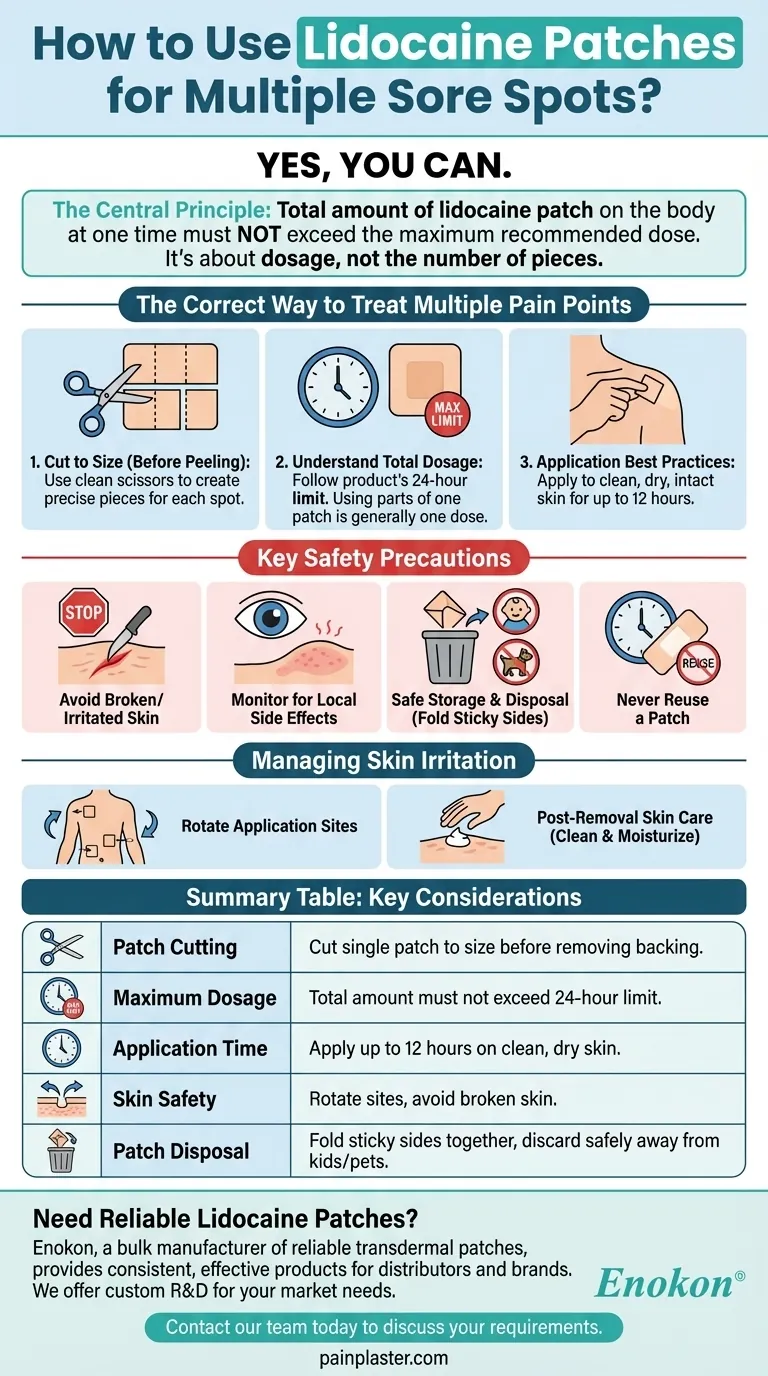
The Correct Way to Treat Multiple Pain Points
Managing pain in several locations requires a focus on precision and adherence to dosage guidelines. Simply applying more patches is not the correct or safest approach.
Cutting the Patch to Size
Before removing the protective film, use a clean pair of scissors to cut the patch into smaller pieces that are just large enough to cover each sore spot. This conserves the patch and allows you to target pain more accurately.
Understanding Your Total Dosage
The most critical rule is to follow the dosage instructions on the product packaging. This usually specifies the maximum number of patches (or the total patch area) that can be used within a 24-hour period.
Applying pieces from a single patch to two different spots is generally safe, as you are still using the dose of one patch. If you need to use more than one full patch, consult the product label to ensure you do not exceed the maximum limit.
Application Best Practices
Always apply the patch or its pieces to clean, dry, and intact skin. The area should be free of lotions, oils, or any other products that could interfere with the adhesive.
Key Safety Precautions to Follow
Using lidocaine patches correctly is essential for avoiding adverse effects. These simple safety measures protect you and others.
Avoid Broken or Irritated Skin
Never apply a lidocaine patch to skin that is broken, cut, scraped, or has a rash. Applying it to damaged skin can cause the body to absorb too much medication too quickly, increasing the risk of systemic side effects.
Monitor for Local Side Effects
Pay close attention to the application site. Mild redness, itching, or a burning sensation can occur, but if these symptoms are severe or persist after you remove the patch, you should stop using it and consult your doctor.
Safe Storage and Disposal
Keep new and used patches out of reach of children and pets. Even a used patch contains enough residual lidocaine to be harmful if ingested.
After use, fold the sticky sides of the patch together and dispose of it in the trash, safely away from children or animals.
Never Reuse a Patch
Once a patch has been worn for the recommended time (e.g., 12 hours), it should be discarded. Reusing a patch is ineffective as the medication is largely depleted, and the adhesive will not stick properly.
Managing a Common Issue: Skin Irritation
Prolonged use on the same spot can sometimes lead to skin irritation. Fortunately, this is often preventable.
Rotate Application Sites
To give your skin a break, avoid applying a new patch to the exact same spot every day. Rotate between a few different locations around the painful area.
Post-Removal Skin Care
After you remove a patch, gently clean the area with mild soap and water. Applying a gentle, fragrance-free moisturizer can help soothe the skin and prevent excessive dryness or irritation.
When to Seek Medical Advice
If skin irritation becomes severe, does not improve with moisturizer, or you develop blisters or welts, stop using the patches. This may indicate an allergic reaction that requires medical attention.
How to Apply This to Your Goal
Your strategy should adapt based on the nature of your pain and your treatment goals.
- If your primary focus is treating two small, nearby areas: Cut a single patch to cover both spots, ensuring you adhere to the single 12-hour application window.
- If your primary focus is treating larger, distant areas of pain: Use separate patches or pieces, but confirm the total amount on your body at one time does not exceed the maximum dose on the product label.
- If your primary focus is consistent, long-term relief: Prioritize rotating application sites and post-removal skin care to maintain skin health and prevent irritation.
By combining precise application with a strict adherence to safety guidelines, you can effectively manage your pain while minimizing potential risks.
Summary Table:
| Key Consideration | Guideline |
|---|---|
| Patch Cutting | Cut a single patch to size for each sore spot before removing the backing. |
| Maximum Dosage | The total amount of patch on the body must not exceed the product's 24-hour limit. |
| Application Time | Apply for up to 12 hours on clean, dry, intact skin. |
| Skin Safety | Rotate application sites and avoid broken or irritated skin. |
| Patch Disposal | Fold used patch sticky sides together and discard safely out of reach of children/pets. |
Need a reliable supply of high-quality lidocaine patches?
As Enokon, a bulk manufacturer of reliable transdermal patches and pain plasters, we provide healthcare and pharmaceutical distributors and brands with consistent, effective products. Our technical expertise supports custom R&D to develop patches tailored to your specific market needs.
Contact our team today to discuss your requirements and benefit from our manufacturing excellence.
Visual Guide
Related Products
- Lidocaine Hydrogel Pain Relief Patch for Pain Relief
- Menthol Gel Pain Relief Patch
- Herbal Medicated Anti Diarrhea Patch for Digestive Relief
- Icy Hot Menthol Medicine Pain Relief Patch
- Capsaicin Chili Medicated Pain Relief Patches
People Also Ask
- How does the aqueous base in a lidocaine patch contribute to drug delivery? Unlocking Sustained Pain Relief Technology
- What are the advantages of topical anesthetics over invasive Lidocaine infiltration? Discover Safer, Scalable Relief
- Which pain patch is most effective for arthritis? Find the Best Relief for Your Joint Pain
- Will a GP routinely continue prescribing lidocaine patches after the initial period? Understanding Short-Term Pain Relief
- Why are lidocaine patches preferred over oral medications? Targeted Relief & Scale Your Brand with OEM R&D Solutions



















