
At its core, a lidocaine patch works by delivering a local anesthetic directly through the skin to calm overactive, damaged nerves. It functions like a targeted noise-canceling system for pain signals, interfering with the ability of specific nerve fibers to send distress messages to your brain without affecting normal sensation in the area.
The key insight is that lidocaine patches are not a simple painkiller that numbs an area. Instead, they selectively reduce the aberrant firing of damaged nerves associated with certain chronic pain conditions, which is why they don't cause numbness and aren't effective for all types of pain.

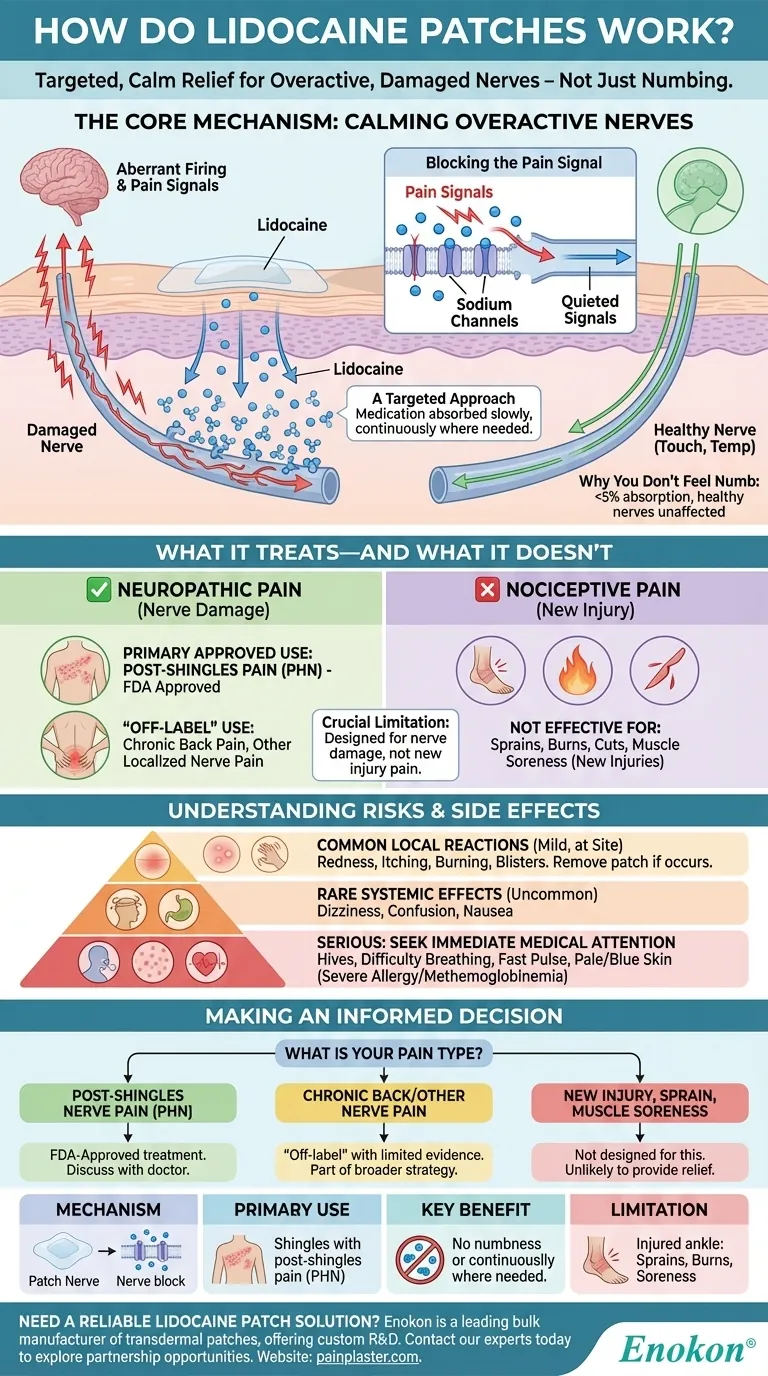
The Core Mechanism: Calming Overactive Nerves
A Targeted Approach
The patch is applied directly over the most painful area of skin. This allows the medication, lidocaine, to be absorbed slowly and continuously into the tissue right where it's needed most.
Blocking the Pain Signal
Lidocaine works by stabilizing the sodium channels on the surface of nerve cells. In chronic pain conditions like post-shingles pain, these nerves can become hypersensitive and fire erratically. By blocking these channels, lidocaine reduces this aberrant firing, effectively quieting the source of the pain signals.
Why You Don't Feel Numb
Crucially, less than 5% of the lidocaine is absorbed into the bloodstream. This dose is too low to cause the complete numbness you'd associate with a dental injection. It also doesn't affect the function of healthy nerves that transmit normal sensations like touch, pressure, or temperature.
What It Treats—And What It Doesn't
The Primary Approved Use: Post-Shingles Pain
The FDA has specifically approved the 5% lidocaine patch for treating the lingering nerve pain that can occur after a shingles infection, known as post-herpetic neuralgia (PHN).
"Off-Label" Use for Other Pains
Doctors may also prescribe lidocaine patches for other conditions, such as chronic lower back pain or other types of localized nerve pain. This is considered an "off-label" use.
The Critical Limitation
Lidocaine patches are designed for neuropathic pain—pain caused by nerve damage. They are not effective for nociceptive pain, which results from a new injury like a cut, burn, or sprained ankle. The evidence supporting their effectiveness for conditions like back pain remains inconclusive.
Understanding the Risks and Side Effects
Common Local Reactions
The most frequent side effects occur directly at the application site. These are typically mild and can include redness, itching, burning, irritation, blisters, or swelling on the skin under the patch. If these reactions occur, you should remove the patch.
Rare Systemic Effects
Because so little medication enters the bloodstream, systemic side effects are uncommon. However, they can include dizziness, confusion, or nausea.
When to Seek Immediate Medical Attention
Though extremely rare, serious side effects are possible. You should contact a doctor immediately if you experience hives, difficulty breathing or swallowing, a fast pulse, weakness, or pale or blue-tinged skin, as these could be signs of a severe allergic reaction or a condition called methemoglobinemia.
Making an Informed Decision
Deciding if a lidocaine patch is right for you depends entirely on the type of pain you are experiencing.
- If your primary focus is post-shingles nerve pain (PHN): The patch is an FDA-approved treatment specifically designed for this condition and is a valid option to discuss with your doctor.
- If your primary focus is chronic back pain or other nerve pain: The patch is considered an "off-label" treatment with limited evidence, so it's crucial to manage expectations and consider it as one part of a broader treatment strategy.
- If your primary focus is pain from a new injury, sprain, or muscle soreness: This patch is not designed for this type of pain and is unlikely to provide relief.
Understanding that lidocaine patches target a specific type of nerve dysfunction is the first step toward using them safely and effectively as part of a comprehensive pain management plan.
Summary Table:
| Feature | Description |
|---|---|
| Mechanism | Delivers lidocaine through skin to block sodium channels on nerve fibers, reducing pain signals. |
| Primary Use | FDA-approved for post-herpetic neuralgia (PHN); off-label for other nerve pain. |
| Key Benefit | Targets neuropathic pain without causing numbness or significant systemic absorption. |
| Limitation | Not effective for nociceptive pain (e.g., new injuries, sprains). |
Need a reliable, high-quality lidocaine patch solution for your healthcare brand or distribution network? As Enokon, a leading bulk manufacturer of transdermal patches and pain plasters, we provide custom R&D and development expertise to create effective, safe products tailored to your market. Let's discuss how we can support your pain management portfolio. Contact our experts today to explore partnership opportunities.
Visual Guide
Related Products
- Lidocaine Hydrogel Pain Relief Patch for Pain Relief
- Capsaicin Chili Medicated Pain Relief Patches
- Menthol Gel Pain Relief Patch
- Icy Hot Menthol Medicine Pain Relief Patch
- Herbal Medicated Anti Diarrhea Patch for Digestive Relief
People Also Ask
- How does the aqueous base in a lidocaine patch contribute to drug delivery? Unlocking Sustained Pain Relief Technology
- What are the advantages of topical anesthetics over invasive Lidocaine infiltration? Discover Safer, Scalable Relief
- Which pain patch is most effective for arthritis? Find the Best Relief for Your Joint Pain
- Will a GP routinely continue prescribing lidocaine patches after the initial period? Understanding Short-Term Pain Relief
- Why are lidocaine patches preferred over oral medications? Targeted Relief & Scale Your Brand with OEM R&D Solutions



















