
Lidocaine plasters are a targeted pain relief solution that work by delivering the local anesthetic lidocaine directly to the skin's surface. They temporarily block pain signals from specific nerves without causing numbness or systemic side effects, making them ideal for localized neuropathic pain. While some relief may be noticed quickly, optimal results typically require 2-4 weeks of consistent use. Their mechanism focuses on abnormal nerve activity rather than general pain sensitivity, offering a unique approach to managing chronic discomfort.
Key Points Explained:
-
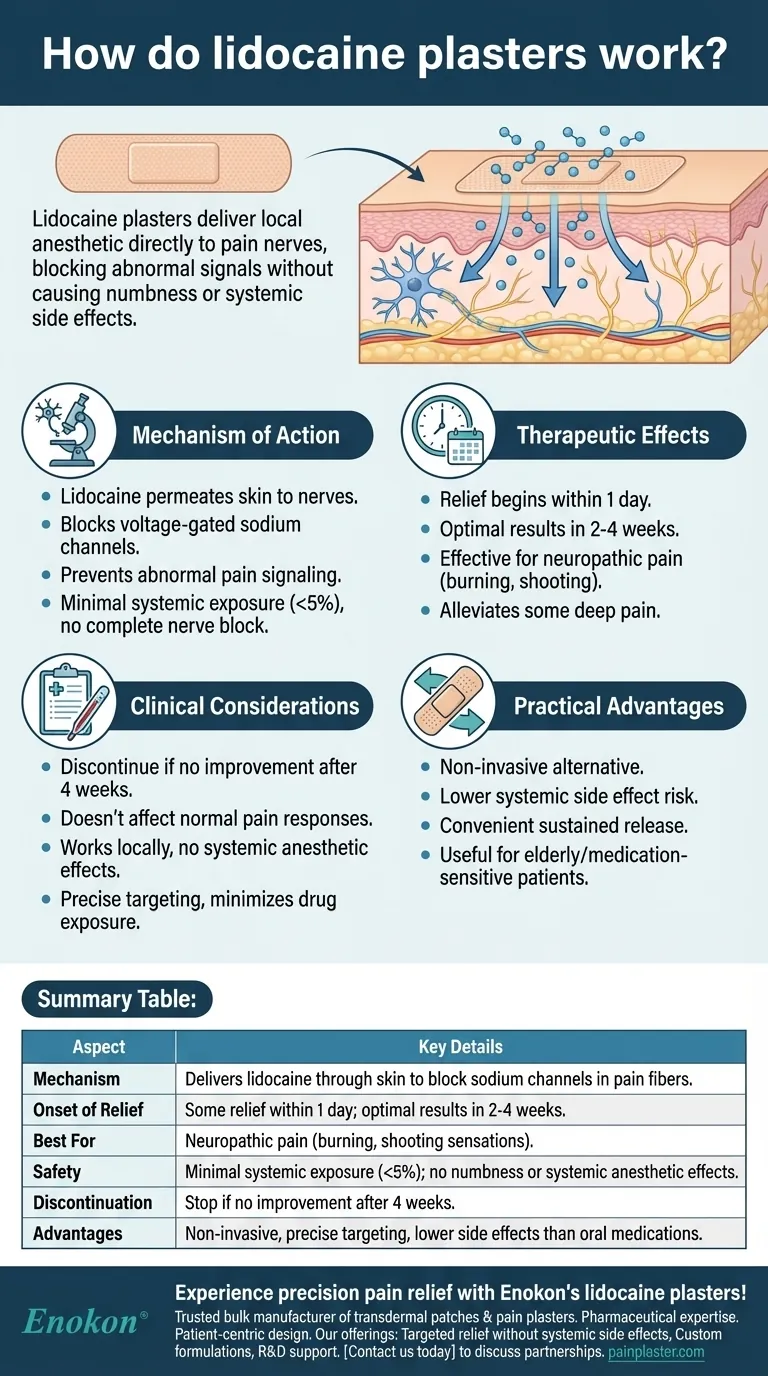
Mechanism of Action
- Lidocaine plasters deliver the local anesthetic through the skin to underlying nerves
- The drug blocks voltage-gated sodium channels in pain fibers, preventing abnormal signaling
- Unlike injections, the plaster provides gradual absorption with minimal systemic exposure (<5%)
- Patients don't experience numbness because concentrations remain below thresholds for complete nerve blockade
-
Therapeutic Effects
- Begins providing some relief within the first day of application
- Reaches maximum effectiveness after 2-4 weeks of regular use
- Particularly effective for neuropathic pain qualities (burning, shooting sensations)
- May also alleviate some deeper pain components through peripheral mechanisms
-
Clinical Considerations
- Should be discontinued if no improvement occurs after 4 weeks
- Doesn't affect normal nociceptive responses (pinprick, thermal sensitivity)
- Works locally without causing systemic anesthetic effects
- The plaster format allows precise targeting of painful areas while minimizing drug exposure elsewhere
-
Practical Advantages
- Non-invasive alternative to oral medications or injections
- Lower risk of systemic side effects compared to oral formulations
- Convenient dosing through sustained release from the adhesive matrix
- Particularly useful for elderly patients or those with medication sensitivity
This targeted approach exemplifies how modern medicine can deliver relief precisely where needed, transforming how we manage chronic pain conditions while minimizing unnecessary systemic effects. The plaster technology represents an elegant solution bridging pharmaceutical efficacy with patient comfort.
Summary Table:
| Aspect | Key Details |
|---|---|
| Mechanism | Delivers lidocaine through skin to block sodium channels in pain fibers |
| Onset of Relief | Some relief within 1 day; optimal results in 2-4 weeks |
| Best For | Neuropathic pain (burning, shooting sensations) |
| Safety | Minimal systemic exposure (<5%); no numbness or systemic anesthetic effects |
| Discontinuation | Stop if no improvement after 4 weeks |
| Advantages | Non-invasive, precise targeting, lower side effects than oral medications |
Experience precision pain relief with Enokon’s lidocaine plasters!
As a trusted bulk manufacturer of transdermal patches and pain plasters, we combine pharmaceutical expertise with patient-centric design. Our lidocaine plasters offer:
- Targeted relief without systemic side effects
- Custom formulations for healthcare brands and distributors
- R&D support for specialized applications
Contact us today to discuss partnerships or custom solutions tailored to your patients’ needs.
Visual Guide
Related Products
- Lidocaine Hydrogel Pain Relief Patch for Pain Relief
- Capsaicin Chili Medicated Pain Relief Patches
- Heat Relief Capsicum Patch for Lower Back Pain Relief
- Natural Herbal Wormwood Patch Pain Plaster
People Also Ask
- How does the aqueous base in a lidocaine patch contribute to drug delivery? Unlocking Sustained Pain Relief Technology
- What are the advantages of topical anesthetics over invasive Lidocaine infiltration? Discover Safer, Scalable Relief
- Which pain patch is most effective for arthritis? Find the Best Relief for Your Joint Pain
- Will a GP routinely continue prescribing lidocaine patches after the initial period? Understanding Short-Term Pain Relief
- Why are lidocaine patches preferred over oral medications? Targeted Relief & Scale Your Brand with OEM R&D Solutions



