
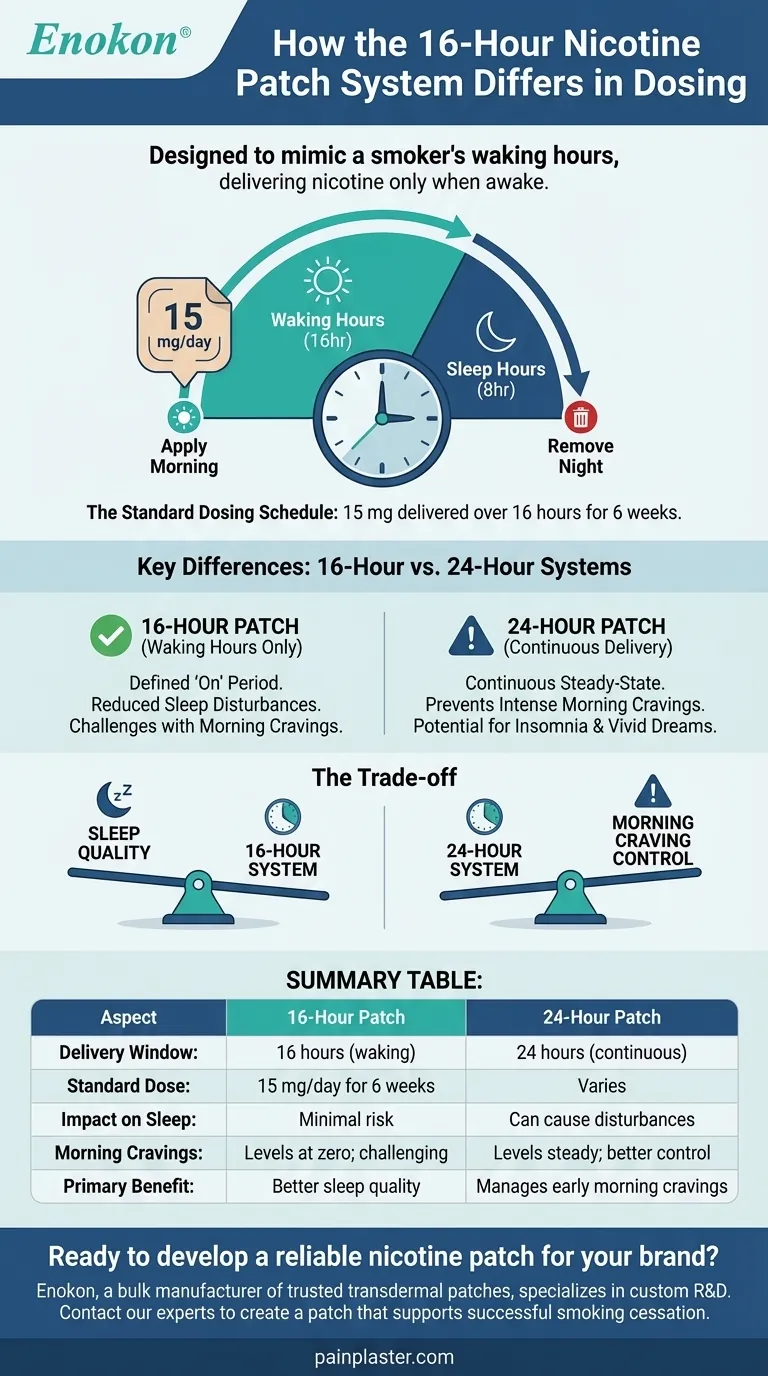
The fundamental difference in the 16-hour nicotine patch system is its delivery schedule, which is designed to mimic the nicotine intake of a typical smoker during their waking hours. The standard recommendation is to use a 15 mg/day patch for a period of six weeks, removing it before you go to sleep.
The core distinction of the 16-hour patch is not just its milligram strength, but its strategy: it provides nicotine only while you are awake. This approach directly targets the primary side effect of 24-hour patches—sleep disturbance—at the cost of not managing early morning cravings.

The Principle: Matching a Smoker's Waking Hours
The 16-hour patch system is built on a simple premise: you don't smoke in your sleep. By delivering nicotine only during the day, it aims to provide a more naturalistic form of nicotine replacement.
How the System Works
The user applies the patch in the morning and removes it at night before bed. This creates a daily cycle where nicotine levels in the body rise during the day to manage cravings and then fall to zero overnight.
The Standard Dosing Schedule
The recommended starting dose is 15 mg of nicotine delivered over 16 hours. This regimen is typically followed for six weeks. It's important to note that there is no proven benefit to extending the use of this system beyond a total of eight weeks.
Key Differences: 16-Hour vs. 24-Hour Systems
Understanding how the 16-hour system differs from its 24-hour counterpart is crucial for making an informed decision. The choice between them hinges on a single trade-off: sleep quality versus morning craving control.
The Nicotine Delivery Window
The most obvious difference is the duration of nicotine delivery. The 16-hour patch provides a defined "on" period, while the 24-hour patch provides a continuous, steady-state level of nicotine in your bloodstream around the clock.
Impact on Sleep
Because the 16-hour patch is removed at night, it significantly reduces the risk of nicotine-related sleep disturbances. Side effects like insomnia, vivid dreams, or nightmares are common with 24-hour systems but are largely avoided with the 16-hour patch.
Impact on Morning Cravings
The major advantage of the 24-hour patch is its ability to prevent intense cravings upon waking. Because nicotine levels remain steady overnight, users wake up with the drug already in their system. With the 16-hour patch, nicotine levels are at zero in the morning, which can make that first hour of the day more challenging.
Understanding the Trade-offs
Neither system is inherently superior; they are simply designed for different user priorities and sensitivities. Choosing the right one requires understanding the compromises involved.
Pro: Minimized Side Effects
The primary benefit of the 16-hour system is a better side-effect profile, specifically concerning sleep. If you are sensitive to stimulants or have a history of insomnia, this is a significant advantage.
Con: The Morning Challenge
The main drawback is the lack of nicotine in your system when you wake up. This can be a critical trigger for relapse for individuals who are used to smoking immediately upon rising.
Making the Right Choice for Your Goal
Your personal smoking habits and sensitivity to side effects should guide your decision.
- If your primary focus is avoiding sleep disturbances: The 16-hour patch is the clear choice, as it eliminates nicotine exposure during the night.
- If your primary focus is managing severe morning cravings: The 24-hour patch may be more effective, provided you can tolerate the potential impact on your sleep.
Ultimately, the best approach is to discuss these options with your healthcare provider to select the patch system that best aligns with your specific quit plan and lifestyle.
Summary Table:
| Aspect | 16-Hour Patch | 24-Hour Patch |
|---|---|---|
| Delivery Window | 16 hours (waking hours) | 24 hours (continuous) |
| Standard Dose | 15 mg/day for 6 weeks | Varies by brand/strength |
| Impact on Sleep | Minimal risk of disturbances | Can cause insomnia/vivid dreams |
| Morning Cravings | Levels at zero; can be challenging | Levels steady; better control |
| Primary Benefit | Better sleep quality | Manages early morning cravings |
Ready to develop a reliable nicotine patch for your brand?
As Enokon, a bulk manufacturer of trusted transdermal patches, we specialize in custom R&D for healthcare and pharmaceutical distributors. Our technical expertise ensures your product—whether a 16-hour or 24-hour system—meets precise dosing and safety standards.
Let's collaborate to create a patch that supports successful smoking cessation. Contact our experts today to discuss your custom development needs!
Visual Guide
Related Products
- Menthol Gel Pain Relief Patch
- Capsaicin Chili Medicated Pain Relief Patches
- Icy Hot Menthol Medicine Pain Relief Patch
- Lidocaine Hydrogel Pain Relief Patch for Pain Relief
- Mugwort Wormwood Pain Relief Patch for Neck Pain
People Also Ask
- How do pain relief patches compare to other pain relief methods? Discover Targeted, Long-Lasting Relief
- How effective are pain relief patches for muscle pain? Target Localized Pain with Transdermal Delivery
- Who should consult a healthcare professional before using pain relief patches? Ensure Your Safety with Medical Advice
- What are some common applications of pain relief patches? Effective Relief for Muscle & Joint Pain
- What are pain relief patches and how do they work? Discover Non-Invasive Pain Management

















