
In most cases, side effects from a lidocaine patch are temporary and begin to subside shortly after you remove the patch. These reactions are typically confined to the skin at the application site and resolve on their own.
The critical distinction to understand is between common, localized skin irritation that fades after patch removal, and rare, systemic effects that affect your whole body, which require immediate medical attention regardless of duration.
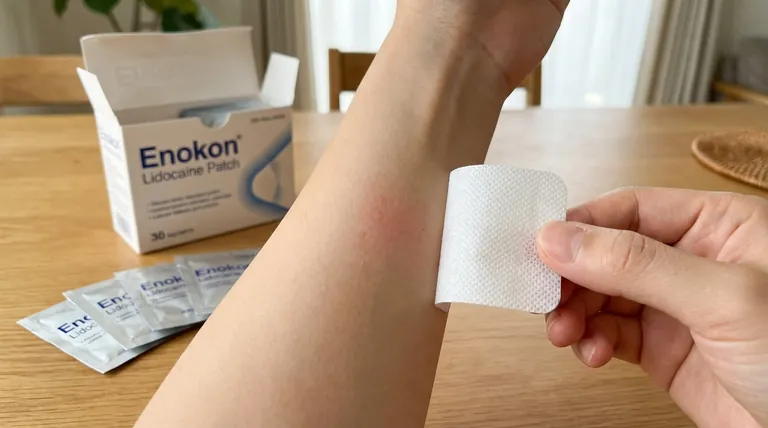
The Two Types of Side Effects
To understand how long a side effect might last, you first need to identify whether it is a local reaction at the patch site or a systemic reaction affecting your entire body.
Common Local Side Effects (At the Application Site)
These are the most frequent side effects and are generally mild. They occur on the skin directly under and around the patch.
Symptoms include redness, swelling, burning, itching, or general skin irritation. You might also notice blisters, bruising, peeling, or slight changes in skin color.
The Expected Duration for Local Reactions
For these common skin reactions, the discomfort and visible signs should start to fade soon after you take the patch off.
If the irritation is mild, it may resolve within a few hours. Do not apply a new patch to that area until the skin has completely recovered.
Less Common Systemic Side Effects (Beyond the Skin)
Systemic effects are a sign that the medication has been absorbed into your bloodstream at a level that affects your whole body. These are less common but more concerning.
Symptoms can include dizziness, lightheadedness, confusion, nausea, vomiting, or unusual weakness and fatigue.
When a Side Effect Is a Serious Warning
While most side effects are minor and temporary, some are indicators of a serious adverse reaction that requires immediate medical help. For these symptoms, the duration is not the primary concern—the severity is.
Signs of a Severe Allergic Reaction
An allergic reaction can be life-threatening. Seek emergency medical attention if you experience hives, severe rash, or swelling, especially of the face, lips, tongue, or throat.
Difficulty breathing or swallowing is a critical warning sign.
Symptoms of Systemic Toxicity
If too much lidocaine enters your bloodstream, it can be toxic. Watch for a very fast pulse, rapid breathing, severe dizziness, fainting, or significant confusion.
Other serious signs include pale or blue-tinged skin, unusual thirst, or severe headache and shortness of breath, which could indicate a rare blood condition called methemoglobinemia.
The Immediate Action Step
If you experience any of these severe symptoms, remove the patch immediately and seek emergency medical care. Do not wait to see how long they last.
Understanding the Risks and Trade-offs
Proper use of the lidocaine patch is key to minimizing the risk of side effects, particularly the more serious systemic ones.
Never Apply to Broken or Irritated Skin
Applying a patch to skin that is already cut, scraped, or irritated can dramatically increase the amount of lidocaine absorbed into your bloodstream.
This significantly raises the risk of systemic side effects and potential toxicity.
Avoid Using Too Many Patches
Using more patches than prescribed, or wearing them for longer than the recommended time (typically 12 hours), can lead to an overdose.
This is one of the primary causes of serious systemic reactions.
Persistent Irritation Is a Signal
If your skin remains red, swollen, or irritated long after you remove the patch, or if the reaction worsens with each use, stop using the patches.
You should consult with your healthcare provider to discuss alternative pain management options, as you may have a sensitivity to the patch or its adhesive.
How to Respond Based on Your Symptoms
Your response should be directly tied to the type and severity of the side effect you are experiencing.
- If your primary issue is mild skin redness or irritation: Remove the patch, gently clean the area, and allow the skin to fully recover before applying a new one to a different location.
- If you are experiencing dizziness, nausea, or moderate confusion: Remove the patch immediately and contact your doctor or pharmacist for guidance on what to do next.
- If you have severe symptoms like hives, difficulty breathing, or fainting: This is a medical emergency; remove the patch and call for emergency medical help without delay.
Ultimately, knowing how to distinguish between a minor, temporary irritation and a serious warning sign is the key to using this medication safely and effectively.
Summary Table:
| Side Effect Type | Common Symptoms | Typical Duration After Patch Removal | Action Required |
|---|---|---|---|
| Local (Common) | Redness, itching, burning at application site | A few hours to a day | Usually resolves on its own. Let skin heal before reapplying. |
| Systemic (Rare/Severe) | Dizziness, confusion, difficulty breathing, fast pulse | Not a wait-and-see situation | Remove patch immediately and seek emergency medical care. |
Need a reliable, high-quality lidocaine patch?
As Enokon, a bulk manufacturer of reliable transdermal patches and pain plasters, we understand that patient safety starts with product quality. We provide healthcare and pharma distributors and brands with patches developed under strict quality control to minimize the risk of adverse reactions.
Partner with us to ensure your products are safe and effective:
- Custom R&D: Leverage our technical expertise to develop patches with optimized drug delivery profiles.
- Consistent Quality: Benefit from our manufacturing precision for reliable, batch-to-batch consistency.
- Expert Support: Work with our specialists from formulation to final product.
Contact our experts today to discuss your transdermal patch needs and how we can support your brand's success.
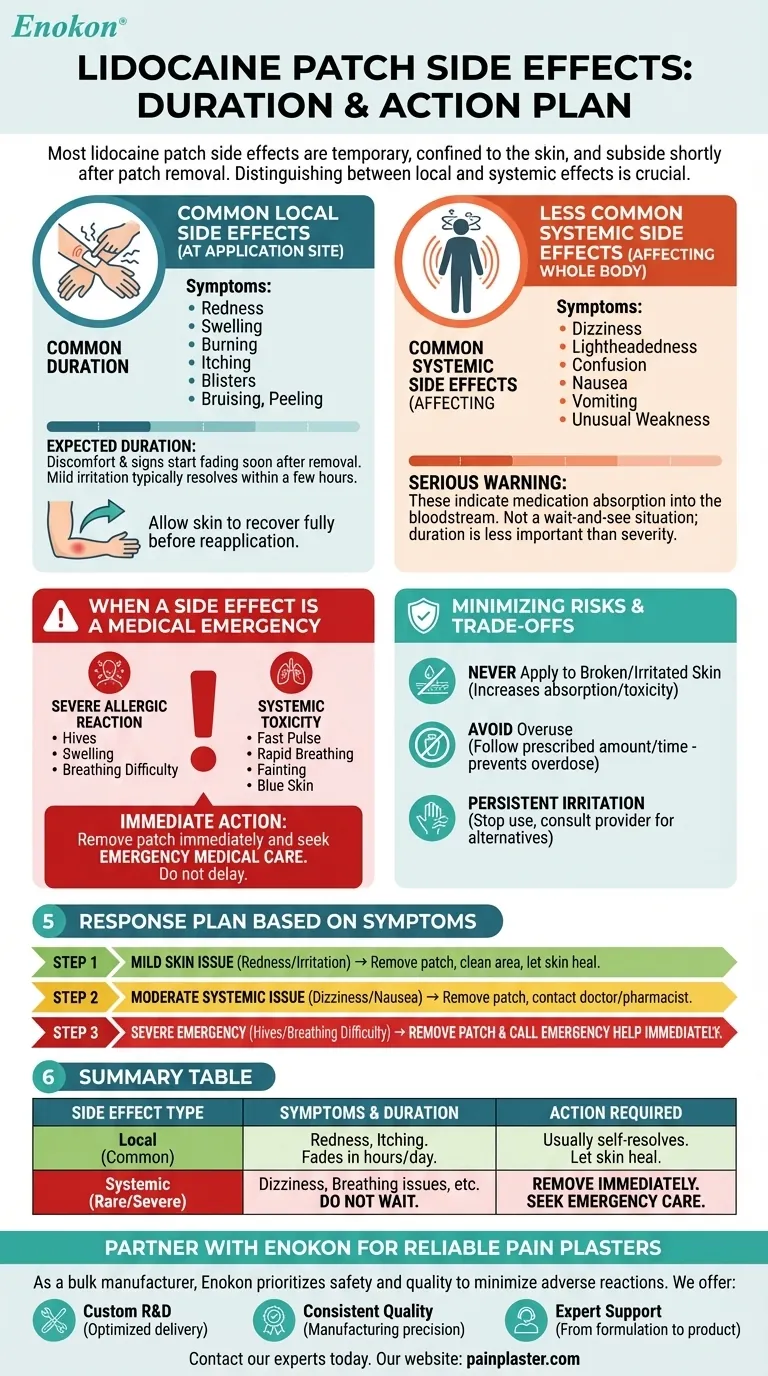
Visual Guide
Related Products
- Lidocaine Hydrogel Pain Relief Patch for Pain Relief
- Menthol Gel Pain Relief Patch
- Icy Hot Menthol Medicine Pain Relief Patch
- Herbal Medicated Anti Diarrhea Patch for Digestive Relief
- Asthma Cough and Pain Relief Patch for Adults and Kids
People Also Ask
- How does the aqueous base in a lidocaine patch contribute to drug delivery? Unlocking Sustained Pain Relief Technology
- What are the advantages of topical anesthetics over invasive Lidocaine infiltration? Discover Safer, Scalable Relief
- Which pain patch is most effective for arthritis? Find the Best Relief for Your Joint Pain
- Will a GP routinely continue prescribing lidocaine patches after the initial period? Understanding Short-Term Pain Relief
- Why are lidocaine patches preferred over oral medications? Targeted Relief & Scale Your Brand with OEM R&D Solutions



















