
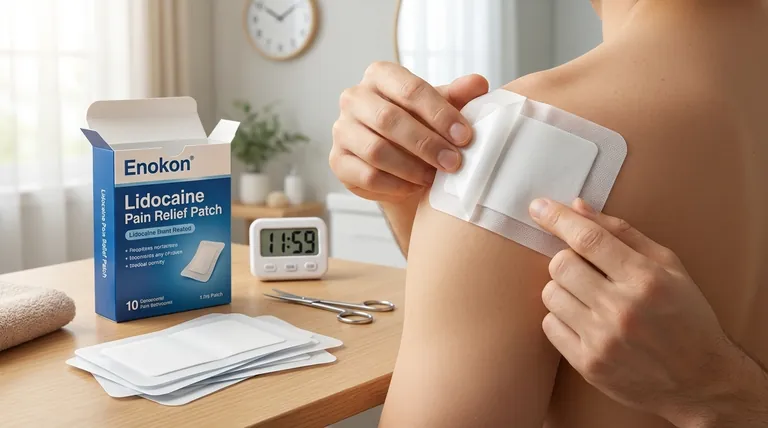
To safely apply a lidocaine patch, you must first ensure the target skin area is clean, dry, and intact, trimming hair with scissors if necessary but never shaving. Apply the patch firmly, avoiding open wounds, rashes, or areas near the eyes, and then wash your hands thoroughly. Crucially, never apply heat over a patch and always adhere to the strict time limits for wearing it.
The core principle of lidocaine patch safety is preventing excessive absorption of the drug into your bloodstream. This is achieved by applying it only to healthy, unbroken skin and by strictly following the recommended time limits—typically 12 hours on, 12 hours off.
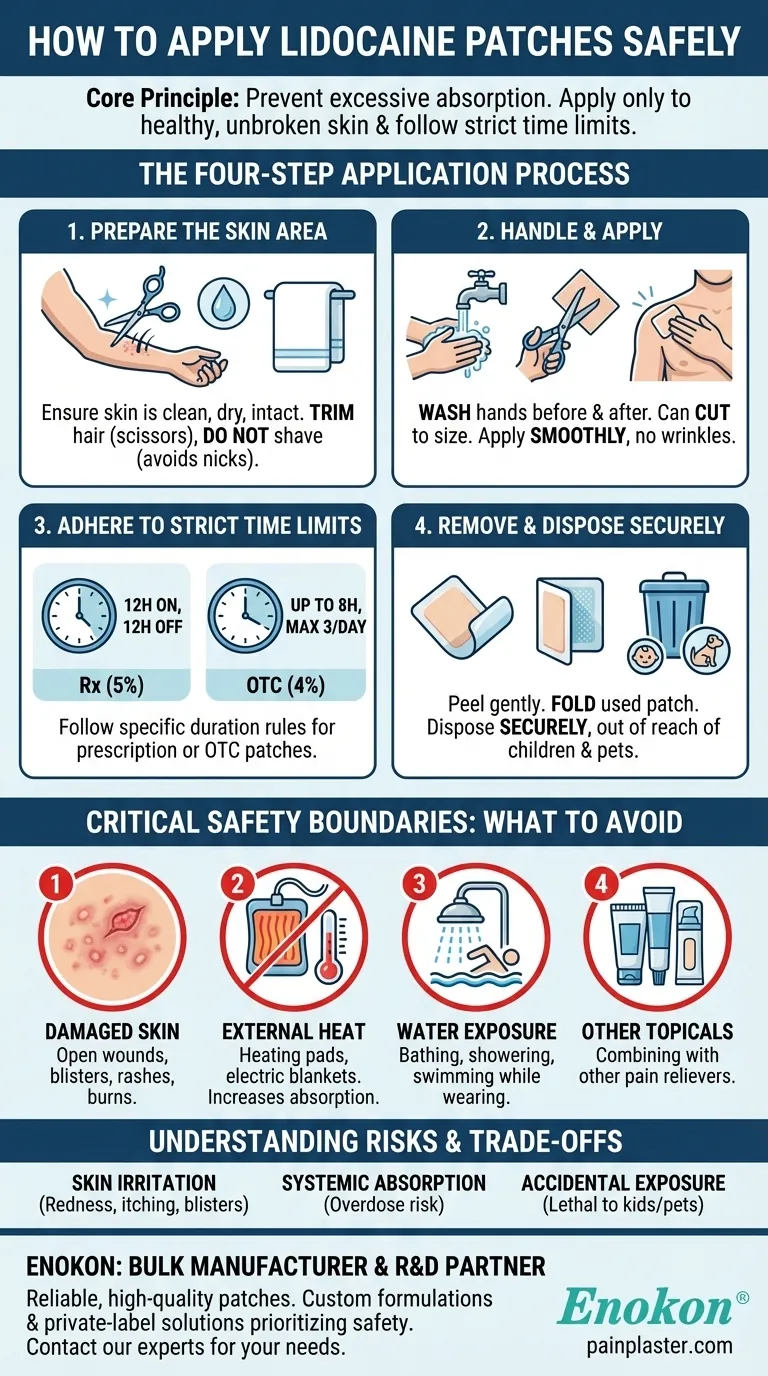
The Four-Step Application Process
Proper application is a systematic process that ensures both effectiveness and safety. Each step is designed to minimize risk and deliver the medication as intended.
Step 1: Prepare the Skin Area
Before touching the patch, prepare the application site. The skin must be completely clean and dry, free of any lotions, oils, or residual moisture.
If hair is present, trim it with scissors. Do not shave the area, as shaving creates tiny nicks and abrasions in the skin that can increase the amount of lidocaine absorbed into your system.
Step 2: Handle and Apply the Patch
Wash your hands with soap and water before and after handling the patch. This prevents you from accidentally transferring the anesthetic to sensitive areas like your eyes or mouth.
If the patch is larger than the area of pain, you can cut it to the desired size before removing the protective liner. Apply the patch smoothly to the skin, ensuring it makes full contact without wrinkles.
Step 3: Adhere to Strict Time Limits
The duration of use is a critical safety control. Different strengths have different rules.
A prescription 5% lidocaine patch should be worn for no more than 12 hours within a 24-hour period. This must be followed by a patch-free period of at least 12 hours.
An over-the-counter (OTC) 4% patch can typically be worn for up to 8 hours. You should not apply more than three of these patches in a 24-hour period.
Step 4: Remove and Dispose of the Patch Securely
After the recommended time, peel the patch off gently. Even used patches contain a significant amount of lidocaine, which can be extremely dangerous to children and pets.
Immediately fold the used patch in half so the sticky, medicated sides press together. Dispose of it in a trash can that is out of reach of children and animals.
Critical Safety Boundaries: What to Avoid
Following the "don'ts" is just as important as following the application steps. These rules are in place to prevent accidental overdose and skin damage.
Never Apply to Damaged or Irritated Skin
Do not apply a lidocaine patch to open wounds, unhealed blisters, rashes, burns, or inflamed skin. Broken skin allows the medication to bypass its intended slow-release mechanism and enter the bloodstream too quickly.
Avoid All External Heat Sources
Never use a heating pad, electric blanket, or other heat source over a lidocaine patch. Heat dramatically increases the rate of drug absorption through the skin, which can lead to a dangerous systemic dose.
Keep Patches Away from Water
Do not wear the patch while bathing, showering, or swimming. Water can weaken the patch's adhesive and may interfere with the intended delivery of the medication.
Do Not Combine with Other Topical Products
Avoid using other topical pain relievers or anesthetics on the same area at the same time. The cumulative dose from multiple products can increase the risk of side effects.
Understanding the Trade-offs and Risks
While generally safe when used correctly, lidocaine patches are potent medication with potential downsides that you must understand and monitor.
Skin Irritation is the Most Common Side Effect
The most frequent issue is localized skin reaction. This can include redness, itching, burning, or blisters at the application site. If irritation occurs, remove the patch and do not reapply to that area until it has healed completely.
The Risk of Systemic Absorption
The primary safety goal is to keep lidocaine localized. If too much enters your bloodstream, it can cause serious side effects. Following the rules—using on intact skin, avoiding heat, and respecting time limits—is your primary defense against this risk.
Accidental Exposure to Children and Pets
The amount of lidocaine in a single new or used patch can be lethal if ingested by a small child or pet. This is why meticulous handling and secure disposal are non-negotiable safety requirements.
How to Apply This to Your Goal
Your approach should be guided by the specific product you are using and your primary goal of safe, effective pain management.
- If your primary focus is managing pain with a prescription (5%) patch: Strictly follow the "12 hours on, 12 hours off" cycle and never use more patches than prescribed by your doctor.
- If your primary focus is using an over-the-counter (4%) patch: Adhere to the "up to 8 hours" wear time and do not exceed three applications in one day.
- If you experience any skin irritation: Remove the patch immediately and allow the skin to fully recover before considering reapplication in a different spot.
- If you live with children or pets: Make proper disposal your highest priority by folding the used patch in half and discarding it securely out of reach.
Proper application transforms the lidocaine patch from a potent medication into a safe and effective tool for localized pain relief.
Summary Table:
| Step | Action | Key Safety Rule |
|---|---|---|
| 1 | Prepare Skin | Clean, dry, and intact skin only. Trim hair, do not shave. |
| 2 | Apply Patch | Wash hands before/after. Can cut patch to size. |
| 3 | Wear Time | Prescription (5%): ≤12 hours. OTC (4%): ≤8 hours. |
| 4 | Remove & Dispose | Fold used patch in half. Dispose securely away from children/pets. |
| AVOID | Heat, Water, Damaged Skin | Never use heating pads. Do not bathe with patch on. |
Need reliable, high-quality lidocaine patches for your brand or distribution network?
As Enokon, a bulk manufacturer of trusted transdermal patches and pain plasters, we combine rigorous quality control with deep technical expertise. We can help you develop custom formulations or private-label solutions that prioritize patient safety and efficacy.
Contact our experts today to discuss your R&D and manufacturing needs.
Visual Guide
Related Products
- Lidocaine Hydrogel Pain Relief Patch for Pain Relief
- Menthol Gel Pain Relief Patch
- Herbal Medicated Anti Diarrhea Patch for Digestive Relief
- Icy Hot Menthol Medicine Pain Relief Patch
- Asthma Cough and Pain Relief Patch for Adults and Kids
People Also Ask
- How does the aqueous base in a lidocaine patch contribute to drug delivery? Unlocking Sustained Pain Relief Technology
- What are the advantages of topical anesthetics over invasive Lidocaine infiltration? Discover Safer, Scalable Relief
- Which pain patch is most effective for arthritis? Find the Best Relief for Your Joint Pain
- Will a GP routinely continue prescribing lidocaine patches after the initial period? Understanding Short-Term Pain Relief
- Why are lidocaine patches preferred over oral medications? Targeted Relief & Scale Your Brand with OEM R&D Solutions



















