
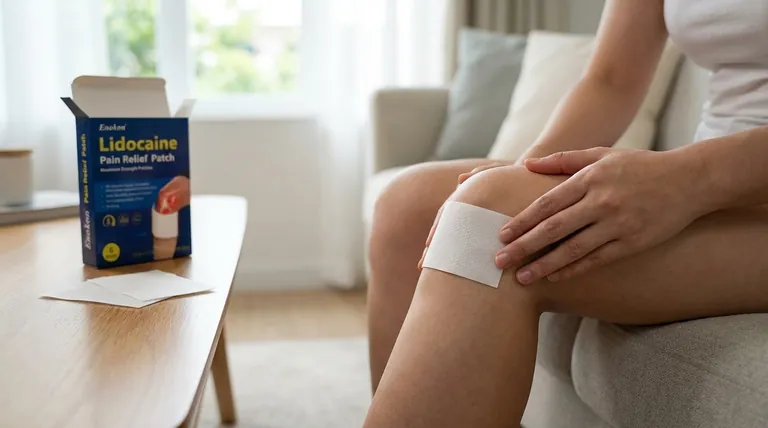
To use the lidocaine dermal patch correctly, you must apply it directly to clean, dry, and intact skin over the most painful area. It is for external use only, and you must strictly follow the duration and frequency instructions provided on your prescription label or by your healthcare provider.
The core principle of using a lidocaine patch is not just about application, but about constant vigilance. Effective pain relief depends on proper skin preparation, while safety hinges on protecting the numb area from injury and ensuring used patches are disposed of securely.
The Core Principle: Proper Application
Correct application is the first step to ensuring the medication works as intended. The patch must have full, direct contact with the skin to deliver the lidocaine effectively.
Choosing the Right Location
The patch should be placed on the most painful area. Select a spot with clean, dry, and healthy skin.
Avoid applying the patch to skin that is burned, cut, irritated, oily, or sweaty. Also, try to choose an area with minimal hair for better adhesion.
Preparing the Skin
Gently clean the application site with mild soap and water, then rinse thoroughly. Pat the skin completely dry with a clean towel.
Do not use lotions, creams, or oils on the area before applying the patch, as they can prevent it from sticking properly.
Handling the Patch
When handling the patch, try not to touch the sticky, medicated side. Apply it firmly to the skin, smoothing out any wrinkles to ensure the entire surface makes contact.
Critical Safety Considerations During Use
Lidocaine works by numbing the area, which requires you to be more aware of your surroundings and your body's signals.
Protecting the Numb Area
Because the patch causes a loss of feeling, you may not notice an injury like a cut, burn, or scrape. Be extra cautious to avoid injury to the skin while it is numb.
Monitoring for Side Effects
Pay attention to how your skin reacts. If your pain worsens or you experience severe irritation where the patch is applied, remove it and contact your doctor.
Informing Healthcare Professionals
You must inform your doctor, dentist, or surgeon that you are using a lidocaine patch before any medical procedure, including an MRI or CT scan. The patch may need to be removed.
Avoiding Accidental Exposure
Never share your patches with another person, as this is a prescription medication. If the medicine accidentally gets in your eyes, rinse them immediately with plenty of cool tap water.
Understanding the Trade-offs and Limitations
While effective for localized pain, the lidocaine patch is not a universal solution and has important limitations.
It Only Provides Local Relief
The patch targets pain in the specific area it covers. It numbs the skin and surrounding tissues but does not treat the underlying cause of the pain or provide systemic pain relief.
Pre-existing Conditions Matter
It is critical to inform your doctor of your full medical history. Conditions related to the heart, liver, or skin may affect whether the lidocaine patch is a safe option for you.
Potential for Skin Irritation
Some individuals may experience redness, itching, or a rash at the application site. While often mild, this can sometimes be a sign of an allergic reaction.
The Final Step: Safe Removal and Disposal
Properly discarding a used patch is a critical safety step that is often overlooked.
Why Proper Disposal is Non-Negotiable
Even after use, a patch still contains a significant amount of active medication. If found by a child or a pet, it can cause serious harm if ingested or applied to their skin.
The "Fold and Throw" Method
After removing the patch, fold it in half with the sticky sides pressed together. This seals the remaining medication inside.
Dispose of the folded patch in a trash receptacle that is safely out of reach of any children or pets.
Key Reminders for Safe and Effective Use
Your approach to using the patch will determine its success and your safety.
- If your primary goal is consistent pain relief: Adhere strictly to the prescribed application schedule and duration, and always apply it to clean, dry skin.
- If your primary concern is safety: Always prioritize protecting the numb area from injury and ensure used patches are disposed of where children and pets cannot reach them.
By combining correct application with a diligent awareness of safety, you can use the lidocaine patch as an effective tool for managing your localized pain.
Summary Table:
| Step | Key Action | Important Consideration |
|---|---|---|
| Application | Apply to clean, dry, intact skin on the painful area. | Avoid oily, irritated, or hairy skin. Do not use lotions beforehand. |
| During Use | Protect the numb area from injury. Monitor for skin reactions. | You may not feel cuts or burns. Inform doctors before medical procedures. |
| Disposal | Fold patch sticky sides together and discard in secure trash. | Used patches still contain medication and are dangerous to children/pets. |
Need a reliable supply of lidocaine dermal patches?
As Enokon, a bulk manufacturer of trusted transdermal patches and pain plasters, we provide healthcare distributors and brands with high-quality, consistent products. Benefit from our technical expertise for custom R&D and development to meet your specific market needs.
Contact our experts today to discuss your requirements and ensure your patients receive safe, effective pain relief.
Visual Guide

Related Products
- Lidocaine Hydrogel Pain Relief Patch for Pain Relief
- Menthol Gel Pain Relief Patch
- Icy Hot Menthol Medicine Pain Relief Patch
- Silicone Scar Sheets Patch Transdermal Drug Patch
- Far Infrared Heat Pain Relief Patches Transdermal Patches
People Also Ask
- How does the aqueous base in a lidocaine patch contribute to drug delivery? Unlocking Sustained Pain Relief Technology
- What are the advantages of topical anesthetics over invasive Lidocaine infiltration? Discover Safer, Scalable Relief
- Which pain patch is most effective for arthritis? Find the Best Relief for Your Joint Pain
- Will a GP routinely continue prescribing lidocaine patches after the initial period? Understanding Short-Term Pain Relief
- Why are lidocaine patches preferred over oral medications? Targeted Relief & Scale Your Brand with OEM R&D Solutions












