
The primary advantages of transdermal patches over oral medications stem from their ability to deliver drugs directly through the skin into the bloodstream. This route bypasses the digestive system and liver, leading to more stable drug levels, a significant reduction in certain side effects, and improved ease of use for the patient.
By avoiding the metabolic toll of the gut and liver, transdermal patches can deliver medication more efficiently and with greater tolerability than traditional oral pills. This fundamental difference addresses the core challenges of inconsistent drug levels and side effects caused by the body's natural breakdown processes.
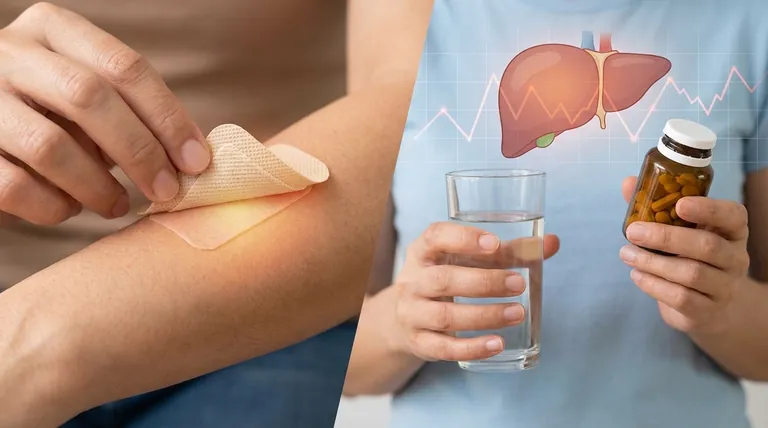
Bypassing the "First-Pass Effect": The Core Mechanical Advantage
When you swallow a pill, the medication's journey through the body is complex and often inefficient. Transdermal patches sidestep the most significant barrier in this process.
What is the First-Pass Effect?
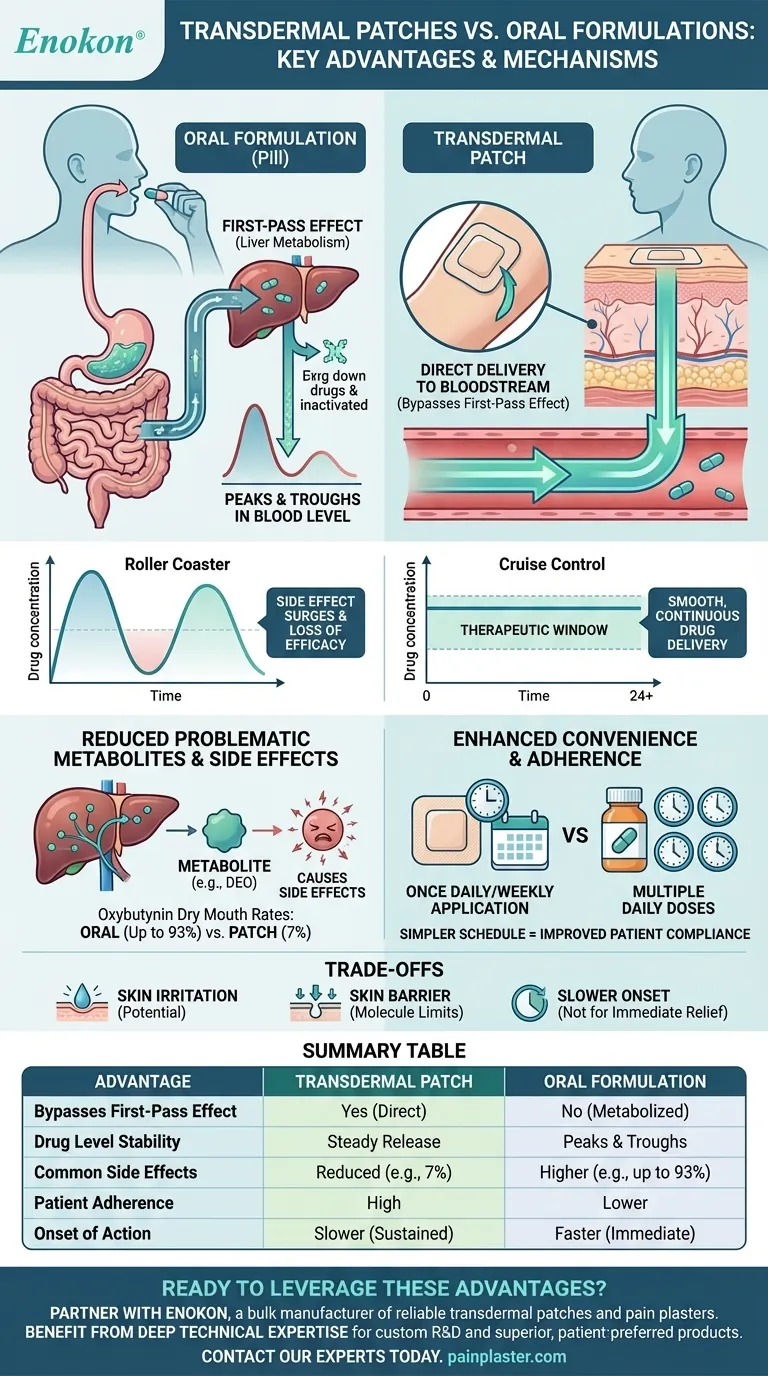
The first-pass effect, or pre-systemic metabolism, is what happens when a drug is absorbed from the gut and passes through the liver. The liver acts as a filter, metabolizing and breaking down a substantial portion of the drug before it can ever reach the rest of the body.
The Impact on Drug Efficiency
Because the liver inactivates a large percentage of an oral drug, the initial dose must be high enough to compensate. Patches deliver the drug directly to the bloodstream, meaning a lower dose can often achieve the same therapeutic effect as a much higher oral dose.
For example, the 9.5mg/24-hour rivastigmine patch provides comparable drug exposure to the brain as the 12mg/day maximum oral dose.
Reducing Problematic Metabolites
The liver doesn't just inactivate drugs; it can convert them into other substances called metabolites. Sometimes, these metabolites are the primary cause of a medication's side effects.
With the drug oxybutynin, the liver creates a metabolite (DEO) that has a higher ratio of side effects to efficacy. By bypassing the liver, the patch minimizes DEO formation, improving the drug's overall tolerability.
Achieving Stable and Continuous Drug Delivery
The way a drug is released into the body dramatically affects its performance and side effect profile. Patches and pills represent two very different philosophies of delivery.
The "Roller Coaster" of Oral Dosing
Oral medications, even extended-release versions, often lead to peaks and troughs in blood concentration. This "pulsatile" delivery can cause a surge in side effects when the level is high and a loss of efficacy when it's low.
The "Cruise Control" of a Transdermal Patch
A transdermal patch provides smooth and continuous drug delivery over a prolonged period (e.g., 24 hours or more). This maintains a steady, consistent concentration of the drug in the bloodstream, keeping it within the optimal therapeutic window.
The Clinical Benefit of Stability
This stability is crucial for certain conditions. For instance, the steady dopaminergic stimulation from a patch may limit motor complications and dyskinesias that can be triggered by the fluctuating drug levels associated with oral formulations.
Understanding the Trade-offs
While advantageous, transdermal patches are not a universal solution. Their unique mechanism comes with specific limitations.
Skin as a Barrier
Not all drugs can be delivered via a patch. A drug's molecule must be small enough and have the correct chemical properties (lipophilicity) to successfully penetrate the skin barrier.
Potential for Skin Irritation
The adhesive on the patch or the drug itself can cause local skin reactions, such as redness, itching, or a rash at the application site. This is one of the most common reasons for discontinuing patch use.
Slower Onset of Action
Patches are designed for sustained, long-term delivery. They are not suitable for situations requiring immediate relief, as it can take several hours for the drug to reach therapeutic levels in the blood.
The Practical Patient Experience
Beyond the biochemical advantages, patches offer tangible benefits that can improve a patient's quality of life and treatment success.
Enhanced Convenience and Adherence
Remembering to apply a patch once a day or once a week is often far simpler than adhering to a schedule of taking pills multiple times per day. This ease of use can significantly improve patient adherence to a treatment plan.
A Non-Invasive Alternative
Compared to intravenous (IV) administration, patches are completely non-invasive. They provide a valuable middle ground, offering continuous delivery without the need for needles or clinical supervision.
Quantifiable Reduction in Side Effects
By avoiding the first-pass effect, patches dramatically reduce certain systemic side effects. For oxybutynin, rates of dry mouth were 7% for patch users, compared to 30-68% for extended-release oral users and up to 93% for immediate-release oral users.
Making the Right Choice for Your Goal
- If your primary focus is minimizing systemic side effects: A patch is often superior because it avoids the creation of problematic metabolites in the liver.
- If your primary focus is ensuring a consistent therapeutic effect: The steady, continuous release from a patch avoids the peaks and troughs of oral dosing, which is critical for many chronic conditions.
- If your primary focus is improving treatment adherence: A simple, long-acting patch application schedule is often easier for patients to manage than taking pills multiple times a day.
Understanding the fundamental differences in delivery mechanisms empowers you to make more informed decisions about your treatment strategy.
Summary Table:
| Advantage | Transdermal Patch | Oral Formulation |
|---|---|---|
| Bypasses First-Pass Effect | Yes, direct to bloodstream | No, metabolized by liver |
| Drug Level Stability | Steady, continuous release | Peaks and troughs |
| Common Side Effects | Reduced (e.g., dry mouth 7% for oxybutynin) | Higher (e.g., dry mouth up to 93%) |
| Patient Adherence | High (once-daily/weekly application) | Lower (multiple daily doses) |
| Onset of Action | Slower, for sustained effect | Faster, for immediate relief |
Ready to leverage these advantages for your product line? Partner with Enokon, a bulk manufacturer of reliable transdermal patches and pain plasters for healthcare and pharmaceutical distributors and brands. Benefit from our deep technical expertise for custom R&D and development to create a superior, patient-preferred product. Contact our experts today to discuss your project!
Visual Guide
Related Products
- Far Infrared Heat Pain Relief Patches Transdermal Patches
- Silicone Scar Sheets Patch Transdermal Drug Patch
- Icy Hot Menthol Medicine Pain Relief Patch
- Menthol Gel Pain Relief Patch
- Mugwort Wormwood Pain Relief Patch for Neck Pain
People Also Ask
- Why is the selection of matrix materials critical when developing customized transdermal patches? Optimize Efficacy
- What are the physical impacts of external heat exposure on the performance and safety of transdermal patches? - Guide
- What are the clinical advantages of local transdermal delivery systems? Unlock Safer, More Effective Pain Relief Solutions
- What role does a skin tolerance scoring system play in the safety evaluation of transdermal patches? Key Safety Metrics
- How does high-purity far-infrared ceramic powder contribute to the efficacy of far-infrared physical therapy patches?



















