
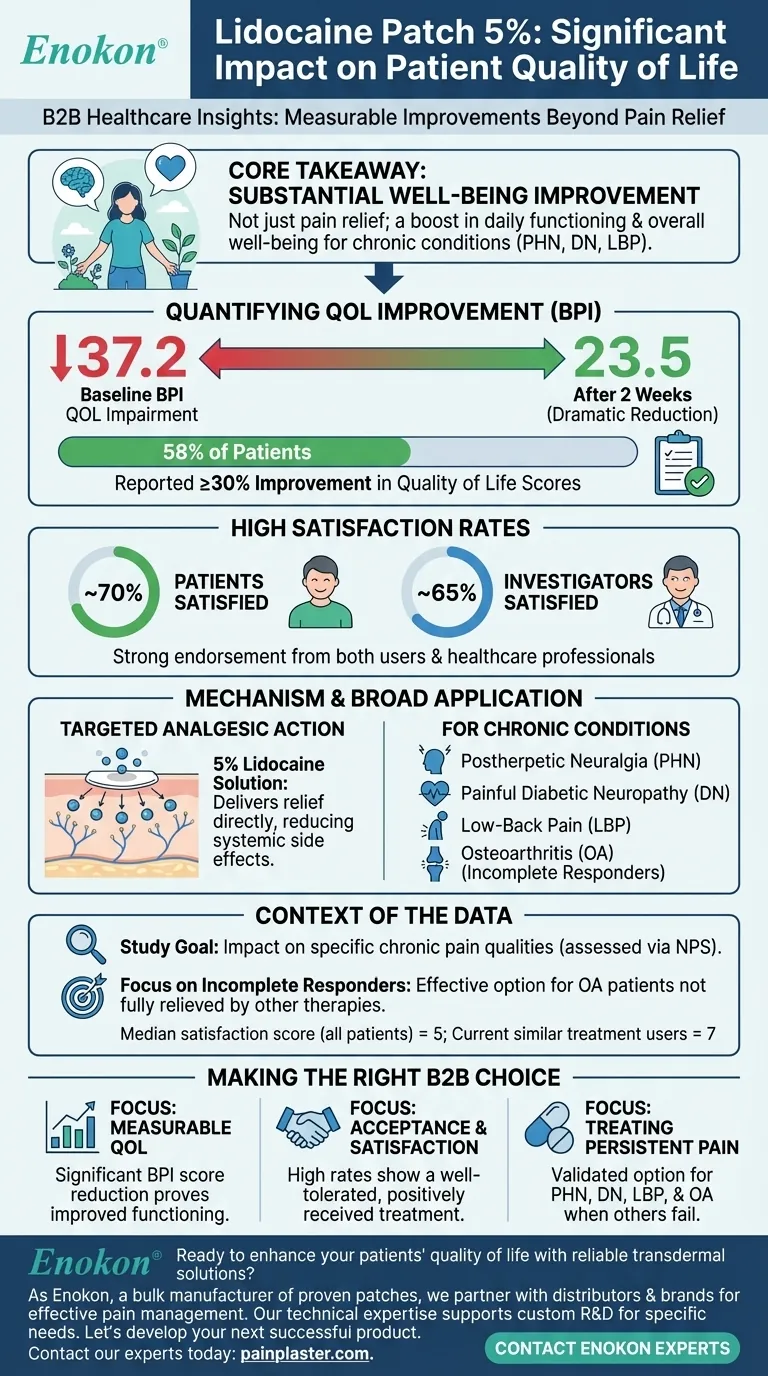
To put it simply, the lidocaine patch 5% had a significant and measurable positive impact on the quality of life (QOL) for patients suffering from chronic pain. This was demonstrated not just by patient-reported satisfaction but also by clinically recognized scoring metrics.
The core takeaway is that the lidocaine patch 5% offers more than just pain relief; it provides a substantial improvement in the daily functioning and overall well-being of individuals with chronic conditions like postherpetic neuralgia, diabetic neuropathy, and low-back pain.

Quantifying the Improvement in Quality of Life
The impact of the lidocaine patch was not merely anecdotal. It was measured using established clinical tools that showed a clear, positive effect on patient lives.
The Brief Pain Inventory (BPI) Score
The most direct evidence comes from the BPI, a standard tool for assessing pain and its interference with daily life. The composite score for QOL impairment decreased dramatically from 37.2 to 23.5 within two weeks of treatment.
This wasn't a minor change. A remarkable 58% of patients reported at least a 30% improvement in their quality of life scores, a threshold often considered clinically significant.
High Satisfaction Rates
Beyond the clinical scores, both patients and the professionals treating them were highly satisfied with the treatment.
Approximately 70% of patients and 65% of investigators reported being satisfied or very satisfied with the overall results of the lidocaine patch 5%.
The Mechanism Behind the Impact
Understanding why the patch is effective helps clarify its impact on quality of life. The benefits stem from its targeted action and applicability across several types of chronic pain.
Targeted Analgesic Action
The patch contains a 5% aqueous solution of lidocaine, a synthetic local anesthetic. This allows it to deliver analgesic (pain-relieving) activity directly to the affected area, minimizing systemic side effects.
Broad Application for Chronic Pain
The studies evaluated the patch's effectiveness across a range of difficult-to-treat chronic pain conditions.
These included postherpetic neuralgia (PHN), painful diabetic neuropathy (DN), low-back pain (LBP), and even osteoarthritis of the knee in patients who had an incomplete response to other therapies.
Understanding the Context of the Data
While the results are overwhelmingly positive, it is important to understand the specific context in which this data was gathered to apply it correctly.
The Study's Objective
The primary goal of the research was to determine the patch's impact on pain qualities associated with specific chronic conditions. This was assessed using tools like the Neuropathic Pain Scale (NPS).
A Focus on Incomplete Responders
One key study specifically assessed patients with osteoarthritis who were not achieving adequate pain relief from their existing analgesic therapy. The patch's success in this group highlights its value as an additional tool in a comprehensive pain management plan.
Nuances in Satisfaction
While overall satisfaction was high, there were slight variations. The median satisfaction score for all patients was 5 (on an unspecified scale), while it was higher, at 7, for those who were current users of similar plaster treatments.
Making the Right Choice for Your Goal
Based on this evidence, the lidocaine patch 5% can be considered for specific therapeutic goals.
- If your primary focus is a measurable QOL improvement: The significant reduction in the BPI score provides strong evidence of the patch's ability to improve daily functioning.
- If your primary focus is patient acceptance and satisfaction: The high satisfaction rates among both patients and investigators suggest it is a well-tolerated and positively received treatment.
- If your primary focus is treating persistent neuropathic or osteoarthritic pain: The patch is a validated option, particularly for patients who have not found complete relief with other analgesics.
Ultimately, the evidence shows the lidocaine patch 5% is an effective tool for improving the quality of life for many individuals living with chronic pain.
Summary Table:
| Key Metric | Result |
|---|---|
| BPI QOL Impairment Score Reduction | 37.2 to 23.5 (in 2 weeks) |
| Patients with ≥30% QOL Improvement | 58% |
| Patient Satisfaction Rate | ~70% |
| Investigator Satisfaction Rate | ~65% |
| Effective For | Postherpetic Neuralgia, Diabetic Neuropathy, Low-Back Pain, Osteoarthritis |
Ready to enhance your patients' quality of life with reliable transdermal solutions?
As Enokon, a bulk manufacturer of proven transdermal patches and pain plasters, we partner with healthcare and pharma distributors and brands to deliver effective pain management. Our technical expertise supports custom R&D to develop solutions that meet specific patient needs, just like the lidocaine patch 5% highlighted in this article.
Let's develop your next successful pain relief product.
Contact our experts today to discuss your custom patch development needs
Visual Guide
Related Products
- Lidocaine Hydrogel Pain Relief Patch for Pain Relief
- Herbal Medicated Anti Diarrhea Patch for Digestive Relief
People Also Ask
- How does the aqueous base in a lidocaine patch contribute to drug delivery? Unlocking Sustained Pain Relief Technology
- What are the advantages of topical anesthetics over invasive Lidocaine infiltration? Discover Safer, Scalable Relief
- Which pain patch is most effective for arthritis? Find the Best Relief for Your Joint Pain
- Why are lidocaine patches preferred over oral medications? Targeted Relief & Scale Your Brand with OEM R&D Solutions
- Will a GP routinely continue prescribing lidocaine patches after the initial period? Understanding Short-Term Pain Relief

