
The fundamental goal of a short-term lidocaine patch prescription is to provide targeted, localized pain control that helps you get mobile and recover more quickly after an acute injury. It is a tool designed to manage pain at its source during the critical initial healing period, allowing you to function without complete reliance on systemic medications.
The lidocaine patch is best understood as a temporary bridge. Its purpose is not to cure the underlying injury but to break the pain cycle just enough to allow for the early movement and activity that are essential for a faster, more complete recovery.
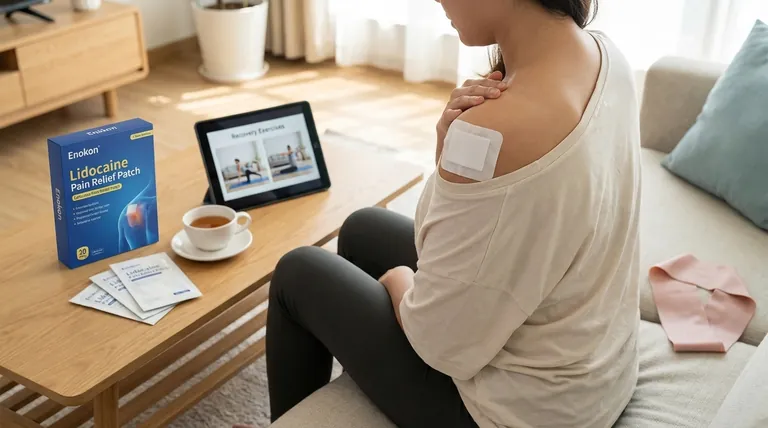
How Lidocaine Patches Support Acute Recovery
To understand why these patches are prescribed for short durations, it's important to see their role within a broader recovery strategy. They are a tactical tool for a specific phase of healing.
The Principle of Localized Anesthesia
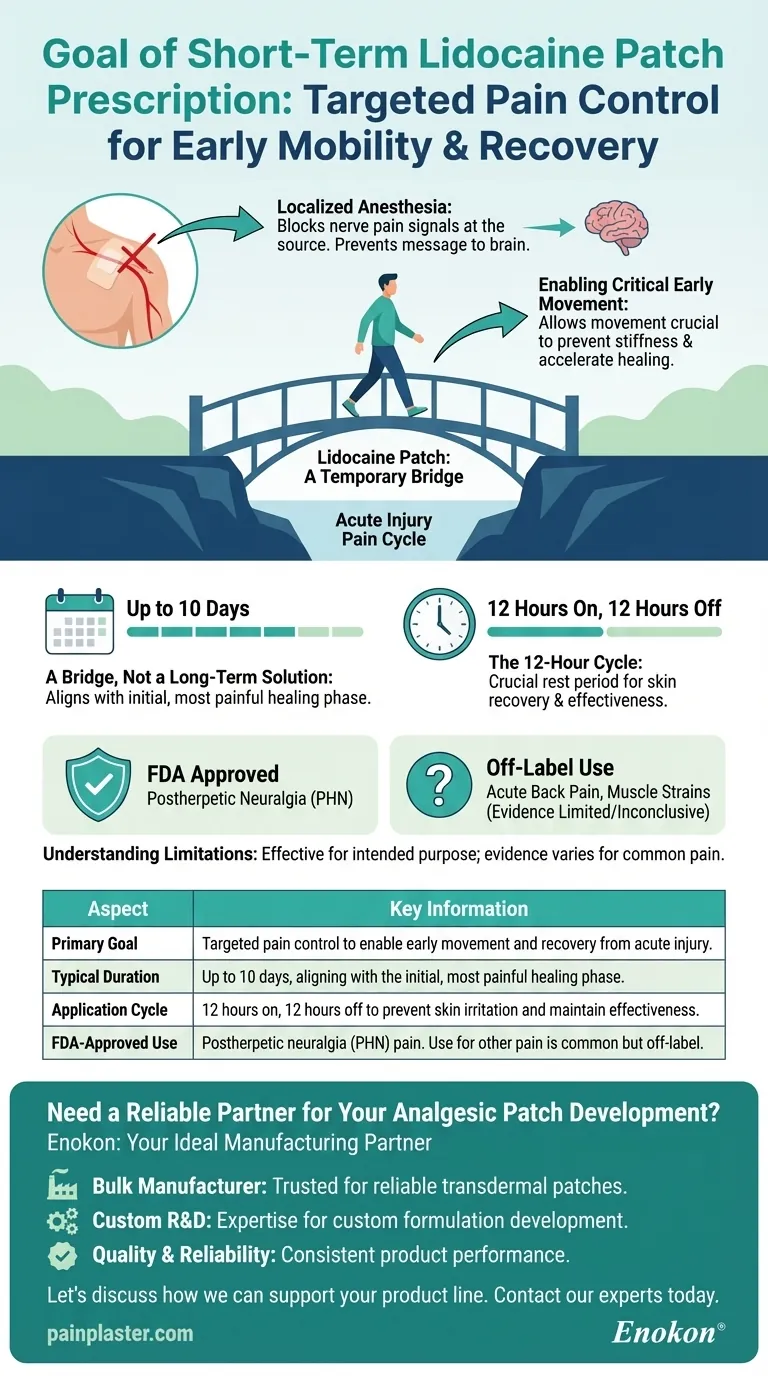
A lidocaine patch works as a local anesthetic. It delivers lidocaine directly through the skin to the painful area, where it blocks nerve pain signals from ever leaving the site of the injury.
This prevents the pain message from reaching your brain. It's a highly targeted approach that avoids the full-body effects of oral painkillers.
Enabling Critical Early Movement
The primary benefit of this localized pain control is that it enables mobility. After an injury, movement is crucial to prevent stiffness and accelerate healing, but pain often makes this impossible.
By numbing the most intense pain, the patch allows you to get up, walk, and participate in physical therapy. This proactive engagement is key to a quicker recovery.
A Bridge, Not a Long-Term Solution
Lidocaine patches are typically prescribed for a limited time, often up to 10 days. This duration is intentional.
It is designed to align with the initial, most painful phase of an acute injury. The expectation is that after this period, natural healing will have progressed enough that this level of intervention is no longer necessary.
Understanding the Limitations and Trade-offs
While effective for their intended purpose, it's critical to recognize the limitations of lidocaine patches to use them appropriately. Their effectiveness is highly dependent on the context.
Specific vs. Off-Label Use
The FDA has officially approved the lidocaine patch for one specific condition: the nerve pain that can linger after a shingles infection, known as postherpetic neuralgia (PHN).
Its use for other conditions, such as acute back pain or muscle strains, is considered "off-label." While this is a common and legal practice, it means the evidence for its effectiveness in these areas is less robust.
Inconclusive Evidence for Common Pain
For many common issues like non-specific back pain, the scientific evidence supporting the effectiveness of lidocaine patches is limited or inconclusive.
This doesn't mean it won't work for you, but it highlights its role as a supportive tool rather than a guaranteed solution. It is often used as one component of a larger pain management plan.
The Importance of the 12-Hour Cycle
Patches should only be worn for 12 hours in a 24-hour period. This "12 on, 12 off" cycle is crucial.
This rest period allows the skin to recover, reducing the risk of irritation, and ensures your body remains sensitive to the medication's effects.
How to Apply This to Your Recovery
The value of a lidocaine patch is defined by your specific goal. Use these principles to guide your conversation with your healthcare provider.
- If your primary focus is recovering from a recent, acute injury: The patch is a valuable tool to manage pain so you can stay active during the first critical days of healing.
- If your primary focus is managing chronic pain: The patch may offer temporary relief, but it should be part of a comprehensive treatment plan, as its long-term effectiveness is not well-established.
- If your primary focus is post-shingles nerve pain (PHN): The patch is an FDA-approved, first-line treatment option that you should discuss with your doctor.
Ultimately, understanding the specific role of the lidocaine patch empowers you to use it as an effective, short-term tool to actively participate in your own recovery.
Summary Table:
| Aspect | Key Information |
|---|---|
| Primary Goal | Targeted pain control to enable early movement and recovery from acute injury. |
| Typical Duration | Up to 10 days, aligning with the initial, most painful healing phase. |
| Application Cycle | 12 hours on, 12 hours off to prevent skin irritation and maintain effectiveness. |
| FDA-Approved Use | Postherpetic neuralgia (PHN) pain. Use for other pain is common but off-label. |
Need a reliable partner for your analgesic patch development?
If you are a healthcare or pharmaceutical distributor or brand looking to provide effective pain management solutions like lidocaine patches, Enokon is your ideal manufacturing partner.
Benefit from our expertise:
- Bulk Manufacturer: We are a trusted bulk manufacturer of reliable transdermal patches and pain plasters.
- Custom R&D: Leverage our technical expertise for custom formulation development to meet your specific market needs.
- Quality & Reliability: Ensure consistent product performance and patient satisfaction.
Let's discuss how we can support your product line. Contact our experts today to explore custom development opportunities.
Visual Guide
Related Products
- Lidocaine Hydrogel Pain Relief Patch for Pain Relief
- Menthol Gel Pain Relief Patch
- Icy Hot Menthol Medicine Pain Relief Patch
- Herbal Medicated Anti Diarrhea Patch for Digestive Relief
- Asthma Cough and Pain Relief Patch for Adults and Kids
People Also Ask
- How does the aqueous base in a lidocaine patch contribute to drug delivery? Unlocking Sustained Pain Relief Technology
- What are the advantages of topical anesthetics over invasive Lidocaine infiltration? Discover Safer, Scalable Relief
- Which pain patch is most effective for arthritis? Find the Best Relief for Your Joint Pain
- How should lidocaine patches be applied for optimal use? Maximize Pain Relief with Proper Application
- Why are lidocaine patches preferred over oral medications? Targeted Relief & Scale Your Brand with OEM R&D Solutions



















