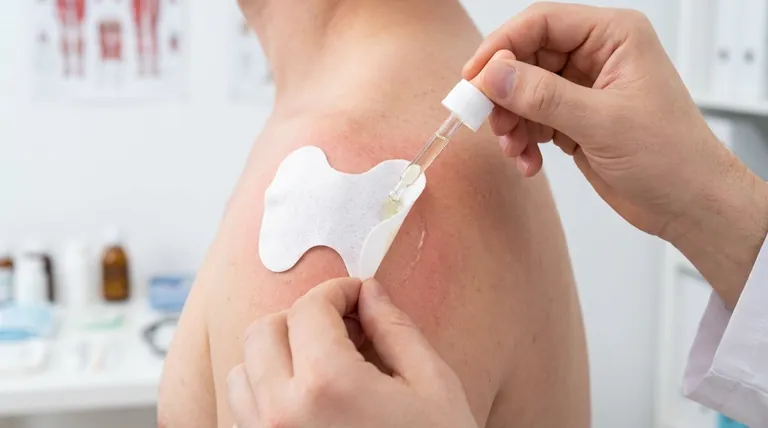
The Moment of Truth
A pain plaster delivers relief for hours, sometimes days. It’s a small marvel of material science, clinging to the body through motion, moisture, and time.
But every plaster's journey ends with a moment of truth: removal. For the user, this final step can be filled with apprehension. The very device that brought comfort now threatens a moment of sharp, stinging pain, leaving behind a red, irritated square of skin.
This isn't a minor inconvenience. It's the final, and often most memorable, part of the user experience. The anticipation of pain can psychologically undermine the therapeutic benefit that came before it.
The Adhesive Dilemma
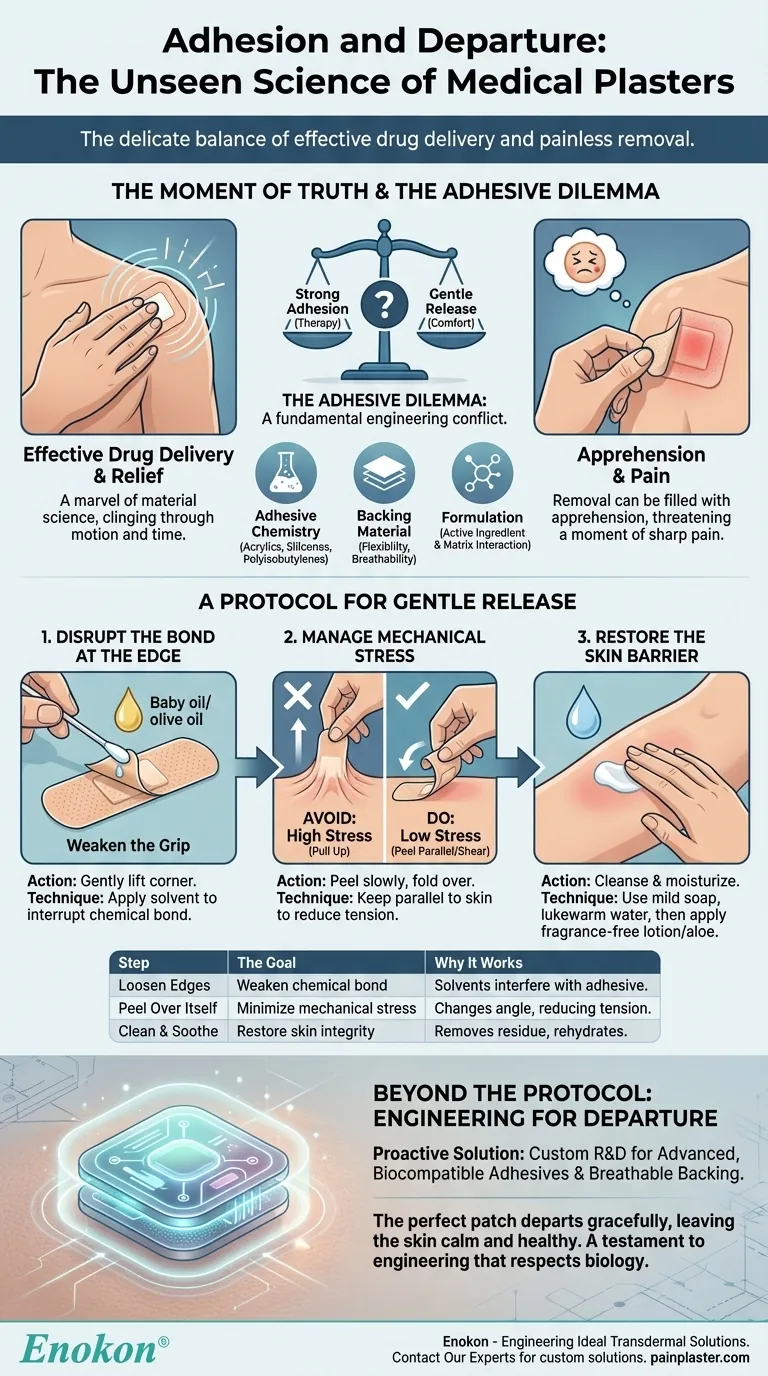
The challenge lies in a fundamental engineering conflict. A transdermal patch's adhesive must be aggressive enough to ensure consistent skin contact for effective drug delivery, yet gentle enough to release without damaging the skin's delicate outer layer, the stratum corneum.
This is the adhesive dilemma. It requires a mastery of polymer chemistry, material science, and human biology. The goal is an adhesive that forms a strong but temporary bond—one that knows precisely when its job is done.
Factors influencing this delicate balance include:
- Adhesive Chemistry: The choice between acrylics, silicones, or polyisobutylenes.
- Backing Material: Its flexibility and breathability affect how stress is distributed on the skin during wear and removal.
- Formulation: The interaction between the active ingredient and the adhesive matrix.
A Protocol for Gentle Release
While patch design is evolving, users can follow a careful protocol to minimize trauma with today's products. This isn't just about pulling slower; it's about systematically managing the forces at play.
1. Disrupt the Bond at the Edge
Before peeling, you must weaken the adhesive's grip.
- Action: Gently lift one corner of the plaster.
- Technique: Apply a small amount of a solvent like baby oil, olive oil, or even warm water along the lifted edge. This interrupts the chemical bond between the adhesive and the skin, doing the hard work for you.
2. Manage Mechanical Stress
The physics of peeling matter immensely. Pulling upward and away from the skin creates maximum tension and is the primary cause of pain and skin stripping.
- Action: Peel the plaster back slowly, folding it over on itself.
- Technique: Keep the plaster parallel and close to the skin surface as you roll it off. This changes the angle of force from a "lift" to a "shear," significantly reducing stress on the epidermis. If you feel resistance, pause and apply more oil.
3. Restore the Skin Barrier
Once the plaster is off, the skin has been through an ordeal. It has been occluded for an extended period and subjected to mechanical stress.
- Action: Cleanse and moisturize the area.
- Technique: Use mild soap and lukewarm water to gently remove any adhesive residue. Pat dry and apply a simple, fragrance-free lotion or aloe vera to rehydrate the skin and soothe inflammation.
| Step | The Goal | Why It Works |
|---|---|---|
| Loosen Edges | Weaken the chemical bond | Solvents (oil/water) interfere with the adhesive. |
| Peel Over Itself | Minimize mechanical stress | Changes the angle of force, reducing skin tension. |
| Clean & Soothe | Restore skin integrity | Removes residue and rehydrates the stratum corneum. |
Beyond the Protocol: Engineering for Departure
A thoughtful removal protocol is a reactive solution. The proactive solution lies in the design and manufacturing of the patch itself. This is where true innovation happens.
As a specialized manufacturer of transdermal systems, we believe the end of a patch's life is as important as the beginning. Through custom R&D, we engineer solutions that solve the adhesive dilemma from the start. This involves selecting advanced, biocompatible adhesives, pairing them with breathable, flexible backing materials, and ensuring the entire system is optimized for both stability and painless release.
The perfect patch doesn't just deliver its payload effectively; it departs gracefully, leaving the skin calm and healthy. It's a testament to engineering that respects biology. This commitment to the complete user journey is what separates an adequate product from an exceptional one.
If you're looking to develop or source transdermal patches that offer efficacy without compromising on user comfort, we can help engineer the ideal solution for your brand. Contact Our Experts
Visual Guide
Related Products
- Capsaicin Chili Medicated Pain Relief Patches
- Heat Relief Capsicum Patch for Lower Back Pain Relief
- Natural Herbal Wormwood Patch Pain Plaster
- Medical Cooling Gel Patches for Fever Cooling Patches
- Silicone Scar Sheets Patch Transdermal Drug Patch
Related Articles
- The Capsaicin Paradox: How a Pain-Inducer Becomes a Pain-Reliever
- The Capsaicin Paradox: When the Cure Creates the Pain
- Beyond Efficacy: The Psychology of Adherence in Topical Pain Relief
- More Than a Sticker: The Hidden Engineering of a Safe Pain Patch
- The Architecture of Relief: Deconstructing the Modern Pain Patch















