The Silent Remodeling of a Failing Heart
Imagine a heart muscle, tired and overstretched. With each beat, it struggles to pump blood effectively, leaving more behind than it should. This condition, often measured by a low ejection fraction, causes the heart's chambers to gradually enlarge—a process called cardiac remodeling. It's a silent, progressive decline that physicians fight to slow or reverse.
The central challenge isn't just managing symptoms like chest pain. It's about intervening at a mechanical level. Can we help the heart pump more efficiently? Can we reduce the physical strain that causes it to weaken over time? This is less a question of medicine and more one of physics and engineering.
Finding the Signal: A Dosage That Makes a Difference
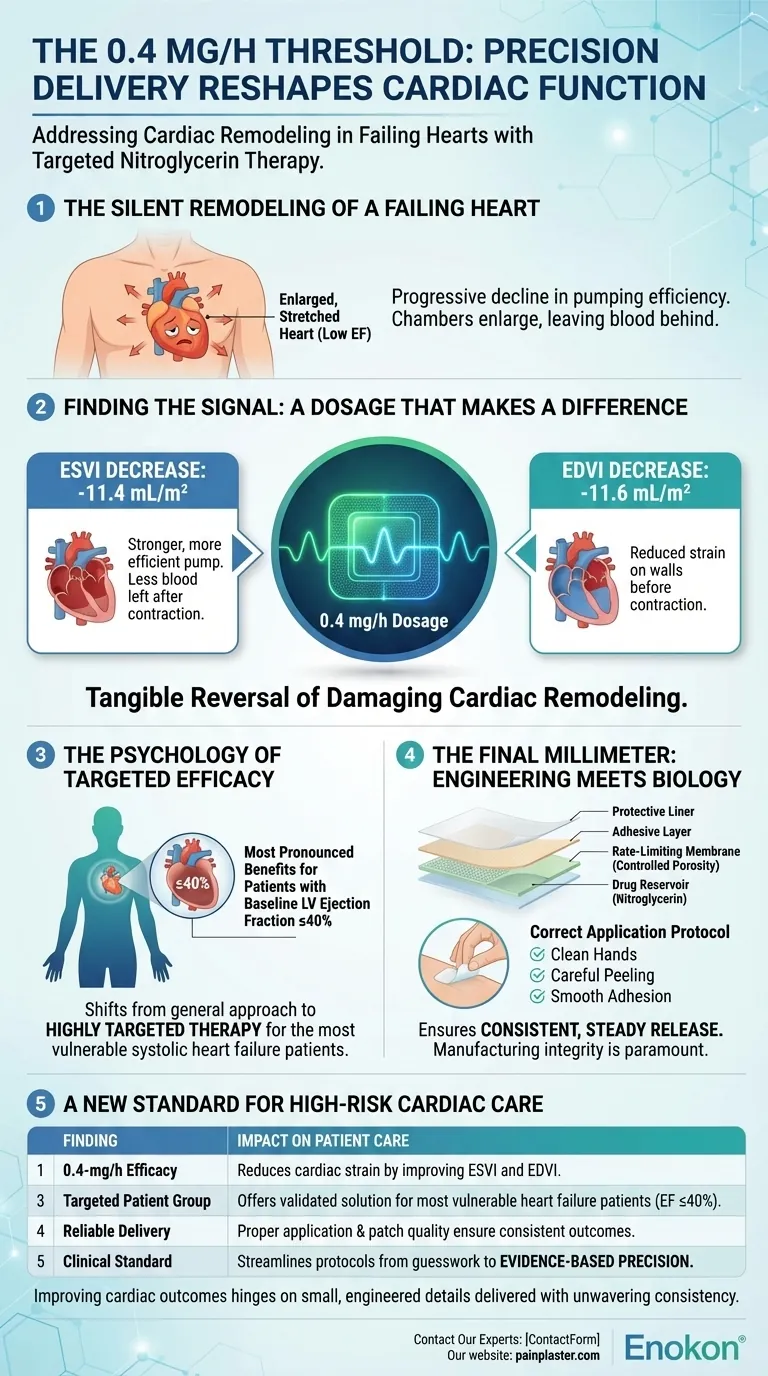
In the search for effective interventions, clinical data often reveals a specific signal in the noise. For the nitroglycerin transdermal patch, that signal is remarkably clear: the 0.4-mg/h dosage.
Studies show this specific rate was the only one to produce statistically significant improvements in key cardiac metrics.
- End-systolic volume index (ESVI) decreased by 11.4 mL/m². This means the heart was left with less blood after each contraction—a sign of a stronger, more efficient pump.
- End-diastolic volume index (EDVI) decreased by 11.6 mL/m². This shows the heart was less over-filled before contracting, reducing the strain on its walls.
These aren't just numbers. They represent a tangible reversal of the damaging remodeling process. It’s the difference between a heart giving in to strain and one regaining its functional composure.
The Psychology of Targeted Efficacy
The most profound insights often come from understanding who benefits the most.
The benefits of the 0.4-mg/h dose were most pronounced in patients with a baseline left ventricular (LV) ejection fraction of ≤40%. This is the clinical marker for systolic heart failure—the very group whose hearts are in the most mechanical trouble.
This finding shifts the treatment paradigm from a general approach to a highly targeted one. For a clinician, it provides confidence. It's no longer a matter of trial and error, but of applying a proven tool to the exact population it's designed to help. It respects the biological individuality of the patient.
The Final Millimeter: Where Engineering Meets Biology
A precisely calculated dose is meaningless if it isn't delivered with equal precision. A transdermal patch is not just a sticker; it's a sophisticated drug delivery system. The success of the 0.4-mg/h dosage is inextricably linked to the engineering of the patch itself.
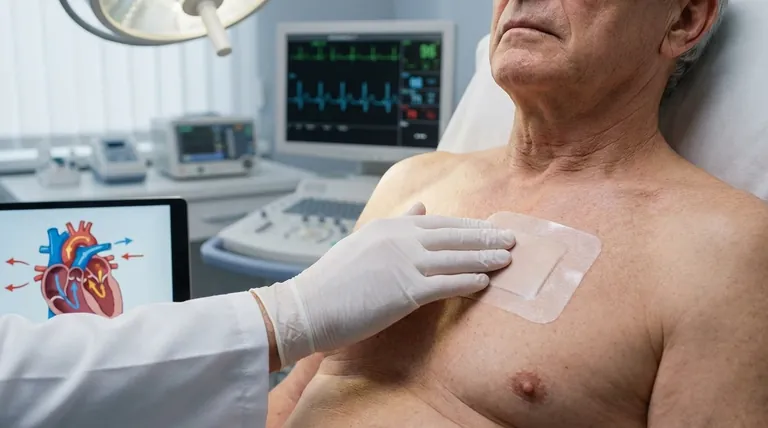
The application protocol—clean hands, careful peeling, smooth adhesion—is the final, critical step. It ensures the consistent, steady release of nitroglycerin that allows the cardiovascular system to respond. Any variability here could negate the clinical benefits.
This is where the manufacturing process becomes paramount. At Enokon, we specialize in the bulk manufacturing of transdermal patches where reliability is engineered from the start. From the adhesive's molecular structure to the controlled porosity of the rate-limiting membrane, every component is designed to ensure that 0.4 mg/h means exactly 0.4 mg/h, every hour. For pharmaceutical brands and distributors, this manufacturing integrity is the foundation of therapeutic trust.
A New Standard for High-Risk Cardiac Care
The evidence points toward a new, more effective standard. The 0.4-mg/h nitroglycerin patch isn't just another option; it's a potential first-line therapy for patients with reduced ejection fraction.
Here's a summary of the clinical argument:
| Finding | Impact on Patient Care |
|---|---|
| 0.4-mg/h Efficacy | Reduces cardiac strain by improving ESVI and EDVI. |
| Targeted Patient Group | Offers a validated solution for the most vulnerable heart failure patients (EF ≤40%). |
| Reliable Delivery | Proper application and patch quality ensure consistent, predictable therapeutic outcomes. |
| Clinical Standard | Streamlines treatment protocols, moving from guesswork to evidence-based precision. |
Ultimately, improving cardiac outcomes hinges on these small, engineered details. The difference between a struggling heart and a stabilized one can be measured in fractions of a milligram, delivered with unwavering consistency.
Achieving this level of precision requires a partner who understands the science behind the delivery. To explore how our custom R&D and reliable manufacturing can support your therapeutic goals, Contact Our Experts.
Visual Guide
Related Products
- Herbal Medicated Anti Diarrhea Patch for Digestive Relief
- Asthma Cough and Pain Relief Patch for Adults and Kids
- Menthol Gel Pain Relief Patch
- Icy Hot Menthol Medicine Pain Relief Patch
- Lidocaine Hydrogel Pain Relief Patch for Pain Relief
Related Articles
- The Unseen Engineering Behind a Simple Medicated Patch
- The Silent Geography of Healing: Decoding the Global Demand for Transdermal Herbal Patches
- Beyond Efficacy: The Psychology of Adherence in Topical Pain Relief
- The Evidence Gap: Navigating the Risks and Opportunities in OTC Analgesic Patches
- More Than a Sticker: The Hidden Engineering of a Safe Pain Patch