
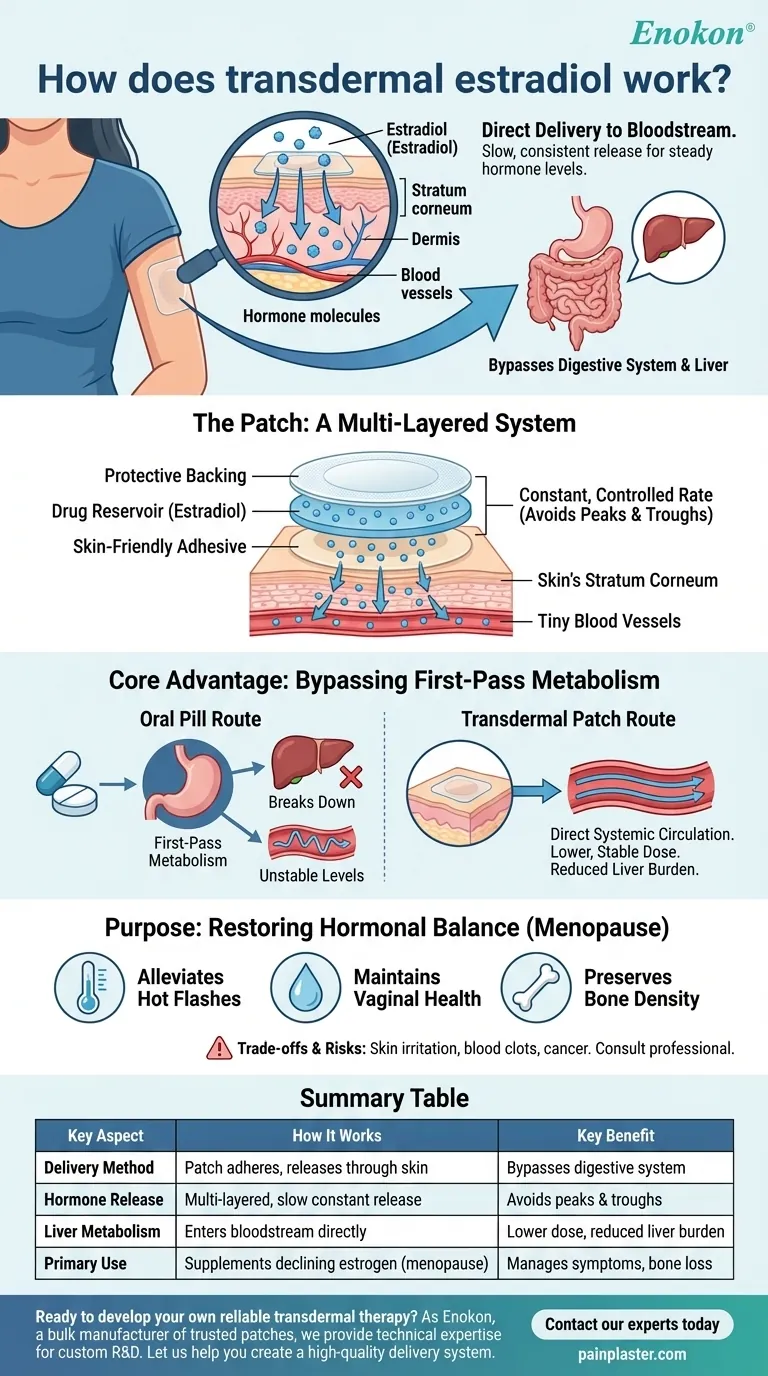
In short, transdermal estradiol works by delivering the hormone directly through your skin into the bloodstream. This method uses a specially designed patch that adheres to the skin, allowing for a slow, consistent release of estradiol over several days. This bypasses the digestive system and liver, providing a steady hormone level to alleviate symptoms associated with low estrogen.
The critical advantage of the transdermal patch is its ability to avoid the liver's "first-pass metabolism." This allows for a lower, more stable dose of estradiol to enter your system, closely mimicking the body's natural hormone production.
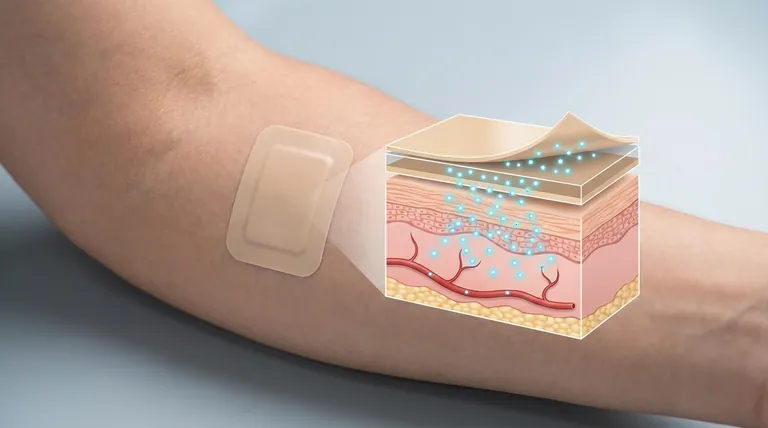
How the Patch Delivers Estradiol
The effectiveness of the transdermal patch lies in its sophisticated, multi-layered design, which is engineered to overcome the skin's natural barrier.
A Multi-Layered System
A transdermal patch is more than just a sticker with medicine. It typically consists of a protective backing layer, a drug reservoir containing the estradiol, and a skin-friendly adhesive that holds the system in place.
Crossing the Skin Barrier
The adhesive holds the patch firmly against you, allowing the estradiol in the reservoir to gradually seep into the skin. The hormone passes through the outermost layer of skin, the stratum corneum, and is absorbed into the tiny blood vessels below.
Ensuring a Steady Dose
This system is designed to release estradiol into your circulation at a constant, controlled rate. This steady delivery avoids the hormonal peaks and troughs that can occur with oral pills, providing consistent symptom relief for up to several days per patch.
The Core Advantage: Bypassing the Liver
The primary reason for choosing a transdermal route over an oral pill is to avoid a process known as first-pass hepatic metabolism.
What is First-Pass Metabolism?
When you swallow a pill, it is absorbed from your gut and travels directly to the liver. The liver metabolizes, or breaks down, a significant portion of the drug before it ever reaches the rest of your body.
Why Bypassing Matters
By delivering estradiol through the skin, the hormone enters the systemic circulation directly. This means a much lower dose is needed to achieve a therapeutic effect, and it reduces the metabolic burden on your liver. This leads to more stable and physiological hormone levels.
Understanding the Trade-offs and Risks
While effective, transdermal estradiol is a medical treatment with potential side effects and risks that require careful consideration with a healthcare professional.
Common, Manageable Side Effects
The most common side effect is skin irritation at the application site. Other frequent effects include headache, breast tenderness, fluid retention, or irregular vaginal bleeding as your body adjusts to the hormone.
Serious but Less Common Risks
Like all estrogen therapies, transdermal estradiol carries serious warnings. These include an increased risk of blood clots (which can lead to stroke or heart attack), endometrial cancer, breast cancer, and gallbladder problems, especially with long-term use.
The Purpose: Restoring Hormonal Balance
The fundamental goal of transdermal estradiol is to supplement the body's declining estrogen levels, primarily during menopause.
Alleviating Menopause Symptoms
By restoring estrogen, the therapy effectively manages common menopausal symptoms. It helps regulate body temperature to reduce hot flashes, maintains vaginal health to combat dryness, and plays a crucial role in preserving bone density to prevent osteoporosis.
Making the Right Choice for Your Goal
Transdermal estradiol is a powerful tool for hormone therapy, but its suitability depends entirely on your individual health profile and goals.
- If your primary focus is managing menopause symptoms with a stable dose: The transdermal patch offers consistent delivery that avoids the metabolic spikes of oral medication.
- If you have liver health concerns or are sensitive to oral medications: Bypassing the liver is a significant advantage of the transdermal route that you should discuss with your doctor.
- If you have a personal or family history of certain health conditions: You must have a thorough discussion with your provider about the serious risks, such as blood clots or cancer, before starting therapy.
Understanding how this delivery system works empowers you to have a more informed discussion with your healthcare provider about your specific needs.
Summary Table:
| Key Aspect | How It Works | Key Benefit |
|---|---|---|
| Delivery Method | Patch adheres to skin, releasing estradiol through the stratum corneum. | Bypasses the digestive system. |
| Hormone Release | Multi-layered system provides a slow, constant release over days. | Avoids peaks and troughs of oral pills. |
| Liver Metabolism | Enters bloodstream directly, avoiding first-pass metabolism. | Lower dose needed; reduces liver burden. |
| Primary Use | Supplements declining estrogen levels, primarily during menopause. | Effectively manages hot flashes, vaginal dryness, and bone loss. |
Ready to develop your own reliable transdermal therapy?
As Enokon, a bulk manufacturer of trusted transdermal patches and pain plasters, we provide healthcare and pharma distributors and brands with the technical expertise for custom R&D and development. Let us help you create a high-quality, consistent delivery system for your patients.
Contact our experts today to discuss your project requirements.
Visual Guide
Related Products
- Silicone Scar Sheets Patch Transdermal Drug Patch
- Far Infrared Heat Pain Relief Patches Transdermal Patches
- Menthol Gel Pain Relief Patch
- Icy Hot Menthol Medicine Pain Relief Patch
- Mugwort Wormwood Pain Relief Patch for Neck Pain
People Also Ask
- What role does a silicone-based transdermal delivery system play in Parkinson's? Enhancing Early-Stage Patient Care
- How is the long-term skin tolerance of silicone-based transdermal patches evaluated in clinical settings? R&D and Safety
- Why is a polarizing microscope used to evaluate the long-term stability of transdermal drug patches? Ensure Efficacy.
- What are common adverse effects of transdermal drug delivery? Risks & Prevention Tips
- What are the advantages of transdermal drug patches? Optimize Medication Delivery with Patches











